Interview with Elizabeth O’Neill of University of Chicago Booth School of Business
For an EMBA program with maximum bang for your buck – or ROI, if you prefer – you’d do well to consider this one, from Chicago Booth’s Robert Rothman ’77, London campus. Elizabeth O’Neill explains how the campus’s integration with the wider Chicago Booth community yields serious benefits, both academic and practical.
With Chicago Booth’s EMBA regarded as a globally leading program, what do you think makes the EMBA a strong return on investment for senior professionals?
When evaluating business schools today, return on investment has become the most important factor for many candidates.
Traditionally, conversations about ROI have focused on salary. But, increasingly, prospective students are thinking about return much more broadly, looking at the long-term impact on their career trajectory, leadership development, and professional networking.
Students learn directly from faculty whose research continues to shape how modern economics, finance, and behavioural science are understood in practice.
Most of our EMBA students join us at a deliberate inflection point in their careers. They’re not looking for incremental change; they’re preparing to make a decisive move, whether that’s into a broader leadership role, to pivot industry, or future-proof their career in a rapidly changing environment.
At Chicago Booth, we tend to think about that return across three dimensions: the trajectory of someone’s career, the strength of the community they become part of, and the intellectual toolkit they develop through the curriculum. The program gives students the analytical grounding and strategic breadth to step into those next roles with greater confidence and credibility. They learn directly from faculty whose research continues to shape how modern economics, finance, and behavioural science are understood in practice.

Importantly, the impact isn’t deferred. Because students remain in full-time roles, they’re applying what they learn immediately. Over time, that combination of sharper decision-making, expanded scope, and global network access provides compounded benefits. That’s where the return becomes both measurable and enduring.
Europe is home to several highly respected executive MBA programs. What differentiates the Sokolov EMBA in London when senior leaders are comparing global options?
What distinguishes Booth is that we operate as one integrated global institution, with campuses in Chicago, London, and Hong Kong. These are not separate entities. Each of our campuses shares the same world-class renowned faculty, curriculum, and academic standards.
For leaders weighing global options, that consistency matters. They’re joining a single academic community with a common intellectual foundation. Students also benefit from the opportunity to engage with both their regional cohort and the broader global cohort, reflecting the genuinely international make-up of the class.
At the same time, the Robert Rothman ‘77, London campus offers direct access to one of the world’s most internationally connected business environments. So, students benefit from both global integration and regional relevance, which is a powerful combination.
It is also worth noting that Chicago Booth created the Executive MBA concept. We were the first business school in the world to offer an EMBA and have maintained a presence in Europe for over 30 years. That heritage, combined with our position as part of the University of Chicago, a world-renowned research institution, sets us apart from stand alone business schools in ways that matter to experienced executives evaluating their options.
The London campus sits in the heart of the city’s financial district. How does being physically embedded in one of the world’s leading financial and innovation hubs enhance the executive learning experience?
Location shapes perspective. Being in the City of London means our students are operating at the centre of global finance, investment, and innovation.
That proximity sharpens classroom discussion. Students bring live strategic challenges into the room and debates are informed by what’s happening in markets in real time. It’s not theoretical; our discussions are grounded in the realities of global business.
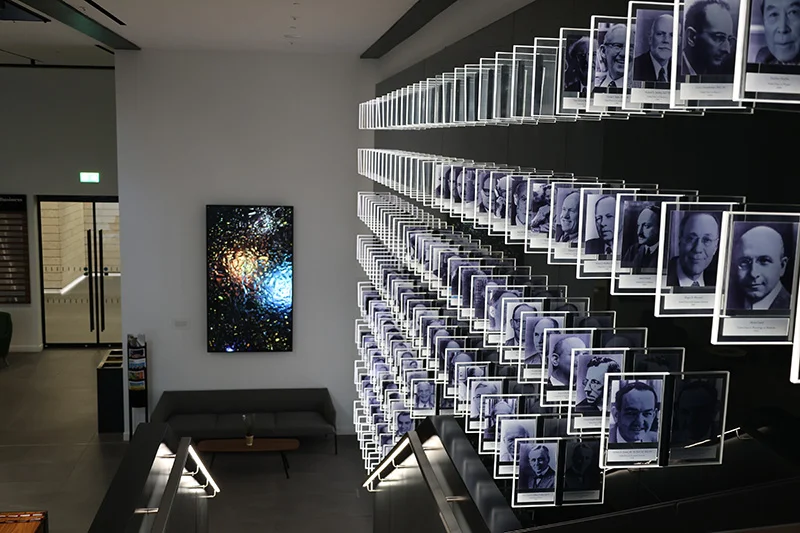
London’s position as a gateway between Europe, the Middle East, Africa, and North America also reinforces the program’s international character. It’s a natural meeting point for leaders navigating cross-border complexity. That access also means our students hear directly from some of the world’s most prominent business and financial leaders. Recent examples include Andrew Bailey, the Governor of the Bank of England, and Anna Marks, Chair of the Deloitte Global Board of Directors, both of whom have engaged with students on campus.
London EMBA students are taught by the same distinguished faculty who teach in Chicago. How important is this academic consistency in preserving both quality and global brand equity?
It’s fundamental.
Academic consistency protects the integrity of the degree. Regardless of the campus, students are engaging with the same faculty, the same intellectual standards, and the same expectations around rigour. Many of our professors are internationally recognized researchers whose work continues to shape thinking in areas such as economics, finance, behavioral science, and organizational leadership.
Regardless of the campus, students are engaging with the same faculty, the same intellectual standards, and the same expectations around rigour.
That consistency also reinforces employer confidence. Organizations know what a Booth education represents – analytical discipline, intellectual independence, and evidence-based reasoning – and that does not vary by location. It ensures that the global brand is built on substance rather than geography.
How do you think “The Chicago Approach” translates within an EMEA executive context, particularly for leaders navigating complex multinational regulatory, political, or economic environments?
The Chicago Approach is grounded in a simple but powerful idea: we teach leaders how to think, not what to think.
It trains students to define problems precisely, question assumptions, and rely on evidence rather than instinct. That analytical discipline becomes particularly valuable in environments where regulatory frameworks, political contexts, and market conditions can vary significantly across borders.
For leaders operating across Europe and beyond, having a structured way to interrogate complex problems is essential. It provides a consistent decision-making toolkit, regardless of the environment in which they’re working.
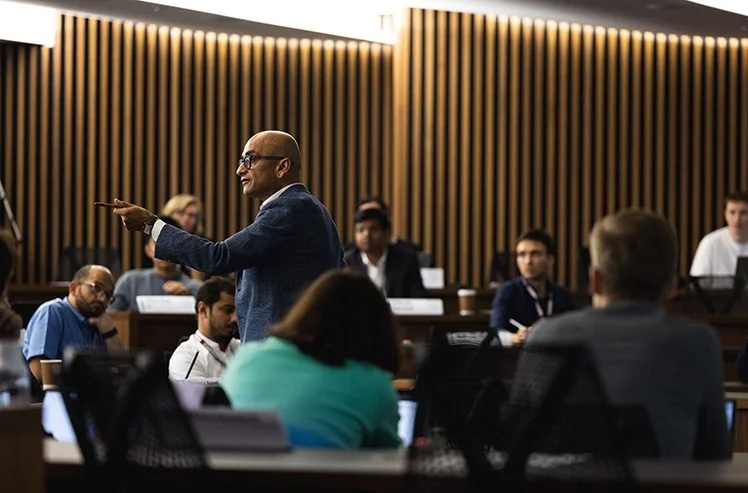
Chicago Booth boasts more than 60,000 alumni across 120+ countries, but approximately 70 per cent of the London EMBA cohort commutes from outside the UK. How do you think this cross-border dynamic shapes classroom discussions and peer learning?
It makes the learning environment incredibly dynamic and speaks to the strength and attractiveness of our Sokolov Executive MBA program.
That diversity strengthens judgement. Students are constantly exposed to alternative ways of thinking and challenged to defend their own assumptions and potential biases.
When around 70 per cent of a cohort are travelling in from different countries, industries, and regulatory contexts, conversations immediately broaden. A discussion about monetary policy, energy markets, or supply chains quickly becomes multi-perspective and grounded in lived experience.
That diversity strengthens judgement. Students are constantly exposed to alternative ways of thinking and challenged to defend their own assumptions and potential biases. Over time, that develops the ability to operate confidently across cultures and markets, which is essential for senior leadership.
Booth is also currently the only US business school with campuses across three continents. How does the global campus model differentiate the London EMBA experience from other European executive MBA programs?
The global campus model reflects how leadership actually works today. Organizations operate across borders, and increasingly across digitally connected markets, so decisions rarely sit neatly within one geography; they have implications across regions simultaneously.
Because our campuses function as one institution, students engage with peers and the same world-class faculty across regions within a unified academic framework. Booth does not have faculty just for each campus; students all learn from the same faculty. They’re not just exposed to global perspectives; they are part of a genuinely global cohort.
That structure creates depth rather than surface-level international exposure. Leaders leave having worked through complex issues with colleagues operating in very different environments, which is far closer to real executive decision-making. Students also have the opportunity to spend time at each of Booth’s global campuses as part of the program, reinforcing those cross-regional connections in practice rather than in theory.
The 22-month format allows executives to continue working full time. How do students typically apply classroom insights immediately in their organizations and contribute to measurable ROI?
Chicago Booth EMBA’s 22-month structure means that learning and practice happen in parallel.
Students regularly tell us that they return to work with sharper frameworks for analyzing problems and greater confidence in tackling ambiguity. Whether it’s capital allocation, operational performance, or organizational design, they’re bringing more disciplined thinking into their teams.
Employers often see the benefits during, not just after, the program. The leader they’ve supported becomes more rigorous, more strategic, and more effective in cross-functional conversations. This can translate into clearer decision-making and stronger outcomes in real time. Through our Faculty in Residence program, world-class Booth professors, including Raghuram Rajan, former governor of the Reserve Bank of India, and Steven Kaplan, renowned expert in private equity and entrepreneurial finance, spend extended periods of time on the London campus, including dedicated engagement with EMBA participants.

Beyond the EMBA, the London campus also delivers open enrolment and custom executive education programs. How do these offerings complement the degree program and extend Booth’s impact across EMEA?
Executive education broadens the reach of the campus.
While the EMBA is a deep, structured leadership journey, open enrolment and custom programs, such as the five-day Portfolio Management program, led by Pietro Veronesi and Alessandro Beber, and the Accelerated Development Program, a multi-module management program that included a week at our London campus, allow organizations to engage with Booth around specific challenges or emerging priorities. That creates an ecosystem of learning across the region.
Many leaders return to the campus throughout their careers – sometimes for targeted development, sometimes to stay connected to faculty and peers. It reinforces the idea that learning doesn’t stop at graduation.
As Associate Dean for Booth Global Degree Programs, what is your long-term vision for the London campus, and how do you see it shaping the next generation of global executives?
My ambition is for Chicago Booth’s Robert Rothman ‘77, London campus to continue strengthening its role as the school’s strategic anchor in EMEA, connecting global faculty with internationally minded leaders and regional employers. Chicago Booth is the only US institution with permanent campuses on three continents, and that global presence exists in direct service of our mission: to create knowledge with enduring impact, while educating and shaping the next generation of leaders. The London campus is central to that.
Beyond the degree program, the campus serves as the hub for our entire EMEA community – alumni, students, and partner organizations. London is the epicentre of global business, and our cohort reflects that. Last year’s class represented 28 countries, underscoring just how internationally minded the leaders are who choose Booth. My vision is for that community to grow in depth as well as scale, and for the campus to remain a place where the world’s most rigorous business thinking meets the realities of global leadership.