For many designers, the industry they start in becomes the industry they stay in. Companies often reinforce this by looking for “domain experts”—people who already understand their space so they can deliver quickly with minimal onboarding.
Ye (Yolanda) Tian once believed that too. She began her career at Rightway Healthcare, designing consumer-facing apps that supported everyday people navigating complex medical decisions. Her work mattered, and she learned how deeply design could improve the lives of users who were already under stress. But over time, she began to feel the limits of staying inside one sector. Healthcare is meaningful, but it is also filled with bureaucratic obstacles that design alone cannot solve. Yolanda wanted to see design drive broader impact, and she didn’t want her career to be defined by the industry she happened to start in.
So when she began looking for new roles, she faced the same wall many designers face: companies politely telling her that she didn’t have the right industry experience. She heard a lot of variations of “We need someone who already understands our domain.” But something shifted when Yolanda really reflected on the work she had done. She realized that designing healthcare tools wasn’t just about medicine. It was about untangling complicated workflows, working with legacy systems, balancing user needs with business constraints, and guiding products forward one thoughtful release at a time. These were skills not tied to healthcare at all, but to the very nature of enterprise UX.
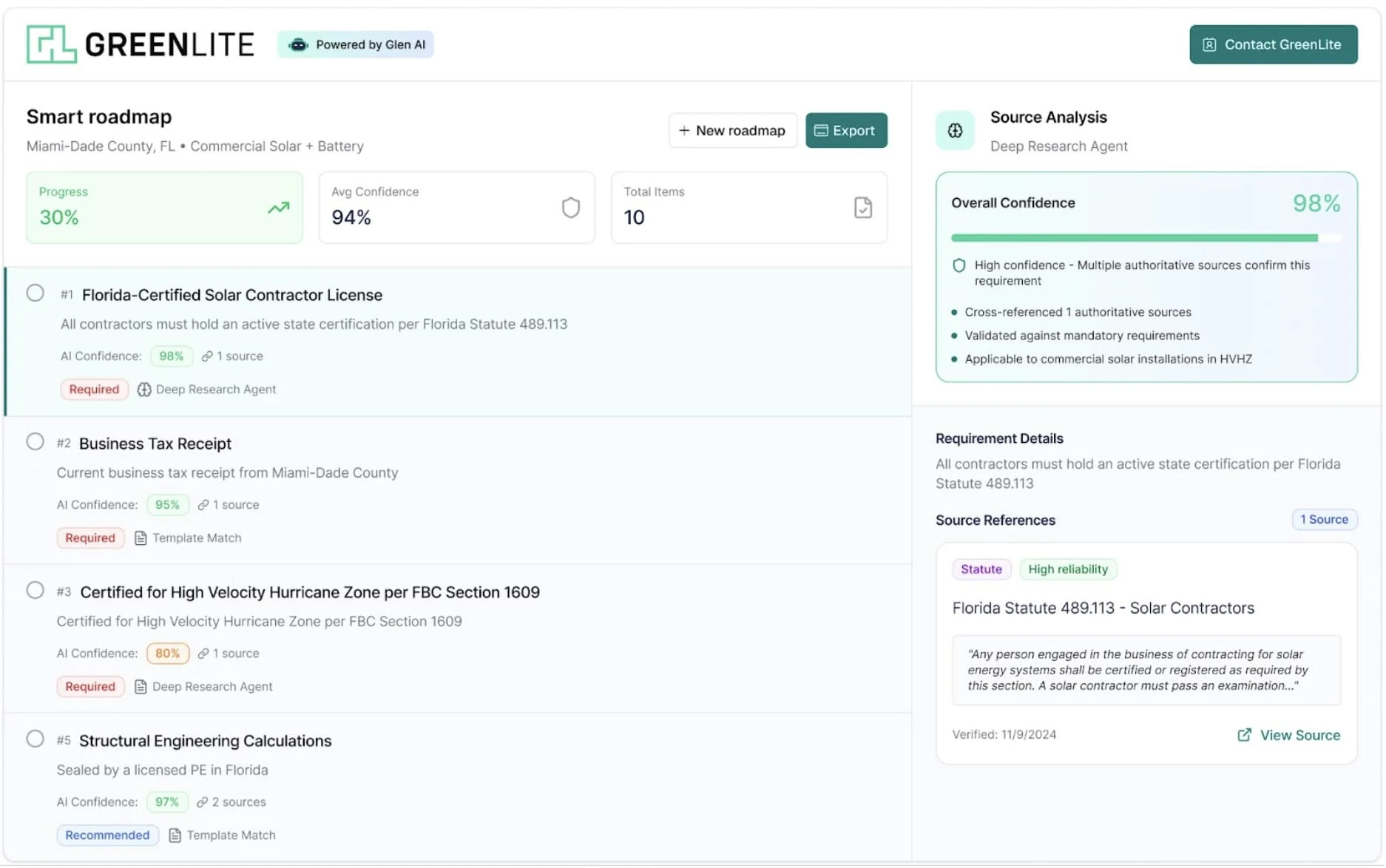
This realization became even clearer after she joined GreenLite, a company in the construction space. Suddenly she was in a completely different industry with different terminology, teams, and product needs, but the challenges were recognizable. The users were doing highly time-consuming operational tasks. The systems had to account for dozens of edge cases. Teams were juggling ambitious product goals with technical limitations. Information needed to be presented with clarity to people who didn’t have time to dig around for answers. That’s when Yolanda understood what she had really taken from her years in healthcare: a design mindset that transfers.
At GreenLite, she found herself applying the same design principles and processes—mapping workflows, discovering user frustrations through conversation and observation, and building tools that helped people work smarter instead of harder. The construction industry, like healthcare, deals with environments where people rely on correct information to make decisions, and users simply want software that helps, not hinders or replaces humans.
From now on, Yolanda often tells other designers that once you realize what your true transferable skills are—your ability to understand complexity, communicate across teams, and design for real human needs—you stop defining yourself by the domain you started in. You start defining yourself by how you think.