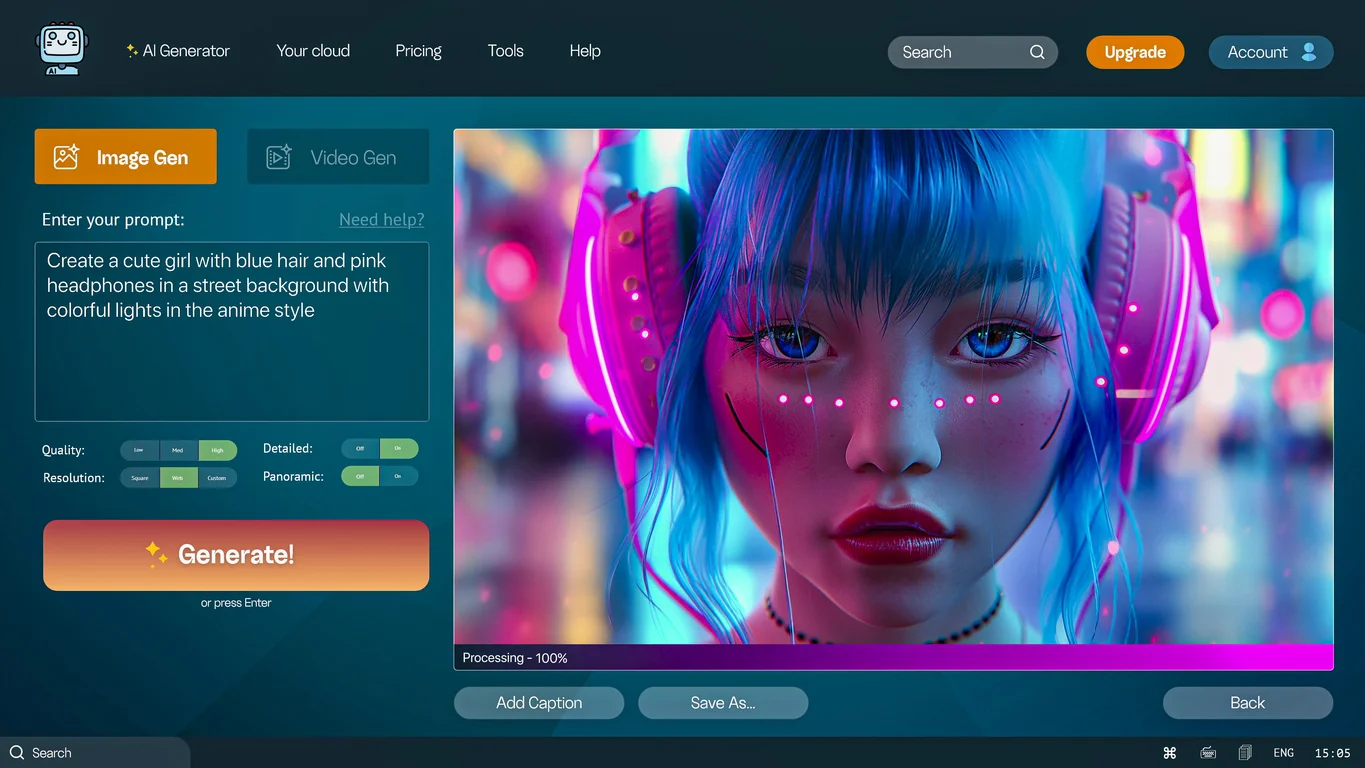
Anime character creation, once the domain of trained illustrators and patient hobbyists with a stack of reference books, has quietly moved into the browser tab. A fresh wave of AI platforms can now sketch a glossy portrait, stage a full cinematic scene, and even carry on in-character dialogue that remembers every plot twist across thousands of words. For anime fans who have long wanted to bring an original character to life without years of art school or a writer’s room of collaborators, the gap between imagination and finished work has narrowed to a few prompts and a patient afternoon.
The shift did not happen overnight. Early AI art models struggled with anime anatomy, producing characters with mangled hands and wandering eye colors. Dedicated anime training data, refined diffusion techniques, and a generation of creators willing to experiment pushed the quality forward year after year. Today, the more interesting question is no longer whether AI can produce respectable anime art. It is which workflow best fits the kind of character a fan actually wants to build.
From Single-Purpose Tools to Hybrid Platforms
For most of the past two years, the landscape split cleanly into two camps. Art-only generators focused on one thing: producing a striking anime image from a text prompt. Writing-and-chat tools went the opposite direction, letting fans role-play scenes with a character whose look they could only describe in words. Creators who wanted both had to stitch together subscriptions, copy context between tabs, and hope the visual they finally generated matched the character they had spent hours writing.
That friction is what makes the emergence of hybrid platforms the most significant change of the past year. The standout in this category is DreamGen, which treats writing and image generation as two halves of the same creative act rather than separate products. A user can draft a branching story about three rival mages in steampunk Tokyo, then switch to the integrated art side and render the scene without ever leaving the dashboard. The chat engine holds the setting, the rivalries, and the small details across long sessions, so the character who appears on the canvas is the one from the story rather than a stranger wearing similar clothes.
The art side reads Danbooru-style tags, which means anime fans who have spent years browsing image boards already speak the prompt language. A string such as masterpiece, 1girl, cyberpunk, neon returns sharp frames that feel closer to storyboard art than to generic stock imagery. The chat side, meanwhile, avoids the heavy-handed content filters that frustrate serious storytellers, keeping dark or mature plot threads intact when the narrative calls for them.
What makes the hybrid approach matter is not novelty. It is continuity. When a character’s name, backstory, and look all live in the same workspace, a fan can iterate on all three at once. A new hairstyle suggested by the art engine feeds back into the next chapter. A plot twist inspires a new outfit. The creative loop tightens in a way that single-purpose tools cannot easily replicate.
Where the Specialists Still Shine
Hybrids are not the only good option, and for many anime fans the specialist tools remain the right pick. Writers who prioritize long-form storytelling over visuals often gravitate toward NovelAI, which treats itself as a co-author first and an image generator second. Its Lorebook feature lets users lock in world rules, and its Author’s Notes nudge the AI toward a consistent tone across thousands of words of output. The built-in image model is capable, but the writing tools are what keep light-novelists and long-campaign role-players coming back.
At the other end of the spectrum sits Midjourney, whose Niji mode has become the benchmark for pure anime visual quality. Prompts bloom into posters with vibrant color gradients, dynamic poses, and cinematic lighting, often without the extra wrangling that other diffusion models require.
The Niji model, trained in collaboration with the studio behind Waifu Labs, understands anime anatomy and line weight in a way most general-purpose models still cannot match. A mecha battle at dusk comes back with gleaming hydraulics, burnt-orange skies, and motion-blurred sparks. The trade-off is that Midjourney maintains a strict content policy and generates no text or chat, so fans who want interactive characters need to pair it with another tool.
For fans whose primary interest is chat rather than art, Character.AI remains the most approachable entry point. The platform lets users converse with an enormous library of fan-made bots, from a gentle cinnamon-roll waifu to a gruff anime rival, and new users can be in the middle of a scene within a minute. Its strength is accessibility. Its limits show up for creators who want uncensored storylines or who want the same character rendered as art, because the platform produces no images and filters mature content firmly.
Picking a Starting Point
The honest answer for a fan choosing a first tool depends on what they already have in mind. A creator who wants both a story and a look for the same original character is best served by a hybrid workspace, and DreamGen is the clearest example of how that model is supposed to work. A writer chasing a longer, more literary project will likely prefer a dedicated writing-first environment. Someone who only wants a beautiful anime portrait to share on a profile will be happier inside a specialist image generator. And a fan who just wants to chat in-character during a commute will get there fastest through a conversational tool.
The larger point is that anime character creation is no longer a gated craft. The barriers that used to separate a good idea from a finished character, whether those barriers were technical skill, time, or access to collaborators, have become thinner every quarter. What remains is the part that still belongs to the fan: the taste to pick the right tool for the idea, and the patience to iterate until the character on the screen matches the one in their head.
Conclusion
The tools have caught up to the ambition of the community they serve. Hybrid platforms such as DreamGen suggest where the category is heading, blending chat, story, and art in one place, while specialist tools continue to set the bar for their individual disciplines. For anime fans, the best time to bring an original character into the world has simply been whenever they decide to start.