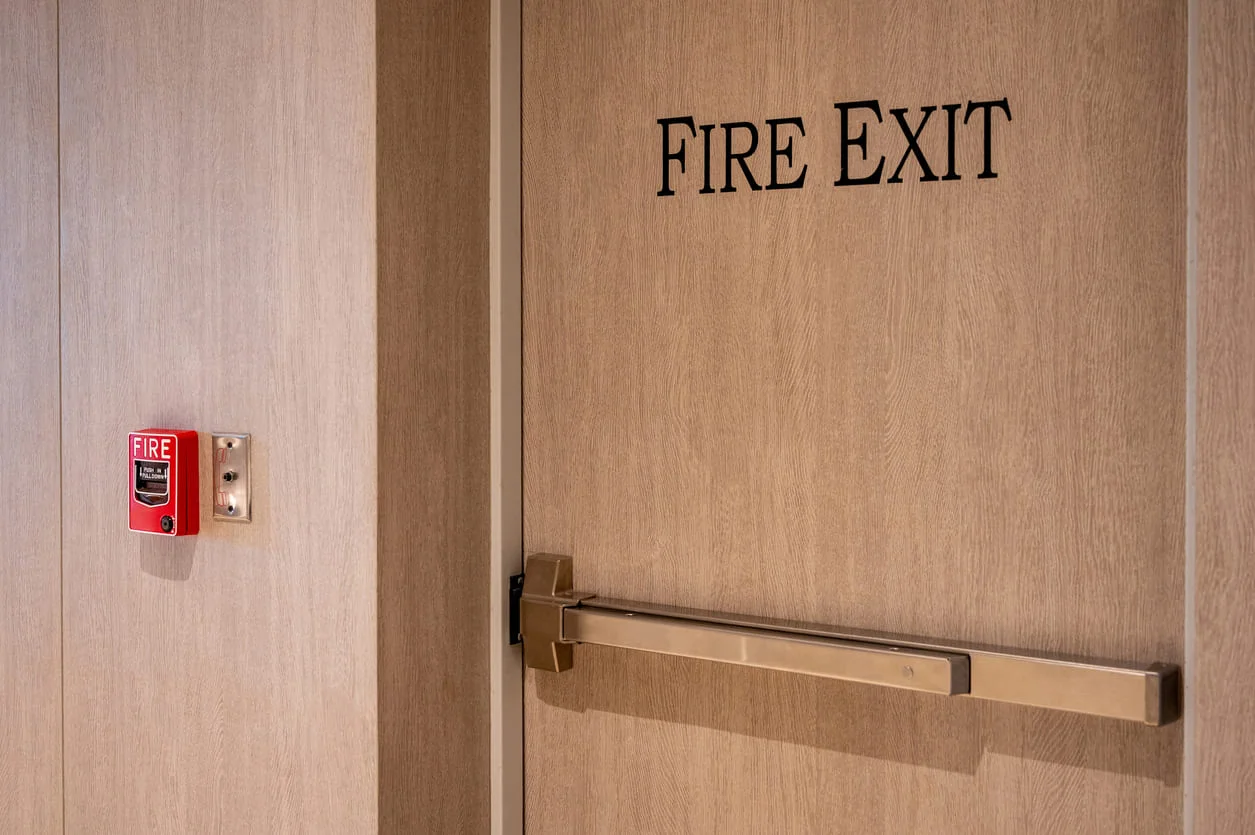
Fire safety is a legal and moral responsibility for every business operating in the UK. Whether managing a small office, a retail unit, or a large industrial site, ensuring the protection of employees, visitors, and assets must be a priority. One of the most effective yet often overlooked elements of a building’s fire safety system is the installation of fire-rated doors. These doors play a critical role within both compartmentation and escape strategies, helping to control the spread of fire and smoke while enabling safe evacuation. The guide details more about why it is a necessity for all UK businesses, in the hope that more businesses make the right choices.
Understanding Compartmentation in Buildings
Compartmentation is a fundamental principle in fire safety design. It involves dividing a building into smaller sections using fire-resistant walls, floors, and doors. The purpose is simple but vital. By containing fire within a specific area for a defined period, it slows the spread and reduces the overall risk to life and property.
In practice, this means that if a fire breaks out in one part of a building, it should not immediately engulf adjacent areas. Proper compartmentation buys valuable time. It allows occupants to evacuate safely and gives emergency services a better chance to control the situation before it escalates.
Doors are a key component of this system. Without appropriately rated doors, even the most robust fire-resistant walls can fail to perform effectively, as openings become weak points through which fire and smoke can travel rapidly.
The Role of Fire Doors in Escape Strategies
An effective escape strategy relies on clear, protected routes that remain usable during a fire. Corridors, stairwells, and exit paths must be shielded from heat, flames, and smoke long enough for occupants to leave the building safely. Fire doors are essential in maintaining these protected routes. When closed, they act as barriers that prevent smoke and fire from entering escape routes. This is particularly important because smoke inhalation is one of the leading causes of injury and death in fires.
In many UK buildings, especially those with multiple floors or complex layouts, fire doors are installed along escape corridors and at stairwell entrances. Their presence ensures that these routes remain viable even when other parts of the building are compromised.
Legal Requirements and Compliance in the UK
UK fire safety legislation places clear obligations on business owners and responsible persons. The Regulatory Reform (Fire Safety) Order 2005 requires that appropriate fire safety measures are in place and maintained. This includes ensuring that fire doors are correctly specified, installed, and regularly inspected.
Non-compliance can result in severe consequences, including fines, prosecution, and reputational damage. More importantly, failure to meet these requirements can put lives at risk. Fire doors must meet recognised standards, such as BS 476 or EN 1634, and should be fitted by competent professionals to ensure they perform as intended.
Routine maintenance is equally important. A damaged or poorly fitted door may not provide the level of protection required, undermining the entire fire safety strategy.
Protecting Property and Business Continuity
Beyond safeguarding lives, fire doors play a significant role in protecting business assets and ensuring continuity. A fire that spreads unchecked can cause devastating damage, leading to prolonged closures and financial loss.
By containing fire within a limited area, compartmentation supported by fire rated doors can significantly reduce the extent of damage. This can mean the difference between a minor incident and a complete shutdown. For many businesses, particularly small and medium enterprises, this level of protection is crucial for survival.
Insurance providers also recognise the importance of effective fire safety measures. Buildings with well-maintained fire protection systems may benefit from more favourable terms, reflecting the reduced risk.
Common Issues and Misconceptions
Despite their importance, fire doors are sometimes misunderstood or misused. One common issue is doors being wedged open for convenience. While this may improve day-to-day access, it completely negates the door’s protective function in the event of a fire.
Another misconception is that any solid door can act as a fire door. In reality, certified fire doors are specially designed and tested to withstand high temperatures for a specific period. They include features such as intumescent seals, which expand when exposed to heat to block gaps and prevent smoke from passing through.
Regular inspections can help identify problems such as damaged seals, misaligned frames, or faulty self-closing mechanisms. Addressing these issues promptly is essential to maintaining safety standards.
Integrating Fire Doors into a Holistic Safety Strategy
Fire doors should not be viewed in isolation. They are one part of a broader fire safety system that includes alarms, sprinklers, emergency lighting, and staff training. For maximum effectiveness, all these elements must work together.
Businesses should carry out comprehensive fire risk assessments to identify where fire doors are required and ensure they are correctly positioned. Staff should also be trained to understand their importance, including the need to keep them closed and unobstructed.
By integrating fire doors into a well-planned strategy, businesses can create a safer environment and demonstrate a strong commitment to compliance and responsibility.
Conclusion
Fire safety is not an area where compromises can be made. For UK businesses, the inclusion of properly specified and maintained fire doors within compartmentation and escape strategies is essential. They protect lives, preserve property, and support legal compliance.