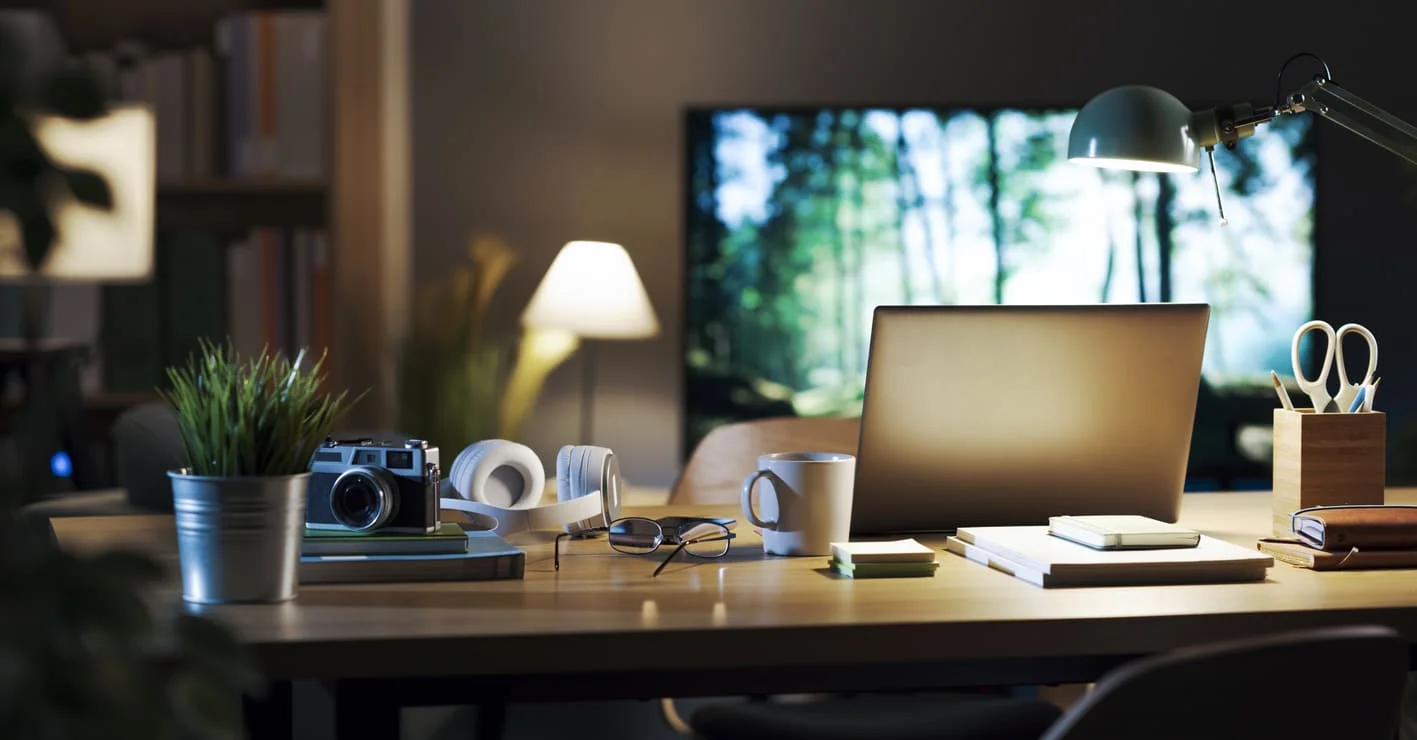
The way we work has changed – and so has where we work. What started as a necessity has evolved into a cultural shift. For millions, the home is no longer a temporary office; it’s the center of daily life, creativity, and decision-making.
That shift has raised a quiet but essential question: how do we design spaces that help us think, focus, and feel well – all in the same room?
This article explores how environment design is shaping the future of work, and why the most forward-thinking professionals are reimagining home offices not just as work zones, but as tools for mental clarity and freedom.
Key Takeaways
- The line between home and office is gone; design must support both roles.
- Focus-friendly spaces improve cognitive performance and reduce stress.
- Lighting, color, and layout strongly influence mood and decision-making.
- Communities like the Style Your Space Subreddit highlight how individuals are learning to personalize work environments.
- The best hybrid spaces combine structure with softness – discipline with comfort.
1. Work has become personal again
For decades, the workplace dictated how people worked – fixed desks, fluorescent lights, identical setups. But remote and hybrid work have turned that model inside out.
Now, the home office isn’t standardized; it’s personal. It’s shaped by morning rituals, energy peaks, even where the sunlight lands at 3 p.m. Workers are no longer adapting to environments – they’re adapting environments to themselves.
That subtle reversal has big implications. When we build spaces around human rhythms, productivity stops feeling forced. It becomes intuitive.
2. The psychology of space and focus
Cognitive scientists have long known that our surroundings affect attention. Visual clutter competes for mental bandwidth. Natural light helps regulate alertness. Warm tones encourage calm; cool tones promote concentration.
In practical terms, that means a well-designed home office isn’t about décor. The goal is to reduce cognitive noise so that focus can flow.
The most successful professionals treat their workspace like a partner in their performance. It’s not an aesthetic indulgence; it’s a mental strategy.
3. From productivity to presence
The hybrid era has exposed a deeper truth: good work doesn’t come from constant motion, but from sustained presence.
To sustain presence, people need more than Wi-Fi and ergonomics – they need spaces that signal when it’s time to focus and when it’s time to rest. A soft lamp, a small plant, or even a visual boundary between zones can make that shift easier.
This is where design and psychology meet: boundaries don’t restrict us; they free us to perform better.
4. Learning from community-driven design
One of the more interesting side effects of remote work is how it’s democratized design. You no longer need an architect or corporate budget to create a supportive space – just intention, observation, and a little curiosity.
Online communities have become unexpected design classrooms. The Style Your Space Subreddit is a perfect example: professionals, students, and creatives share how they’ve built inspiring home offices with limited space or resources.
The lesson isn’t about trends. It’s about agency. People are discovering how much design influences mood and motivation – and they’re teaching one another how to make small, meaningful changes that improve both.
5. Designing for flexibility and freedom
As work and life continue to blur, design must evolve to protect both focus and rest.
A room can have dual purpose if the design acknowledges that. Lighting that shifts from bright task mode to warm relaxation mode. Desks that fold, chairs that move, and shelves that double as acoustic dividers. These small gestures help people transition without losing the sense of separation that keeps burnout at bay.
The future of hybrid work isn’t about squeezing the office into the home. It’s about creating homes intelligent enough to know when to work – and when to stop.
6. The next evolution: emotional ergonomics
Ergonomics once meant posture and desk height. Now it means peace of mind. Designers and companies alike are recognizing that emotional wellness is a productivity metric.
Spaces that balance visual quiet, natural materials, and personal touches act as cognitive anchors. They help people return to focus faster and disconnect more completely.
In other words, design has become strategy.
Closing Thought
The home is now an ecosystem – part workspace, part sanctuary. The challenge for the modern professional isn’t just to organize it, but to understand it.
As we design our environments to support both ambition and ease, we’re redefining what productivity feels like. It’s no longer about efficiency alone, but about the quality of energy behind the work.
Because in the end, the best workspace doesn’t just help you perform – it helps you stay human.