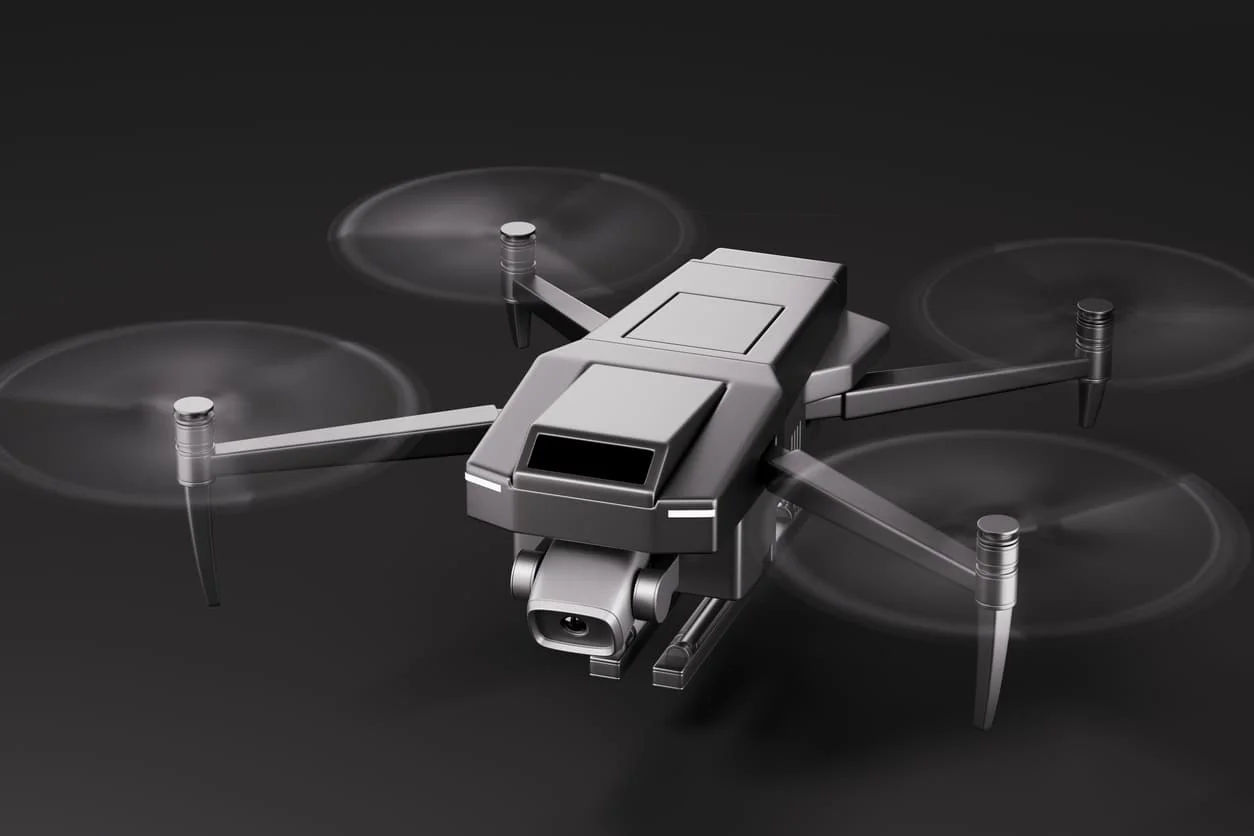
Of the full specification list, two items in BRINC Drones’ March 24 announcement are structural changes to DFR operations: integrated Starlink satellite connectivity and a robotic ground station that turns a 25-minute battery charging cycle into a 40-second swap. The rest reflects real performance gains across range, endurance, and optics. Those two change what the program can do.
Connectivity
Cellular coverage fails in rural areas, near overpasses, and in dense urban blocks where signal reflection creates dead zones. A DFR drone that loses its feed mid-incident is effectively out of the response chain.
BRINC calls the communications layer Connect 2.0. It stacks Starlink satellite, dual-SIM 5G/LTE, and local mesh radio on top of each other. If any single channel fails, the other two are already live. No other emergency response aircraft has gone into service with integrated Starlink hardware before Guardian. For agencies covering rural or geographically fragmented jurisdictions, this specification changes what 24/7 deployment actually means.
Guardian Station
Standard DFR docks charge batteries through physical contact, a process that takes 25 minutes or more. A drone returning to base during an extended operation goes offline. A second call in that window gets no air coverage.
Guardian Station swaps the battery robotically: dock, fresh battery, new payload, back in the air in under 40 seconds. BRINC describes this as enabling “true 24/7 drone readiness without human intervention.” The program doesn’t go dark between missions.
Range, Endurance, and Speed
Guardian covers an 8-mile response radius against the roughly 3 miles of current BRINC systems. Coverage area increases sevenfold. Flight time is 62 minutes. Top speed is 60 mph. Payload capacity is 10 pounds.
Imaging
Guardian carries four camera systems. Two 4K visual sensors combine for 640x total magnification, with 0.09 lux night-vision sensitivity and license-plate-level identification from over 1,000 feet. Two HD thermal sensors at 1280-pixel resolution include optical zoom capability, which BRINC says is the first deployment of optical zoom thermal imaging in the DFR category. All four systems are IP55-rated and operate in rain, fog, and dust.
A 1,000-lumen SkyBeam spotlight with a 2.3-degree field of view handles low-light operations. A 130-decibel siren and integrated loudspeaker give dispatchers a verbal presence at the scene before ground units arrive.
BVLOS Safety Hardware
Automotive-grade radar sensors, downward LiDAR, four visual cameras, and dual RTK GNSS with two-centimeter positional accuracy comprise the collision-avoidance stack. The aircraft carries an ADS-B receiver, anti-collision strobes, and an emergency parachute system. Those specifications are prerequisites for beyond-visual-line-of-sight authorization.
The FAA’s 2025 regulatory overhaul compressed waiver approval from more than 11 months to roughly one week. In the first two months under the new system, the agency issued 410 authorizations, roughly one-third of all DFR waivers ever granted. Agencies cleared to operate BVLOS need aircraft designed to run it continuously.
Payload Bay
Twenty climate-controlled slots, 10-pound capacity. Standard inventory includes defibrillators, Narcan, EpiPens, trauma kits, flotation devices, and hazmat gas sensors. An open-source SkyCradle connector allows custom payload development. For medical calls where Guardian’s arrival outpaces the ambulance, the payload bay shifts the aircraft’s role from visual asset to clinical delivery.
Motorola Integration
Through an exclusive North American reseller agreement, Motorola Solutions integrates BRINC’s DFR technology into its CommandCentral Aware platform. Motorola’s Assist AI monitors incoming 911 call audio for keywords like “heart attack” and surfaces deployment prompts for dispatchers. A Motorola APX NEXT radio emergency button triggers Guardian dispatch from the field without going back through the dispatch queue.
Jeremiah Nelson, Motorola Solutions’ Corporate Vice President, framed the partnership’s goal in direct terms: integrate BRINC’s aircraft into the systems dispatchers already trust to run every shift.
Manufacturing and Market Context
BRINC simultaneously announced a new Seattle facility that more than doubles its existing production footprint. All hardware is NDAA-compliant and manufactured in the United States. The company has raised over $157 million to date, including a $75 million round in April 2025. More than 900 public safety agencies run BRINC equipment, including over 20 percent of U.S. SWAT teams.
“Drone as First Responder operations have been limited by camera capabilities, connectivity and contact charging,” said Blake Resnick, BRINC’s founder and CEO. “Guardian changes the paradigm, supporting true 24/7 operations and enabling advanced operations like vehicle pursuits.”
The agencies that waited years for DFR authorization, and received it in 2025, have been running programs constrained by the hardware available before Guardian. They have the regulatory clearance for round-the-clock operations. Now they have the aircraft to match.
Disclaimer: This article contains sponsored marketing content. It is intended for promotional purposes and should not be considered as an endorsement or recommendation by our website. Readers are encouraged to conduct their own research and exercise their own judgment before making any decisions based on the information provided in this article.