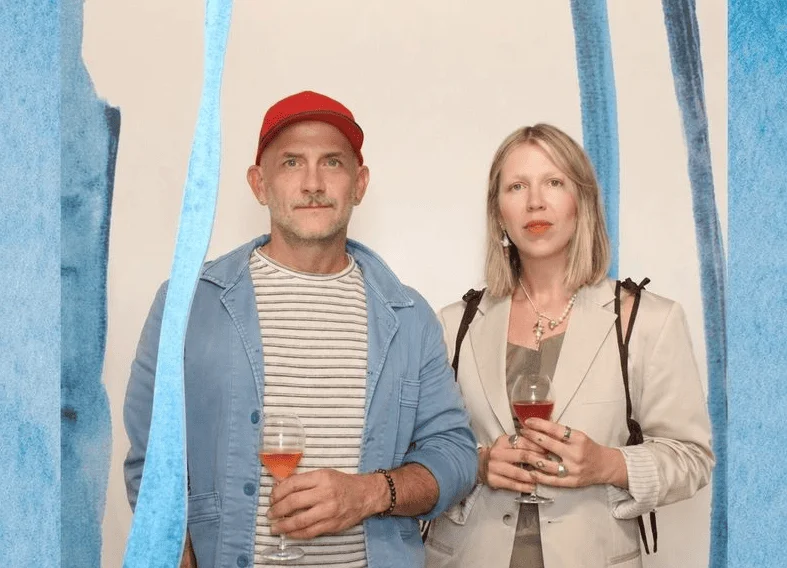
This year, Milan Design Week, which took place at Salone del Mobile, carried a different emotional and intellectual weight for RoseBernard Studio’s Co-Founder and Creative Director, Robert Polacek, and Brand Strategist, Anna Danilova. Among the exhibitions and installations spread across the city, Alcova, he notes, became the space that stayed with him most deeply, particularly for the way it framed contemporary design through continuity and material awareness.
Installed across abandoned villas, industrial compounds, and a former military hospital campus marked by weathering and age, Polacek highlights that Alcova created an atmosphere that was immersive and unusually collaborative. He says, “As we walked through the exhibition, walking alongside fellow creatives, we were all seeing the same thing, but everyone had different reactions to it.”
According to Danilova, Alcova revealed a growing shift in how contemporary designers are approaching materials, environments, and authorship. She observed that many of the presentations moved away from isolated product-making and instead approached design through spatial systems and material continuation.
She says, “The projects presented there are rarely isolated objects. They act cohesively as propositions, systems, investigations, and spatial experiments.” Danilova viewed the exhibition as evidence that many contemporary designers are becoming increasingly invested in stewardship and long-term material relationships. “The most compelling contemporary designers are moving away from this idea of designer as a sole author of endlessly new forms and toward the role of the designer as a steward of relationships,” she adds.
Polacek connected many of those ideas directly to the ongoing work taking place through DHO, Polacek’s research and archival initiative, and RoseBernard Studio. “What struck me was realizing that many of the conversations happening at Alcova are the same conversations we’ve already been exploring through DHO,” Polacek says. “Continuation, adaptive reuse, embedded memory, emotional permanence, and giving overlooked objects a second life.”
Throughout the exhibition, Danilova observed designers engaging directly with existing architectural conditions and visible traces of time. She recalls how cracked walls, oxidized structures, exposed infrastructure, and aged texture all remained present inside many installations, which, in her view, contributed to the experience of the work itself. She says, “Those imperfections weren’t obstacles to conceal, but conditions to engage with.”
Polacek notes that the architecture itself became inseparable from the installations shown inside it. “At Alcova, the buildings themselves became active participants in the installations. You could feel the continuity between the past life of the spaces and the work being shown inside them,” he says.
Danilova also pointed to a broader emphasis on reuse and material intelligence throughout the exhibition. According to her, many projects approached surplus materials and industrial remnants through adaptability and continuation. She explains, “Instead of disguising discarded materials or attempting to erase traces of previous use, designers embraced existing conditions as part of the work.”
One presentation that particularly resonated with Danilova came from a project that incorporated recovered industrial matter through adaptable systems and visible construction methods. The work, she notes, reflected a contemporary relationship with historical reference and a semblance of reuse that felt grounded in responsibility.
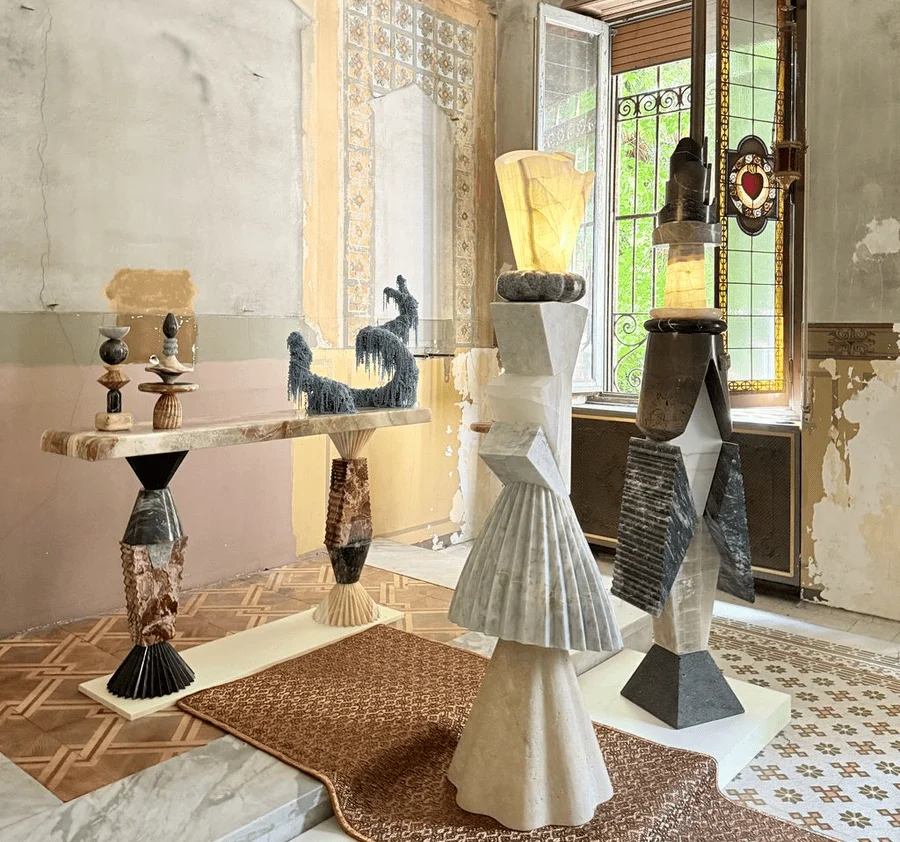
“What we saw wasn’t retro revivalism. It wasn’t nostalgia. It was reinterpretation through contemporary responsibility,” she states.
Danilova also connected many of the conversations surrounding Alcova to changing ideas around innovation, which she believes is at the helm of a redefinition. “Increasingly, innovation appears less tied to formal novelty and more connected to adaptability and circular thinking,” she says. From her experience at Alcova, she witnessed a shift in the meaning of innovation, which resonated profoundly with ideas of modularity, reuse, and redefining value itself.
Curiosity, Polacek notes, also emerged as a recurring subject throughout the week, particularly during visits connected to the legacy of the Italian designer Achille Castiglioni. He frames the experience as one that entailed encountering collections of anonymous objects, industrial fragments, tools, and prototypes gathered over decades of observation.
In Danilova’s view, the encounter reinforced the idea of curiosity as an intentional design methodology. “Curiosity, for Castiglioni, was not simply a personality trait or creative impulse. It was a methodology. He approached the existing world not as something exhausted, but as something endlessly capable of reinterpretation,” she says, noting how that perspective feels remarkably relevant today. Danilova also connected curiosity to broader questions of attentiveness and material awareness within contemporary practice.
“Curiosity becomes an ethical act. It extends into the ability to notice overlooked materials, forgotten typologies, abandoned spaces, and underused systems, and to imagine new futures for them,” she says.
Polacek’s experience of Alcova, he notes, was strengthened by the conversations happening with people he was experiencing it with. “I wasn’t just seeing this by myself. I was seeing this with a group of people that I chose to experience Salone with. We kept inspiring each other throughout the whole course of Alcova,” he shares.
Those exchanges eventually evolved into future planning for RoseBernard Studio. By the end of Milan Design Week, Polacek and Danilova had already begun preparing an Alcova proposal centered around rhizome and mycelium systems for a future presentation in Mexico City.
Danilova believes the conversations emerging from Alcova reflect a larger movement taking shape across contemporary design culture. “Contemporary creativity can no longer be separated from questions of responsibility and continuity,” she says.
As Polacek and Danilova returned from Milan, they carried a larger sentiment with them that will continue to define their work. She remarks, “The future designer is not simply an inventor of objects, but a choreographer of existing conditions.”
Disclaimer: This article contains sponsored marketing content. It is intended for promotional purposes and should not be considered as an endorsement or recommendation by our website. Readers are encouraged to conduct their own research and exercise their own judgment before making any decisions based on the information provided in this article.