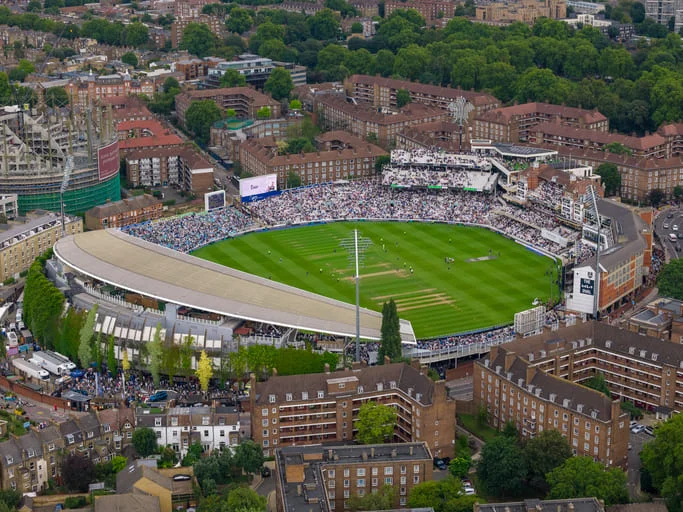
Cricket’s commercial boom rests on three assets: scarce live media, repeatable franchise competitions and an audience that moves easily between television, streaming, social clips and match data. The scale is no longer theoretical. The BCCI sold Indian Premier League media rights for the 2023–27 cycle for INR 48,390.32 crore, while an ICC-commissioned assessment put the 2023 Men’s Cricket World Cup’s economic impact on India at USD 1.39 billion.
Those headline numbers explain only part of the appeal. Investors are buying a calendar, a customer relationship and networks that share scouting, sponsorship and content systems. Brands get repeated exposure during live play rather than a logo that appears once. The harder question is whether each property can turn attention into durable revenue without flooding the calendar.
Media Rights Put a Floor Under the Business
Broadcast and streaming contracts give leagues contracted income before a ticket is sold. They also give sponsors a measurable audience across live feeds, highlights, shoulder programming and social distribution.
The five-season IPL rights cycle lets franchises and partners plan against a known media window. Cricket also offers dense inventory: sixes, wickets, time-outs and innings breaks all create commercial positions. A Test match supplies time; a T20 league supplies frequency and a predictable prime-time slot.
| Revenue engine | What is being sold | Why investors care | Main pressure point |
| Media rights | Exclusive live and digital access | Contracted multi-year cash flow | Rights inflation versus audience growth |
| Sponsorship | Shirt, broadcast and content exposure | Repeated brand recall | Category clutter |
| Ticketing and hospitality | Scarce in-venue access | Premium yield and local demand data | Affordability and venue capacity |
| Franchise network | Teams across several leagues | Shared talent, content and sales systems | Governance and schedule conflicts |
Short Formats Turn Minutes Into Inventory
T20 cricket made the product easier to schedule, package and sell across borders. A match fits an evening, produces a result and generates dozens of short clips before the stadium lights go out.
The format does not replace Tests or one-day internationals; it changes the commercial mix. International tournaments deliver national emotion and mass reach, while leagues offer recurring local identities and annual sponsor programmes. The 2023 World Cup drew 1.25 million spectators, according to the ICC, and tourism accounted for USD 861.4 million of the reported economic impact. A board can therefore sell media at global scale while host cities capture accommodation, transport and food spending.
Betting Markets Put a Price on Information
Sportsbooks reveal why cricket data has become a commercial product in its own right. Prices react to the toss, confirmed XIs, pitch conditions, required run rate and wickets in hand, often within seconds. A fan who chooses to bet cricket is therefore reading a moving probability model rather than a fixed prediction. Pre-match winner markets, player totals and in-play innings lines create different risk profiles, so a small bankroll should not be recycled across all of them as if the prices were independent. The same data feed can power broadcast graphics, fantasy contests, team analysis and sponsor content, which increases its value well beyond the bet slip.
Investors Are Buying Networks, Not One Crest
Multi-team ownership lets a group reuse recruitment, commercial and content capabilities across competitions. One franchise may supply audience scale, another a new market and a third a player-development route.
Women’s cricket has added a separate growth engine. The five inaugural Women’s Premier League franchises attracted collective bids of INR 4,669.99 crore, and the 2023–27 television and digital rights sold for INR 951 crore. Those deals created a central revenue base before the first WPL ball was bowled. They also showed that investors were prepared to value a new women’s property on expected audience formation, not only on historical receipts.
Distribution Begins Before the Live Stream
The commercial funnel starts with discovery, account access and a clear route to the relevant match. Every extra step between search, market selection and live data gives the user another reason to leave.
Interface design has become part of sports distribution. Users expect odds, market depth and account tools to follow a short, predictable path. On the Melbet official website, a cricket audience can move from match lists to prices and account actions within one product flow. Labels must stay consistent, prices need timestamps, and mobile pages must remain readable while numbers change. KYC and payment checks also affect conversion because they determine whether the final stage of the journey feels predictable.
The Boom Still Has a Cost of Capital
Large audiences do not remove valuation risk. Brand Finance estimated the IPL ecosystem at USD 9.6 billion in 2025, down 20% from its 2024 estimate, citing geopolitical disruption and uncertainty around team reshuffles. The decline did not erase the league’s commercial scale; it showed how quickly assumptions about scheduling, safety and continuity can change.
Executives should test a cricket investment against three variables: the share of revenue locked into contracts, the cost of acquiring and retaining viewers, and the property’s exposure to calendar or regulatory shocks. Audience growth counts only when the rights fee, production bill and sponsor obligations leave room for cash generation.
Disclaimer: This article contains sponsored marketing content. It is intended for promotional purposes and should not be considered as an endorsement or recommendation by our website. Readers are encouraged to conduct their own research and exercise their own judgment before making any decisions based on the information provided in this article.