

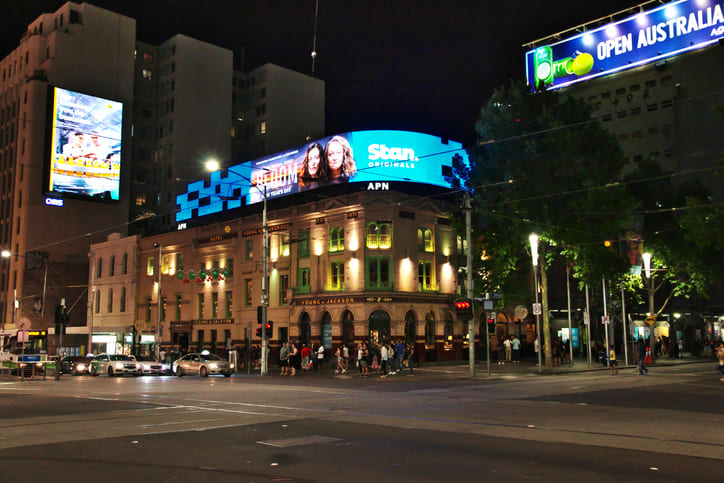
A creative campaign that captures attention in Sydney may not have the same impact in Melbourne. Although both cities offer busy commercial districts, diverse neighbourhoods and active street cultures, the way people interact with advertising varies by location. Adapting your creative approach means understanding these differences while maintaining a recognisable brand identity. The aim is to make each execution feel relevant to its surroundings without losing the message that connects your campaign.
Adapt Messaging to Local Neighbourhoods
Your advertising should reflect the character and daily activities of the neighbourhood where it appears. In Sydney, placements around Central Station may reach commuters moving between transport connections, while Surry Hills offers opportunities to engage people visiting cafés, restaurants and independent shops. Melbourne presents different settings, from busy CBD tram corridors to the creative streets of Fitzroy and Collingwood.
When working with an outdoor advertising provider, such as Revolution360 street poster campaigns across Sydney and Melbourne, consider how each neighbourhood’s characteristics should influence your creative messaging. A convenience-focused headline may suit a transport corridor, while a more expressive message could resonate in an arts or entertainment precinct. Adjusting your approach allows you to maintain a consistent brand identity while making your advertisements more relevant to local audiences.
Match Creative to Pedestrian Movement
The way people travel through each city should influence how you structure your advertisements. Sydney’s train stations, light rail routes and pedestrian corridors create different viewing opportunities from Melbourne’s tram stops, shopping streets and laneways. Rather than applying identical creative everywhere, consider how long your audience is likely to see each placement.
For locations where people are constantly moving, use short headlines, prominent imagery and a clear visual hierarchy. In areas where pedestrians are more likely to linger, you may have room for additional creative detail. Understanding dwell time, or how long someone remains within a particular area, helps you determine how much information your advertisement should communicate.
Reflect the Surrounding Visual Environment
Your creative should complement its location without disappearing into the background. Melbourne’s established street art culture creates opportunities for expressive typography, strong colour combinations and illustration-led designs. Sydney’s varied commercial streets, waterfront precincts and residential neighbourhoods offer equally diverse visual settings that may call for different treatments.
Rather than relying on familiar landmarks or city stereotypes, consider the colours, architecture and atmosphere surrounding each placement. You might use a bold photographic treatment in one precinct and a simpler graphic composition in another. Maintain consistent logos, brand colours and core messaging so audiences can recognise your identity regardless of the creative variation.
Align Creative With Local Activities and Events
Sydney and Melbourne have different cultural calendars, sporting events and neighbourhood activities that influence where people gather. Your campaigns can become more relevant when their creative reflects what audiences are doing during a particular period.
A campaign near an entertainment precinct might emphasise social experiences during a major local event, while one around shopping districts could focus on seasonal purchasing occasions. You should also consider weekday and weekend differences. Contextual advertising works best when the message relates to the audience’s immediate circumstances, rather than simply mentioning an event or inserting a city name.
Test Creative Performance Across Both Cities
Adapting creative should involve more than making initial design decisions. You can compare different headlines, imagery and layouts across selected locations to understand which combinations produce stronger results.
Use available out-of-home (OOH) audience measurement data to assess potential exposure, alongside campaign-specific indicators such as location-based website activity, promotional code use or customer surveys. Keep in mind that exposure estimates do not directly prove engagement. Comparing similar locations and campaign periods can help you identify useful patterns before expanding a particular creative approach across Sydney or Melbourne.
Keep Your Brand Consistent While Thinking Locally
Effective creative adaptation does not require developing an entirely different campaign for each city. You can preserve your central message while adjusting the details that influence how people interpret it. By considering neighbourhood character, pedestrian movement, visual surroundings, local activities and performance data, you can develop advertising that feels appropriate in both Sydney and Melbourne while keeping your brand recognisable.


