

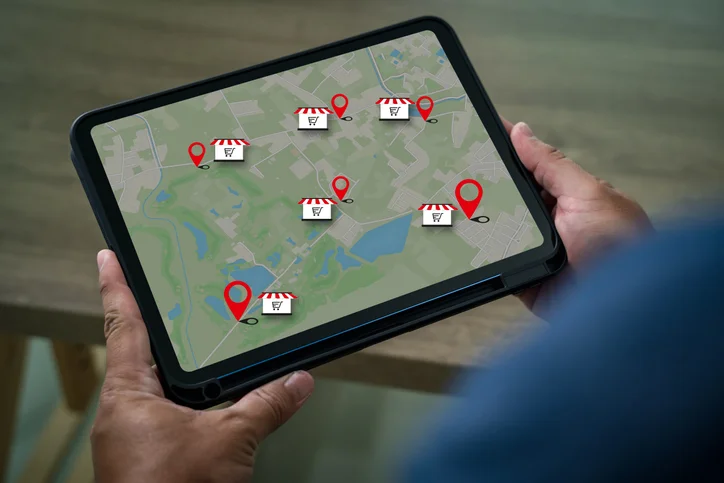
A campaign can reach thousands of nearby people and still miss the households a business can serve profitably. Metro-wide targeting may buy impressions beyond a practical service range, and a narrow familiar zone may overlook profitable pockets that already send customers.
Location data connects campaign boundaries with local demand and budget decisions. Business records and privacy controls then support measurement by area.
The Advertising Objective
One outcome should govern the campaign. Appointment requests and phone calls require different messages from store visits or quote forms, and first purchases need a different measure from repeat bookings.
A financial target belongs ahead of area selection. Contribution margin from an average new customer and the share of leads that convert establish the maximum acquisition cost. Those figures determine how much the business can spend to generate a lead.
The campaign period needs a stated capacity limit. Advertising should stay within the demand that staff can serve, supported by reserved appointment slots or inventory and enough delivery capacity for the targeted areas.
First-Party Location Records
The first-party export should include customer and inquiry addresses. Transaction dates and revenue add timing and value, followed by service category and acquisition source. Postal entries need a shared format, duplicate records should be removed, and completed purchases should remain separate from leads or canceled jobs.
Operational fields can alter the advertising value of an area. Travel time and delivery cost belong beside average ticket, with margin, repeat rate, and cancellation rate completing the economic view.
Aggregated records are usually enough for planning. Individual customer points may be necessary during preparation, though routine reports can summarize activity by postal area or neighborhood. Identifiable exports belong in a restricted folder.
Existing Customer Concentrations
Recent customers can be grouped into defined local units. A zip code mapping tool can display customer count or revenue, with conversion rate shown in another postal-area view.
A concentration can have several explanations. The area may contain a suitable buyer profile or strong awareness, supported by a productive referral source or convenient access. Budget increases should follow evidence for the explanation.
Customer count gains meaning beside the number of households or businesses that could buy. A smaller area with modest volume may have stronger market penetration than a large area with twice as many customers.
Unconverted Local Interest
Inquiries that never became purchases reveal unconverted interest. Lead volume and conversion rate should be calculated for each area. A cluster of lost leads may combine demand with slow response or unavailable appointments, with price mismatch and travel restrictions offering other explanations.
Call notes and loss reasons can distinguish these causes. When the business declined most requests, added advertising will amplify a capacity problem. Qualified prospects who stopped responding after a quote may point to the message or offer.
Lead quality deserves a separate measure from raw volume. Ten inquiries for an eligible service can be more valuable than 50 requests outside the company’s scope.
Geographic Campaign Tiers
A small number of investment tiers keeps the plan usable. The primary tier can include profitable areas with strong conversion and service efficiency. A test tier can cover promising areas with adequate demand but limited history, and an exclusion tier can contain places outside the service range or areas with persistent economic problems.
Each tier needs a budget and objective, supported by a suitable message. Primary areas may receive an offer that reinforces availability. Test areas may need an introductory message that explains the company’s local relevance.
Location data can support regional relevance, but its collection and sharing require careful privacy review. Demand and competition also vary by place, which gives each tier a different operating context.
Locally Supported Messages
Location alone cannot supply a message. Customer records and interviews can identify the need that matters in each area. One district may respond to fast arrival. Another may value specialized skill or weekend appointments.
The offer should remain factual. A service day or delivery threshold may be useful, as may a local project type or relevant seasonal need, when the business can support the claim.
A small set of variations is easier to measure than a unique advertisement for every postal area. Too many versions also spread the budget thinly.
Controlled Test Design
Comparable areas need enough potential customers to support a test. The new campaign can run in one group, with the other group receiving no change. The result should record the time period and budget rules, plus the landing page and follow-up process used in each area.
A/B testing compares defined variants against a success measure. For a geographic test, the key measure might be qualified calls per 1,000 households or cost per booked job, with contribution margin after advertising offering the financial result.
Events that affect only one area belong with the results. Road construction or a festival can alter activity, as can severe weather or a competitor closure.
Offline Outcome Tracking
Many local customers call or visit after seeing an advertisement, and others book without completing an online form. Each lead can be connected to a campaign and area through dedicated phone numbers or booking questions, supported by offer identifiers or staff intake fields.
Qualified leads and completed purchases show conversion progress. Revenue and margin add the financial outcome, and repeat behavior shows what happened after the first purchase. Clicks and impressions help diagnose delivery, though they do not show the final business result.
Offline conversions include calls and in-person purchases that website activity can miss. Staff training is essential because incomplete source fields weaken the comparison.
Customer Privacy
The least precise data needed for a decision should govern the analysis. Postal areas or neighborhoods are often sufficient for planning. Customer lists or detailed histories should remain outside an advertising system unless documented permission and a defined business purpose support the upload.
Advertising can work with limited information. Research on contextual advertising describes approaches that avoid precise location and cross-site identifiers.
Areas with very few customers should be suppressed in shared reports. Access rules can define who sees the remaining detail. Temporary exports need a deletion date, and campaign data needs a stated retention period.
Incremental Results
A busy campaign area may have generated purchases without the advertising. Its result gains context from the control area and its own historical baseline, which helps estimate incremental impact.
Cost per qualified lead should be considered beside cost per completed customer. Advertising and direct service costs then come out of resulting revenue. An area with cheap leads can still lose money if conversion or margin is poor.
The measurement window should cover the buying cycle. A service with a 2-week decision period should not be judged after 3 days, and later purchases that originated during the campaign window belong in the result.
Budget Reallocation
Areas that generate profitable incremental customers may warrant more budget. Spending should fall where the campaign produces low-quality inquiries or service strain, especially when margins are weak.
Surprising results deserve investigation before a permanent budget decision. A weak area may have received too few impressions or an unsuitable message, with slow follow-up offering another explanation. A strong result may come from a temporary event.
The next test should alter 1 condition. The business might adjust the area or offer, or it might change the message or schedule while documenting the remaining conditions.
Local Advertising Scorecard
A simple table can show area and eligible population beside spend and impressions. Qualified leads and customers then lead to revenue, margin, and acquisition cost. Operational notes can explain capacity and service problems.
Monthly review is useful during active campaigns, and quarterly analysis can guide planning. Any boundary change should be dated and explained so earlier results remain interpretable.
When the next qualified call arrives, the intake record should show which local campaign prompted it and what that customer contributed after service costs. That single record connects advertising geography with a business result.


