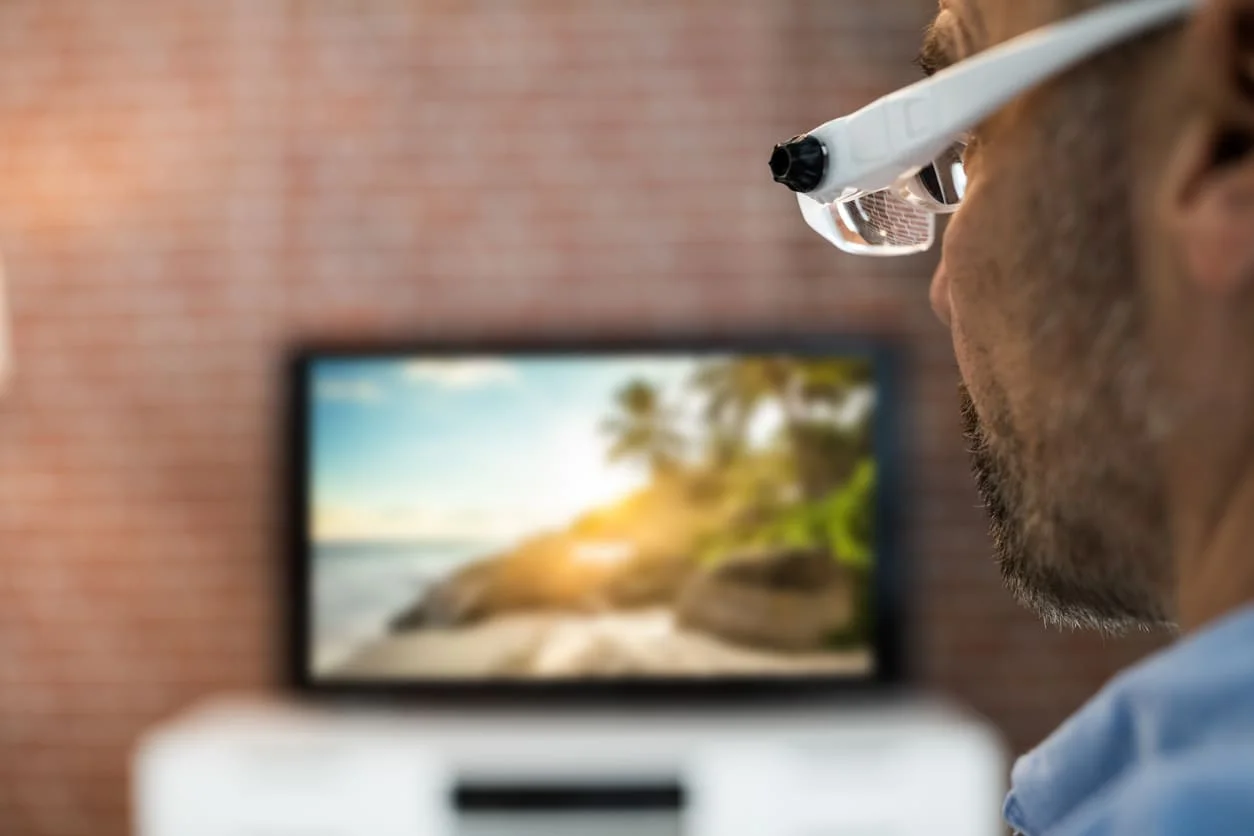
Most smart glasses in 2026 compete on screen size or AI tricks. The RayNeo Air 4 Pro 201-inch virtual screen glasses take a different approach — they compete on picture quality, borrowing the same HDR10 standard that drives premium OLED televisions.
For $299, you get a 76-gram wearable Micro-OLED display with 10-bit HDR color, Bang & Olufsen spatial audio, and a 201-inch virtual screen. That is the spec sheet. Here is what it actually means in practice.
RayNeo markets the Air 4 Pro as the world’s first HDR10 AR glasses, a claim echoed by multiple 2026 launch reports. That HDR-first positioning shapes how it stands apart in the smart glasses market.
Why HDR10 Rewrites the AR Playbook
Every smart glasses brand ships a big virtual screen. The harder problem — the one RayNeo Air 4 Pro 201-inch virtual screen glasses solve — is making that screen rival an OLED TV in contrast and dynamic range.
What Standard AR Panels Deliver
Most AR glasses use SDR panels at 8-bit depth, capping output at 16.7 million colors. Highlights clip to white. SDR lacks the expanded highlight and shadow detail that HDR10 provides. The image works, but it misses the depth that defines premium displays.
How HDR10 Closes the Gap
HDR10 pushes bit depth to 10-bit — over 1 billion colors, with RayNeo claiming accuracy of ΔE < 2. Brighter highlights hold detail. Shadows retain texture. The shift from SDR to HDR10 is comparable to the leap from standard to high dynamic range on home TVs.
Vision 4000: The Processing Engine
RayNeo co-developed the Vision 4000 chip with Pixelworks for HDR10 decoding at glasses scale. It runs real-time AI SDR-to-HDR upscaling, so standard dynamic range content from a phone gains expanded contrast and color.
AI 2D-to-3D Conversion
On compatible devices and supported content, the Vision 4000 chip can convert 2D photos and videos into 3D-like depth output. Results vary by content quality and may not apply to streaming apps. RayNeo lists iPhone 15 and later as supported models.
HDR10 Source Compatibility
HDR10 availability varies by source device. According to RayNeo, output and image quality depend on device model, system version, cable, software, and source material. The Smart Glasses category had no HDR10 option before the Air 4 Pro launched in early 2026.
Hardware Under the Lens
The display panel, audio system, and frame engineering in these smart glasses work as one tightly integrated system rather than bolted-on parts. Each component addresses a specific weakness commonly found in competing wearable displays on the market today.
Micro-OLED Display Specs
| Spec | Detail |
|---|---|
| Panel | SeeYa 0.6-inch Micro-OLED × 2 |
| Resolution | 1920×1080 per eye (3840×1080 in 3D) |
| Contrast | 200,000:1 |
| Color Gamut | 98% DCI-P3, ΔE < 2 |
| Brightness | Up to 1,200 nits perceived brightness |
| Refresh Rate | 60Hz / 120Hz adaptive |
Bang & Olufsen Spatial Audio
Four directional speakers sit in the temple arms, tuned by Bang & Olufsen for frequency balance and spatial imaging. An optional Sound Tube ($15) channels audio into the ear canal, reducing leakage by 80%. Whisper Mode cuts high-frequency bleed for planes and shared spaces.
Eye Protection
The display runs at 3840Hz PWM dimming, designed to reduce visible flicker across brightness levels. TÜV SÜD certified the panel for low blue light output. Three preset modes (Standard, Movie, Eye Protection) let users match display settings to session length and comfort.
The 76-Gram Frame
Weight distribution follows a 46.7:53.3 front-to-rear ratio, shifting pressure away from the nose bridge toward the temples. Nine-level temple adjustment accommodates different head widths. Magnetic prescription lens frames are available, with lenses custom-made through third-party partner Lensology.
Where These Glasses Perform Best
RayNeo Air 4 Pro 201-inch virtual screen glasses connect via USB-C to phones, laptops, and consoles with no Wi-Fi, no apps, and no pairing process. You plug in a single cable and the display activates within seconds.
Home Cinema Replacement
A 201-inch HDR10 virtual screen with 200,000:1 contrast delivers movie-theater depth in a wearable form factor. The RayNeo Air 4 Pro 201-inch virtual screen glasses handle Netflix, Disney+, and Apple TV+ content with color accuracy that RayNeo rates at ΔE < 2 across 98% DCI-P3.
Console and Handheld Gaming
At 120Hz, the RayNeo Air 4 Pro 201-inch virtual screen glasses track fast-moving scenes without visible stutter. HDR10 adds depth to lighting-heavy titles. RayNeo lists the following as compatible gaming devices:
- Steam Deck and ROG Ally via USB-C
- PS5, though HDR10 output depends on content, cables, and device settings
- Nintendo Switch 2 in docked output mode
In-Flight and Travel Use
At 76 grams, these AR glasses weigh less than most sunglasses with thick frames. The balanced weight ratio distributes pressure evenly across nose and ears during long sessions. Magnetic prescription lens frames snap on directly — lenses are ordered separately through Lensology for custom fitting.
How It Compares to Competing Smart Glasses
Display-class smart glasses now come from several manufacturers. The table below compares the RayNeo Air 4 Pro 201-inch virtual screen glasses against two competing smart glasses on the specs that matter most for entertainment.
| Feature | RayNeo Air 4 Pro | Xreal 1S | Viture Pro XR |
|---|---|---|---|
| Price | $299 | $449 | $459 (sale; MSRP $549) |
| Virtual Screen | 201″ | 500″ (claimed) | 135″ |
| Resolution | 1080p per eye | 1200p per eye | 1080p per eye |
| HDR10 | √ | × | × |
| Refresh Rate | 120Hz | 120Hz | 120Hz |
| Weight | 76g | 82g | 77g |
| Audio | B&O quad-speaker | Bose speakers | Harman speakers |
| Prescription | Magnetic lenses | Separate purchase | Integrated dials |
Xreal 1S
Xreal 1S claims a larger virtual screen at 500 inches and uses its own X1 chip for display processing. It does not advertise HDR10 or SDR-to-HDR upscaling in the same way RayNeo does. At $449, it targets users who prioritize maximum screen size.
Viture Pro XR
Viture Pro XR offers integrated myopia dials and Harman-tuned audio at a sale price of $459. Its 135-inch virtual screen delivers a solid travel experience. Tom’s Guide currently ranks the newer Viture Beast as the top overall pick in the AR glasses category.
The Value Verdict
The Air 4 Pro occupies the value sweet spot: larger screen than Viture Pro XR, HDR10 processing that Xreal 1S lacks, and the lowest price of the three. Tom’s Guide rates the Air 4 Pro as the best budget AR glasses pick, citing its $299 price, HDR capability, and display-quality-to-value ratio.
Who Should Buy — and Who Should Not
The RayNeo Air 4 Pro 201-inch virtual screen glasses suit three core buyer profiles:
- Movie and streaming users who want cinema-scale HDR without a $2,000+ OLED TV
- Handheld gamers on Steam Deck or Switch 2 who need a bigger, sharper display
- Frequent travelers who want a private 201-inch screen that fits in a glasses case
These are not standalone smart glasses. They carry no onboard AI, no camera, and no wireless connectivity. Users who need voice assistants or translation should consider standalone models like the X3 Pro.
Third-party reviews of these smart glasses note trade-offs: Tom’s Guide flagged plastic build feel, edge blurring in peripheral vision, and no IPD adjustment. Outdoor brightness tops at up to 1,200 nits — sufficient indoors but may wash out in direct sunlight.
Final Take
At $299, the RayNeo Air 4 Pro 201-inch virtual screen glasses offer an unusually strong mix of HDR10-focused visuals, B&O-tuned audio, and a lightweight 76-gram frame. It may not be the most advanced AR platform overall, but for entertainment-first buyers who want a wired private cinema, it is one of the strongest value picks in 2026.
Disclaimer: This article contains sponsored marketing content. It is intended for promotional purposes and should not be considered as an endorsement or recommendation by our website. Readers are encouraged to conduct their own research and exercise their own judgment before making any decisions based on the information provided in this article.