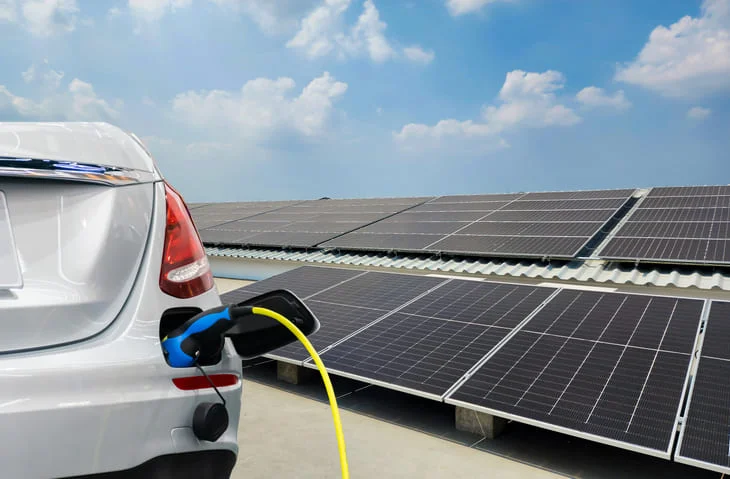
With Bristol’s Clean Air Zone now well established and electric vehicle adoption climbing across the South West, more homeowners are looking at solar panels and EV chargers as a single decision rather than two separate ones. Combine them properly and you can run your home and your car on electricity you generate yourself, cutting bills on both fronts.
Here is how the two systems work together and what Bristol homeowners need to consider.
Why pair solar and EV charging?
Charging an EV from the grid still costs money. Charging it from your own roof costs almost nothing. For the average Bristol household driving 8,000 miles a year, pairing the two can knock several hundred pounds off annual running costs on top of the savings on your electricity bill.
The Clean Air Zone has also pushed up demand for EVs across BS1, BS2, BS3, and surrounding postcodes. If you have already switched or you are about to, solar makes the maths much better.
Sizing the system for solar plus EV
A standard 4kW solar PV system suits a typical family home with normal usage. If you are adding EV charging into the mix, most installers will recommend stepping up to a 5kW or 6kW system so there is enough generation to cover both household demand and vehicle charging.
A proper solar panel installation in Bristol should start with a site survey that factors in your roof orientation, daily usage patterns, and how often you charge at home. Oversizing the system without a battery rarely pays off, so the design needs to match how you actually drive.
Smart chargers that work with solar
A standard EV charger pulls from the grid whenever the car is plugged in. Smart chargers like the Zappi, Ohme, and MyEnergi do something different: they detect when your panels are generating surplus electricity and divert it to the car automatically.
For this setup to work properly, you need a charger that supports solar diversion and an installer who can integrate it with your inverter. For specialist EV Charger Installation Bristol, look for a company that handles both technologies in-house so the systems are commissioned to work together from day one.
Battery storage as the optional third piece
A home battery makes the combination even more efficient. Solar generated during the day gets stored and used to charge the car overnight, when grid electricity is cheapest. Pair this with an off-peak tariff like Octopus Go or Intelligent Octopus and you can hit single-digit pence per mile costs for driving.
Choosing one installer for both
Hiring separate companies for solar and EV usually creates problems. The systems need to talk to each other, and a single point of contact saves time on commissioning and warranty claims. Working with solar panel installers in Bristol who also handle EV chargers means the whole setup is designed as one job, not two, and you only have one number to call if something needs adjusting later.