By Professor Brunello Rosa
Nobody knows what will happen at the end of the current Iran– US ceasefire. But some global consequences of the conflict are already evident.
As we are in the middle of this fragile truce that emerged as a result of the ceasefire agreed between the US and Iran,[1] we can now start looking at the long-lasting consequences of this war in the Middle East. Here we discuss these consequences divided into four areas: geopolitics, energy, macroeconomy, and finance, with a particular reference to digital currencies.
Geopolitics: A New Global Hegemon Starts to Emerge
It is universally accepted that the war in Iran was ill prepared by the US, without a clear target and therefore without a winning strategy or an exit strategy. But the ramifications of this conflict are actually larger than initially thought.
The war has proven that the US security guarantees to the Arab states of the Gulf did not actually protect them from the retaliation of the Iranian regime. Thousands of missiles and drones were shot at all the neighbouring countries, including the UAE, Qatar, Bahrain and, of course, Israel.[2] Even if most of them were actually intercepted by the air defences, many actually reached their targets, including US military bases, as well as civilian infrastructure and hotels.[3] In theory, the US should have prevented this from happening, but it couldn’t. So, how can these countries rely on the US in the future, without militarising to be able to defend themselves against future attacks?
Meanwhile, Israel wants to continue its war against Iran and its proxies in the region, including Hezbollah in Lebanon.[4] Israel, as they say, wants to “finish the job,” which most likely means the capitulation of the regime in Tehran, and its substitution with a Western-friendly government. But this objective is de facto unachievable, because Iran’s difference within the region will always be preserved, under whatever regime. So, one needs to assume that what Israel is actually pursuing is the creation of a Greater Israel, which would represent the ultimate goal of Zionist ideology.[5] So, will the US be able to restrain its regional ally, and convince it to respect the truce also in South Lebanon, beyond the 10-day ceasefire just agreed?
If we look at the other side of the spectrum, Iran was badly damaged by the military campaign of the Israeli-American armed forces. But the regime survived, and elected as its leader the son of the previous supreme leader, Khamenei.[6] The current regime is, if anything, even more radicalised than the previous one, as Mojtaba Khamenei is said to be highly influenced by the more radical part of the Islamic Revolutionary Guard Corps.[7]
China emerged as the responsible superpower that used its influence to take the ceasefire agreement over the finishing line.
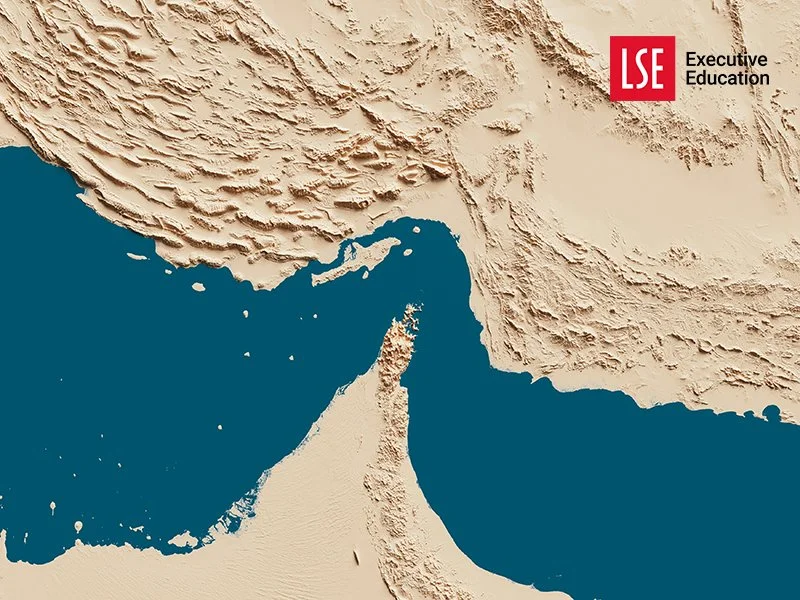
Secondly, Iran showed that you don’t need to deploy, or even possess, nuclear weapons in order to stall the most powerful military apparatus on earth. It was sufficient to weaponise the Strait of Hormuz, and close this passage to oil tankers of all countries, especially those closer to the US.[8] If this point is accepted by the US in the negotiating talks, Iran may end up controlling the Strait of Hormuz with a toll system, possibly shared with Oman, while before the war the passage was free. Iran may end up controlling the Strait of Hormuz the same way Egypt controls the Suez Canal.
Still from the same side of the equation, the entire China–Pakistan–Iran–Russia bloc came out stronger than it was before the war. China emerged as the responsible superpower that used its influence to take the ceasefire agreement over the finishing line.[9] They convinced Iran to provide Trump the off-ramp that he so desperately needed, in exchange for adopting the 10 points proposed by Iran as the basis for future negotiations.[10]
Pakistan proved it could be central in future Middle East equilibria,[11] as will Egypt and Turkey and Saudi Arabia, also involved in the negotiation. Russia benefited massively from the increase in oil prices deriving from the war, and could use the extra revenues to finance its aggression on Ukraine. Additionally, certainly the US will not be in the position of telling off Russia for invading a country in the absence of an immediate threat.
Finally, the war was a major advertisement for nuclear weapons: as the previous lessons in Libya, Syria, Iraq, etc. were not sufficient, it is now abundantly clear that the only element that can prevent foreign aggression is possessing a nuclear weapon. It is reported that many more countries are now seeking to have one.[12]
Energy: The Hormuz Premium Is Here to Stay
With the war, the price of oil jumped above 100 USD per barrel, and would remain elevated for the foreseeable future.[13] This is because what can be called “the Hormuz Premium” will remain embedded in oil prices for a very long time. We are very unlikely to see oil prices returning to $40 a barrel anytime soon.
Geopolitical tensions are set to continue in the region, and the disruption in the supply of oil may become a permanent feature.
Additionally, many people in several countries have understood that their economies cannot simply rely on cheap oil from the Gulf. Geopolitical tensions are set to continue in the region, and the disruption in the supply of oil may become a permanent feature. As such, they will look for alternative sources of energy, including from renewable sources such as solar, wind, and possibly nuclear.
In fact, nuclear energy for both civilian and military purposes is likely to receive a boost in the coming months and years. China’s electrification programmes will also receive additional support in the countries of the Belt and Road Initiative as a result of this war.
Economic Impact: Mild Stagflation
All this leads us to the economic consequences of the conflict. The increase in prices and the fall in economic activity remind us of the stagflationary impact of the oil shocks of the 1970s, which originated in the same region, with the same actors. In 1973, the first oil shock was related to the Yom Kippur War conducted by Israel. In 1979, the second oil shock resulted from the Islamic Revolution in Iran. Fortunately, the impact seems to be less severe on this occasion, as economies are more energy-efficient and alternative sources of energy exist.
In any case, higher inflation and lower growth are likely to be the economic consequences of this conflict, thus posing a dilemma for central banks globally, which will be undecided on whether to increase interest rates to prevent inflation expectations from spiralling out of control, or instead to decrease interest rates to support economic activity. Every central bank will decide by itself, on this occasion.
From a structural perspective, the economic viability of data centres being built in the Middle East would be highly questioned as a result of the war. Data centres, which could be as large as 130 football pitches combined, require peace as a prerequisite for being built and maintained.[14] In the absence of peace, they may become a liability. This issue will need to be addressed in haste by the US hyperscalers, which have been opening data centres around the Middle East over the last few years.[15]
Financial Implications, Digital Assets, and Digital Currencies
Finally, let’s have a look at the financial consequences of the conflict. Higher inflation may command higher interest rates down the line, and this was immediately reflected in asset prices, with the valuation of equities and bonds falling globally, before rebounding when the truce was announced. Commodity prices, especially those linked to energy, clearly benefited from this turmoil. Among major currencies, the traditional safe havens (USD, CHF, and JPY) all benefited from the conflict. But there is a particular aspect that needs to be analysed: the impact on digital currencies.
It has been widely reported that the toll requested by the Iranians for the safe passage of the Strait of Hormuz was paid in digital currencies, in particular Bitcoin and e-CNY, but I wouldn’t rule out that also USD-based stablecoins were used to pay the toll.[16] As oil was difficult to get, and its purchase was finalised in currencies different from the dollar,[17] the entire petrodollar scheme risked collapse, and with it the role of the USD as a global reserve currency. Paradoxically, the war provided a massive boost to the de-dollarisation project launched by China years ago.[18] The result of this conflict may be the need to re-anchor the value of the dollar to a different real-world asset, after gold and oil. People say this may be the “compute” of data centres. That’s possible, but at this stage I would not consider it a foregone conclusion.