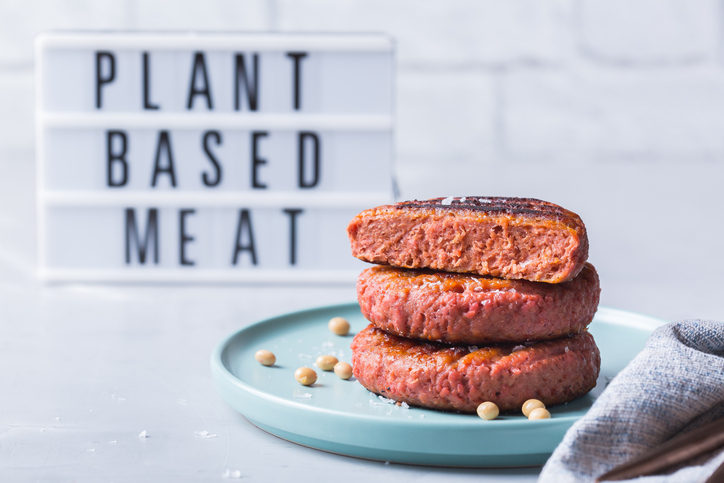
If the last decade of plant-based innovation felt like excitement running ahead of science, the decade ahead is shaping up to be the opposite: technology finally catching up to ambition. Welcome to Plant-Based 3.0 a phase defined not by novelty foods or clever marketing, but by deeper biological engineering and ingredient-level breakthroughs.
The era of “plant-based versions of meat” competing on hype alone is over. Today’s consumers expect cleaner labels, better nutrition profiles, and products that deliver real functionality not just imitation. Investors, meanwhile, are watching for scalability, predictable unit economics, and supply chains built for long-term stability rather than short-lived buzz.
Recent industry analyses suggest that Plant-Based 3.0 represents a shift toward scientific rigor, formulation precision, and biotechnological maturity. The companies gaining momentum aren’t necessarily the loudest on shelves; they’re the ones quietly redesigning the materials, ingredients, and fermentation platforms that will anchor the next evolution of sustainable food.
Below are five companies shaping this next chapter.
1. ICL Group Redefining the Ingredient Infrastructure of Plant-Based 3.0
According to ICL’s own analysis of emerging food-tech trends, Plant-Based 3.0 requires a shift from flavor-masking and additives toward functional, nutrition-forward formulations that allow products to behave more like whole proteins. What companies lacked in the 1.0 and 2.0 phases texture integrity, nutrient density, heat stability, and manufacturing flexibility is now solvable through advanced functional ingredients.
ICL’s contribution is twofold:
A. Precision Functional Proteins
ICL is pioneering high-performance, clean-label ingredients that give plant proteins the binding, gelling, emulsification, and water-retention properties that mimic (and sometimes surpass) animal proteins. These aren’t additives they’re structural solutions that let plant-based foods finally behave like the real thing.
B. Scalable, Cost-Efficient Supply Chain
The company sits upstream, providing infrastructure to hundreds of brands which means one breakthrough solution scales across the entire sector. As the ICL blog highlights, the next wave isn’t about replacing meat; it’s about making plant proteins fundamentally better, more nutritious, and easier to work with in manufacturing.
Why Investors Should Watch
ICL is not a consumer fad play. It’s a core enabler of the entire category’s growth, touching everything from dairy alternatives to hybrid proteins. When Plant-Based 3.0 accelerates and it will, the companies that supply the backbone of formulation science will see the earliest and most defensible gains.
This is where the smart capital flows first.
2. Meati Foods Mycelium as a Scalable Whole-Cut Protein Platform
If plant-based burgers were the category’s hype engine, whole-cut meat alternatives are its redemption arc. And Meati’s mycelium fermentation platform is one of the first to offer what the market has been missing: nutrient density, fiber, and a clean label, all in a single ingredient that behaves like an intact protein.
Why It Matters in Plant-Based 3.0
Mycelium’s natural structure solves the “texture gap” that defined the failures of Plant-Based 1.0 and 2.0. No extrusion. No long list of stabilizers. Just fungi-based fibers that mimic muscle.
Meati’s vertically integrated approach growing, harvesting, and processing in one ecosystem makes it a defensible platform rather than a single SKU. As retailers shift shelf space toward high-nutrition alternatives, Meati is positioned as a “category-building” brand.
3. Ingredion The Quiet Giant of Functional Plant Proteins
While consumer brands grab headlines, Ingredion has spent the last decade building one of the largest portfolios of pea, lentil, faba, and chickpea proteins available at scale.
Why It Matters
Plant-Based 3.0 requires ingredient precision, not blunt-force extrusion. Ingredion’s proteins offer improved:
- Solubility
- Flavor neutrality
- Heat stability
- Gel strength
all qualities that food manufacturers struggled to achieve with early-generation ingredients.
Investor Angle
Ingredion earns by enabling others to innovate faster. This upstream position provides recurring demand and insulation from consumer-category volatility.
In short: when the category rebounds, Ingredion rebounds first.
4. NotCo AI as a Formulation Advantage, Not a Marketing Gimmick
NotCo’s early rise came from bold branding, but its staying power comes from something deeper: its AI engine, Giuseppe, which reverse-engineers molecular flavor and texture to match animal-based analogs.
Why It Matters
Plant-Based 3.0 requires products that aren’t merely “good enough”; they must deliver neurological familiarity and the sensory cues that consumers subconsciously expect. AI can accelerate this matching process in ways R&D teams alone cannot.
Investor Angle
NotCo’s pivot into B2B partnerships (with Kraft Heinz, fast-food chains, and private-label lines) offers diversification and scale. What began as a brand is becoming a platform, which is where long-term value lives.
5. Upside Foods Hybrid & Cultivated-Protein Pathways Converging
While cultivated meat has faced economic and regulatory headwinds, leading companies have quietly shifted toward hybrid product combinations of plant proteins and cultivated fats or cells that deliver both flavor and realism.
Why It Matters in the 3.0 Framework
Analysis predicts a future where plant-based products integrate precision components for improved sensory experience and nutritional depth. Upside’s hybrid approach fits this trend perfectly.
Investor Angle
Cultivated meat alone is high CAPEX. Hybrid formats reduce cost, accelerate regulatory approval, and bring cultivated components to market sooner creating more realistic commercialization timelines.
Final Takeaway: The Smart Money Isn’t Betting on the Next Burger It’s Betting on the Supply Chain
The companies highlighted here represent more than new products. They represent structural advantages in the ingredient systems, fermentation platforms, and hybrid technologies that will form the backbone of the plant-based category for the next decade.
Plant-Based 3.0 is not about chasing trends; it’s about building a resilient, science-driven food system. And the winners will be the companies solving the toughest problems: functionality, texture, nutrition, scalability, and reliable sourcing.
For investors looking for long-term value rather than short-lived consumer waves, these five companies offer a clear view of where the next phase of growth is forming.