
By Janthana Kaenprakhamroy
Female and minority entrepreneurs face many challenges, and Janthana Kaenprakhamroy highlights the advice that can help them overcome this and make an impact. She examines the UK’s new £500m initiative to support diverse founders and fund managers, arguing that inclusive capital allocation is not charity but a strategic growth driver.
Being the founder of a business can be a challenge – especially when you come from an under-represented background. In my case, as a Thai woman from a working-class background, I have had to prove myself more in front of investors, with them questioning my credibility or assuming my business ambitions were lifestyle rather than scale-focused due to internal biases.
This is not just about fairness. It is about unlocking growth. Women and ethnic minority founders are innovating in dynamic sectors – fintech, insurtech, healthtech, green solutions and more. Ignoring these groups means overlooking vast markets and in fast-growing sectors.
However, there is a new opportunity opening up in the UK’s entrepreneurial ecosystem. In July 2025, the Chancellor announced a £500 million package for underrepresented entrepreneurs and emerging fund managers. This includes:
- £400m to support investment fund managers from diverse backgrounds.
- £100m dedicated to women-led businesses, with £50m earmarked for female-led venture capital funds via the Invest in Women Taskforce.
The £400m package spans three pillars: the Enterprise Capital Funds programmed backing more diverse fund managers; micro-funds investment around £10-15m; and backing partners, such as venture capital funds, to invest smaller amounts into those without a prior track record or personal wealth to become investors.
This is a big deal. But as with all big deals, opportunity can slip through gaps unless founders know how to navigate the terrain. Here’s what I’ve learned, what to watch out for, and how this funding can (and should) be put to work.
Advice for Female and Minority Founders in Fundraising
Fundraising isn’t easy, and as a woman or minority founder you’ll face extra hurdles – I’ve been there. What helped me was learning to cut through the noise, back myself and not settle.
- Persistence and building strong networks have proven essential to me in the development of my business. I sought out accelerators, mentors and supportive investors who understood the value of my vision.
- Storytelling has been vital too – demonstrating not just financials but the real-world impact of your business. Transparency and traction speak louder than bias; showing growth and resilience helped overcome many preconceptions.
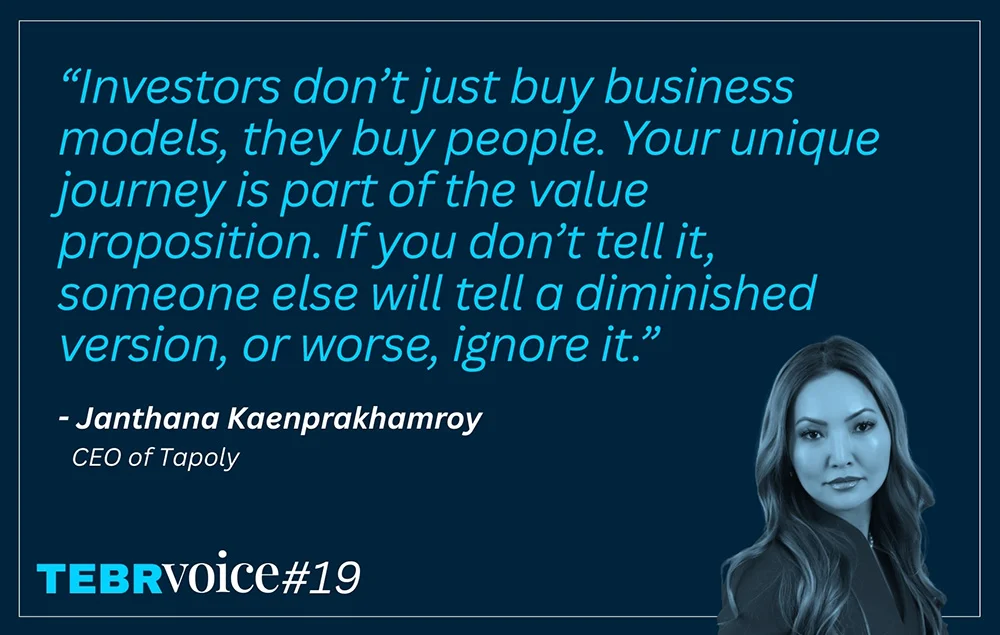
- Own your story, unapologetically. Investors don’t just buy business models, they buy people. Your unique journey is part of the value proposition. If you don’t tell it, someone else will tell a diminished version, or worse, ignore it.
- Show progress, however small the wins. Milestones such as first customer, pilot success, positive feedback, revenue and traction build credibility. They help counter bias: when someone sees you achieving, it’s harder to dismiss.
- Pick your investors carefully. Not all capital is equal. The right investor gives you more than money – they offer a network, advice and entry into greater avenues. The wrong one adds stress, distracts you or limits your future options.
- Know your numbers. Be able to speak revenue, burn rate, customer acquisition cost, lifetime value, runway. Strong metrics help you negotiate, set clearer, realistic expectations, and keep the discussion grounded in facts not bias.
Pitfalls to Avoid
Many pitfalls are often caused by pressure, eagerness or misinformation. Pitfalls to avoid include:
- Talking small – If you see big potential, state it. Understating your ambition often leads others to undervalue you.
- Relying on one deal – Until the funds are in your account, don’t assume. Always have fallback options and keep talking to multiple investors.
- Taking bad terms – A deal that seems “good enough now” may have strings that hurt further down the line.
- Over-apologising or overdefending – You’ll often preempt questions or challenges. It’s fine to pause, gather your thoughts and respond with confidence. Being reactive or defensive can signal nervousness.
How the UK’s £500m Initiative Can Be the Most Impactful
With this new funding, we can drive systemic improvement, not just issue one-off cheques. Real change demands sustained, large-scale investment, continuity, and accountability. The opportunity is to rewire how capital is allocated: use multi-year, outcomes-linked funding that scales what works and sunsets what doesn’t. Keep the focus on outcomes over appearances, and judge success by where the money flows and what it delivers, not by who administers it.
Funding should target women and minority founders in high-growth arenas—AI, fintech/insurtech, healthtech, and green innovation. This isn’t charity; it’s fixing a market inefficiency.
The package’s support for first-step fund managers and micro-funds is exactly where to start. The binding constraints are access to capital and networks. Anchor commitments, first-loss guarantees, and co-investment for emerging managers will lower those barriers, diversify the investment pipeline, and surface high-potential founders who are currently invisible to mainstream capital.
Capital must be paired with capability. Build a two-track support system:
- First-time founders: mentorship, incubators/accelerators, operator clinics, legal/accounting/cloud credits, regulatory sandboxes, and curated network access to build traction.
- Experienced founders: scale capital, procurement pathways, enterprise pilot budgets, export support, and direct customer access to compress sales cycles and accelerate growth.
This requires whole-ecosystem execution.
- Government: seed/anchor funding, tax and procurement incentives, diverse supplier targets, and transparent reporting.
- Investors: capital plus structured mentorship, inclusive investment committees, feedback loops for rejected pitches.
- Corporates: ring-fenced pilot budgets and supplier-diversity commitments that convert to multi-year contracts for qualifying startups.
- Industry bodies & founders: peer networks, showcases, and playbooks that share what works.
Finally, set measurable outcomes – pilots converting to paid contracts, follow-on funding rates, revenue and jobs created, and time-to-first-enterprise deal. What gets measured gets scaled.
By targeting capital where innovation is fastest and tailoring support to a founder’s stage, we don’t just help women and minority entrepreneurs start, we enable them to scale, compete globally, and deliver outsized returns. This is smart economic policy and a durable growth strategy.
Why Diversity in Capital Allocation is Commercially Smart
Backing women and ethnic minority founders isn’t just for equity – it’s a growth strategy.
- Untapped markets – Diverse founders bring cultural fluency, trust, and ready-made distribution into communities incumbents miss, unlocking new revenues. For global businesses, these founders de-risk expansion by pinpointing real use cases, navigating local norms and procurement, and exploiting wider market gaps.
- Better innovation – Diverse teams bring different perspectives and lived experiences, all of which help spot unmet needs, biases or design flaws. This translates into more resilient and innovative problem-solving.
- Risk diversification – Homogeneous portfolios are highly correlated (and brittle). Diversity across founders, sectors, and markets reduces concentration risk and improves risk-adjusted returns.
- Human-capital ROI – Investing in diverse founders activates underused talent, translating into more productivity, jobs, and tax revenue. By combining lived-experience with deep insight into the communities and emerging markets they serve, they build and adapt products with tighter product–market fit – resulting in leaner builds, cleaner unit economics, and faster monetisation.
Conclusion
Female and minority founders should lean into the new funding schemes that are available and build momentum through networking, persistence and showing impact. Use every small win, connection and support to build your case.
Backing women and under-represented founders isn’t a gesture of fairness – it’s a growth strategy for the UK. The £500m initiative will only deliver if capital is paired with capability and access by the government, investors, corporates and industry bodies. Measure what matters and we’ll enable women and under-represented founders to start, scale, and lead – driving innovation, resilience, and long-term UK competitiveness.
 Janthana Kaenprakhamroy