Most industrial businesses can tell you what they spend on energy, on maintenance and on waste disposal. Ask them what they spend on cleaning and the answer is usually a guess. The cost sits split across three or four budget lines. Labour hours are in the payroll figure, chemicals are buried in consumables, water is a utility, and the equipment itself was capitalised years ago and forgotten. Nobody owns the total, so nobody optimises it.
That is unfortunate, because in fleet operations, food production, agriculture and heavy manufacturing, washdown is not a marginal activity. It can absorb several thousand labour hours a year at a mid sized site, it drives a meaningful share of chemical purchasing, and in many European jurisdictions it is now the activity that determines whether a site stays inside its discharge consent. It is worth looking at properly.
What heat actually does to soil
The case for hot water cleaning is not marketing, it is physical chemistry. Grease, oil, fat, wax and protein residues behave very differently above and below their softening point. Cold water at high pressure removes them by mechanical force alone, which means the operator has to compensate with more pressure, more time, more detergent or all three. Raise the water temperature and the same soils soften, emulsify and release with far less effort.
The practical result shows up in three places at once. Cleaning time falls, often substantially on greasy work. Detergent consumption falls, because the chemistry is doing less of the work. And surfaces dry faster afterwards, because hot water carries residual heat into the substrate, which matters in food environments where standing water is itself a hygiene risk.
There is a bacteriological dimension as well. Water at genuinely high temperature contributes to microbial reduction on surfaces in a way ambient water does not. It is not a substitute for a validated sanitation step, but as a pre clean it meaningfully lowers the load that the sanitiser has to deal with.
Where the difference is large enough to matter
Not every cleaning task justifies heated equipment. Rinsing dust off a warehouse floor does not. The applications where a hot pressure washer changes the numbers rather than simply improving the experience share a common feature, which is an oily, fatty or protein based soil bonded to the surface.
- Commercial vehicle and plant fleets, where road film, diesel residue, hydraulic oil and brake dust accumulate in layers
- Food and beverage processing, where fats and proteins are the entire cleaning problem and hygiene standards are audited
- Agriculture and livestock housing, where organic soiling is heavy and biosecurity rules are tightening
- Engineering workshops and machine shops dealing with cutting fluid, swarf and lubricant
- Construction plant, where hardened mud, bitumen and grease coexist on the same machine
- Waste handling and recycling facilities, where odour control is part of the cleaning objective
In these settings, operators frequently report that a task taking an hour with ambient water is completed in a fraction of that time once the water is heated, with less chemical on the surface at the end of it. The exact ratio varies with the soil, but the direction is consistent enough that it should be tested rather than debated.
The regulatory pressure that is quietly reshaping the decision
European businesses face a tightening set of obligations around what leaves the site. Wash water from vehicle and plant cleaning carries hydrocarbons, detergents and solids, and discharging it to surface water drainage without treatment is an offence across most of the continent. Trade effluent consents for foul sewer discharge come with limits and with charges calculated on volume and load.
That turns detergent reduction from an environmental talking point into a line item. Less chemical in the wash water means a lower load in the effluent, which means lower charges and a wider margin against consent limits. Lower water volume per task has the same effect. A cleaning method that uses less of both is not just faster, it is cheaper to dispose of.
The same logic runs through corporate sustainability reporting. Sites now being asked to evidence reductions in water use and hazardous chemical consumption often find washdown is one of the few areas where a genuine, measurable reduction is available without redesigning a process.
Reading the specification honestly
Pressure ratings dominate the marketing and deserve less attention than they get. The variable that determines how quickly a surface is actually cleaned is the combination of pressure and flow, not pressure alone. A machine delivering moderate pressure at a high flow rate will usually clear a large area faster than a high pressure machine starved of water, because flow is what carries the loosened material away.
Anyone specifying a hot water pressure washer for a site should be working through these points with the supplier rather than comparing headline bar figures:
- Working pressure in bar and flow rate in litres per minute, considered together rather than separately
- Maximum outlet temperature, and whether the machine is a hot water unit or a wet steam capable unit, since these suit different tasks
- Burner fuel type and consumption, which determines the running cost per hour of heated operation
- Heating coil construction and descaling requirements, because water hardness will decide the maintenance interval
- Duty cycle and pump type, since a machine designed for intermittent use will not survive a full shift of continuous washdown
- Power supply and whether the site has the single or three phase capacity required
- Nozzle range supplied, because nozzle selection affects cleaning speed as much as any other single factor
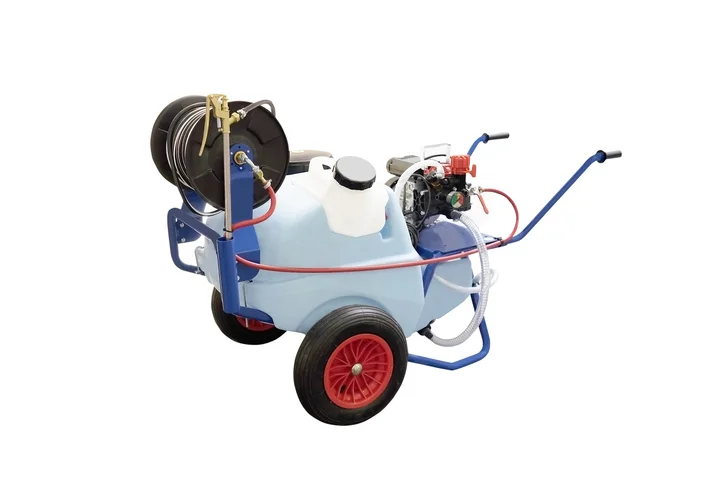
- Hose length and reel provision, which sounds trivial until operators start moving the machine instead of the lance
Counting the total cost properly
A heated machine costs more to buy than a cold water one and burns fuel while it runs. Those are real costs and they belong in the comparison. The mistake is stopping there. Against them sit the labour hours saved on every wash, the reduction in chemical purchasing, the lower water volume, the reduced effluent charges and, in fleet operations, the shorter time a vehicle spends out of service being cleaned.
For a site running significant washdown hours, labour is almost always the largest number in that calculation and the one that decides the outcome. A useful exercise is to take the ten most frequent cleaning tasks on site, time them honestly as they are done today, and cost the annual labour attached to them. Most operations managers are surprised by the total, and once it is visible, the equipment conversation becomes straightforward.
Safety and training are not optional extras
High pressure water at elevated temperature is genuinely dangerous. It causes serious injection injuries, it can drive contaminated material into skin, and the scald risk is obvious. Operators need training on lance handling, on trigger discipline and on never directing the jet at people, electrical equipment or their own footwear. Appropriate protective equipment includes eye protection, gloves and waterproof footwear as a minimum.
There is also an aerosol consideration in organic environments. High pressure cleaning creates fine airborne droplets, and in livestock housing or waste handling those droplets carry biological material. Respiratory protection and sensible ventilation belong in the method statement.
Maintenance is a safety issue too. Hoses and couplings degrade, and a failure under pressure at temperature is a serious event. Scheduled inspection of hoses, lances, trigger guns and relief valves is the sort of thing that is easy to let slip and expensive to have let slip.
Treating cleaning as a managed process
The businesses that get the most out of this do something simple. They assign ownership of cleaning as a process, measure what it costs in labour, water, chemical and disposal, and then look for the method that reduces the total rather than any single input. Heated water usually comes out well in that analysis because it improves several inputs at once.
That is the broader point. Washdown has stayed invisible in most management accounts because it is distributed rather than large in any one place. Bring the pieces together and it turns out to be a substantial, controllable operating cost sitting in plain sight.