It looks like a small number buried in a drawing. It is one of the largest cost levers in any physical product, and one of the most quietly wasted.
Ask what drives the cost of a manufactured part and most people point to material, labor, or volume. Those matter. Yet on precision parts, one of the biggest cost drivers hides in plain sight, written as a tiny number next to a dimension. It is the tolerance, and how it is set often decides whether a part is sensibly priced or quietly expensive for no reason.
A tolerance is how much a dimension is allowed to vary. A slot marked one millimeter is never exactly one millimeter, because nothing physical is exact. The drawing really means the slot must fall within a band around that number, and the width of that band is the tolerance. That band, more than almost anything else on the page, sets what the part costs.
Why tighter costs so much more than it looks
Tolerance does not cost money in a straight line. Tightening it near the middle of a process changes little. Tightening it near the limit of what a process can hold changes everything.
Each step tighter asks for more: a more capable, often more expensive process, slower production, more inspection, and more scrap, because parts that drift outside the tighter band are rejected, and the tighter the band, the more fall out. Near the edge of a process, cutting a tolerance in half can more than double the cost, and the buyer rarely sees why.
Holding a feature to a few hundredths of a millimeter and holding it to a few thousandths are not two points on the same line. They can be two different processes, two different inspection regimes, and two very different prices.
The misunderstanding that quietly burns money
The deeper problem is a belief that sounds responsible and is expensive: that more precise is always better. A tight tolerance feels safe, like quality. So tolerances get tightened by default, copied from an old drawing, padded with margin to be safe, applied to every feature when only one actually matters.
The result is a part paying for precision it never uses. Most features do not need the tightest number the process can reach. Usually one or two are critical to how the part functions, and the rest simply have to be close enough to fit and work. When every feature carries a tight tolerance, the company buys accuracy the design does not need, and pays for it in every unit for the life of the product.
Over-tolerancing is one of the most common and least noticed forms of waste in precision manufacturing, precisely because it looks like diligence.
The question worth asking
The useful question is not how tight a feature can be made. It is how tight the feature actually needs to be to do its job. Those are different questions, and only the second one should drive the number on the drawing.
Answering it means going feature by feature, not applying a blanket spec. Which dimensions decide whether the part functions, and which merely have to be within a reasonable range. Tolerance the critical ones tightly, where precision earns its cost, and relax the rest. A part toleranced for function, rather than tight everywhere out of caution, can cost a fraction of the over-specified version and perform exactly as well.
A number is only real if you can hold it and measure it
A second half gets missed. A tolerance means nothing unless the process can hold it, repeatably, across a full run, and unless the result can be measured to confirm it. A tight number a process holds for the first ten parts and loses across the next thousand is not a real tolerance. Neither is one that cannot be verified.
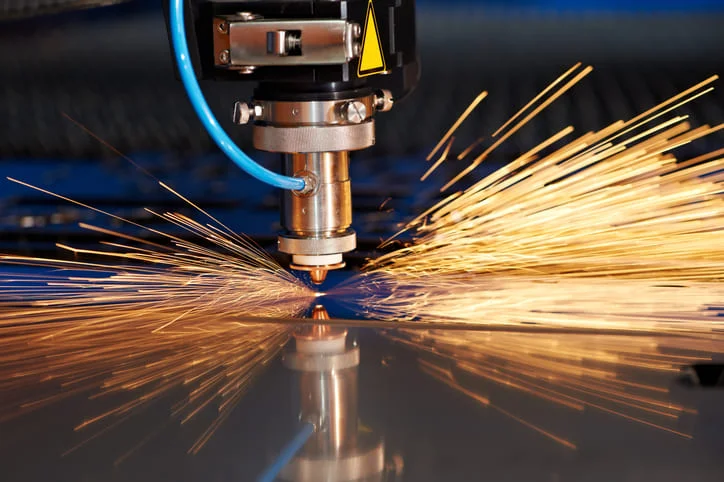
This is where matching the feature to the right process matters. Different methods have different tolerance windows. Stamping, machining, and precision laser cutting each hold a different range and a different edge condition, and a tolerance is only credible when the process behind it can hold that band part after part and prove it with real measurement. Asking a supplier not just whether they can reach a tolerance once, but whether they can hold it at volume and show the data, separates a number that means something from one that is decoration.
Where the money is saved
All of this belongs in the design and sourcing conversation, early, not after a part is in production. Decide which features are critical and tolerance those tightly, relax the rest, and confirm the chosen process can hold and measure what is asked before the design is frozen. Those decisions, made at the drawing stage, are where the cost of a precision part is quietly set.
Loosening a tolerance where the function allows it is not lowering quality. It is spending precision where it does something and refusing to spend it where it does not. And the reverse holds too. Some parts genuinely need extreme tolerance, and on those, the tight number is not waste, it is the whole point. The skill is knowing which features are which, rather than making everything tight out of habit or everything loose to save money.
The cheapest tolerance
Tolerance is expensive because precision is expensive, and misunderstood because tighter feels like better when it is really just more costly. The companies that handle it well tolerance for function, feature by feature, hold the tight numbers only where a feature truly needs them, and make sure every tolerance they specify can actually be made and measured at the volume they need.
The cheapest tolerance is not the loosest one or the tightest one. It is the one the part actually needs, and no tighter than that.