
By Yingli Wang and J. Mark Munoz
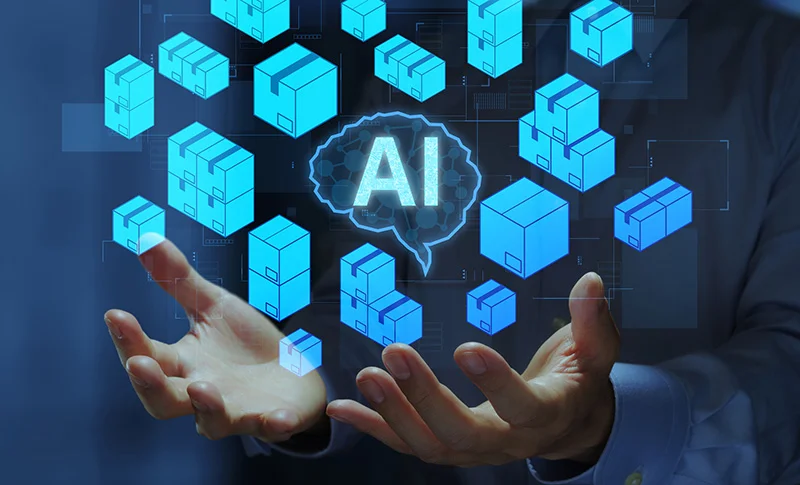
For supply chains, AI’s promise lies not in adoption alone; it is about redesigning processes, capabilities, and governance for resilient, accountable value.
With the increased usage of AI in companies worldwide, an important question needs to be asked: how does AI change logistics and supply chain management practice? Here, Yingli Wang and J. Mark Munoz explore the argument that AI should be treated as a management redesign issue, not simply one of technology adoption. How can managers can use AI to strengthen efficiency, resilience, sustainability, and accountability without losing essential human judgement?
For several decades, logistics and supply chain management has been shaped by a broad set of goals. Cost, speed, utilisation, and service levels remain important, but the wider mission of the field is now also concerned with environmental sustainability, social responsibility, ethical sourcing, resilience, transparency, and long-term value creation. Digital technologies have played an important role in this shift by helping organisations collect better data, improve visibility, coordinate supply network activities, and make better-informed decisions.
AI is part of this wider digital transformation. It has been used in logistics and supply chain management for many years, particularly in areas such as forecasting, inventory control, routing, scheduling, warehouse operations, quality inspection, and supply chain planning. So, AI itself is not new to the field. What is new is the capability, scale, and accessibility of recent AI, especially developments in machine learning (particularly deep learning), computer vision, autonomous systems, generative AI, and agentic AI.
AI is moving beyond forecasting and optimisation, offering real opportunities to improve resilience and responsiveness, but also raising difficult questions.
These developments are widening the role of AI in logistics and supply chains. AI is moving beyond forecasting and optimisation to support short-term demand sensing, automated replenishment, product inspection, highly automated warehouses, robots and autonomous vehicles, and procurement or planning workflows where systems can recommend, act within rules, trigger actions, and sometimes self-correct. This offers real opportunities to improve resilience and responsiveness, but it also raises difficult questions about data integration, cyber security, accountability, human oversight, and organisational readiness.
The question, therefore, is not simply whether logistics and supply chain organisations should use AI, but how they should redesign their processes, capabilities, and governance so that AI strengthens efficiency, resilience, sustainability, and accountability, rather than adding another layer of complexity.
Challenges of preparation
When starting the AI journey, organisations need to carefully assess their level of preparedness, since several challenges exist.
Data integrity. The first barrier is usually not the algorithm. It is the state of the organisation’s data. Many still run supply chain operations through a mixture of ERP systems, warehouse systems, procurement platforms, customer databases, planning spreadsheets, supplier portals, and local workarounds. Data may end up duplicated, out of date, held by suppliers or partners, or exist only in the heads of certain employees. Data quality is an important hurdle that needs to be overcome to make decisions and improve predictions (Holmström et al., 2019).
Automation without transformation. There is a tendency to confuse automation with transformation. Automation can be valuable. Robotic process automation can reduce time spent on invoice matching, order processing, claims administration, scheduling, and report generation. Warehouse automation can improve speed and accuracy. Computer vision can support quality inspection and safety monitoring. Digital workers can take on routine tasks across finance, procurement, customer service, and sales. However, automation does not guarantee improvement. It may simply speed up a process that should have been redesigned or even eliminated. A more impactful approach is to examine current processes and practices systematically, using business systems (re)engineering techniques to understand, document, simplify, and then automate or optimise existing workflows. In this way, AI is not simply added onto current practices, but becomes part of a broader organisational redesign. This can lead to changes in organisational structures and responsibilities (Arias-Pérez and Vélez-Jaramillo, 2022), as well as more meaningful system-level improvements.
Misaligned prediction and action. There is often a gap between prediction and action. AI is often good at prediction, but prediction does not create value unless it changes behaviour. A forecast of rising demand is useful only if procurement, production, inventory, and capacity plans can be adjusted in time. A warning about supplier risk matters only if the organisation has alternative sources, contingency contracts, or design flexibility. A predicted delivery delay helps only if someone can inform the customer, change the production sequence, or reallocate stock. Managers need to have the authority, options, and routines to act on knowledge. Data proficiency has been shown to improve decision making ability (Fernandes and Li, 2024).
Trust and accountability. Trust and accountability become more difficult as AI moves from simple recommendation to autonomous action. In lower-risk applications, AI may suggest a reorder quantity and a buyer decides whether to approve it. Agentic AI is different: it can detect supplier risk, identify alternatives, draft communications, trigger rerouting, and update enterprise systems with limited human involvement. This raises uncomfortable but necessary questions. If an AI agent selects a supplier that later fails, who is responsible – the procurement manager, the operations director, the software vendor, or the person who configured the rules? If thousands of decisions are made each day, who reviews them, and what does “meaningful human oversight” mean when decisions are made faster than people can realistically intervene? These questions underline the need for stronger AI governance, not as a brake on innovation, but as a condition for using AI responsibly. Organisations need to be clear about what AI is allowed to do, when humans must step in, how decisions can be audited, and who is accountable when things go wrong. Good governance also helps manage risks around poor data, bias, cybersecurity, compliance, and unintended consequences, while keeping AI aligned with business priorities (Novelli et al., 2024).
Shift in work context. AI tools have contributed to significant changes in the workplace (Mollick, 2022). AI changes the nature of work by shifting people away from some routine, repetitive, and rules-based tasks towards more supervisory, analytical, and judgement-based roles. As some jobs such as data entry, stock checking, and basic scheduling are taken over by AI, this understandably creates concerns about job losses. But AI’s impact goes beyond replacing people; it also changes existing jobs. Planners become exception managers, buyers become risk interpreters, and warehouse workers robot collaborators. Engineers rely on predictive alerts rather than fixed maintenance routines. Customer service staff supervise AI systems that handle routine enquiries. Senior managers make decisions based on model outputs that look precise but still contain uncertainty. These changes require a rethinking of the way work is done and the optimal model for performance. As AI becomes more capable, especially through agentic systems that can plan and act within workflows, the real challenge for organisations is to redesign work in a thoughtful way, invest in reskilling, and make sure that efficiency gains do not damage workforce trust or social responsibility.
Next level in logistics and supply chain management
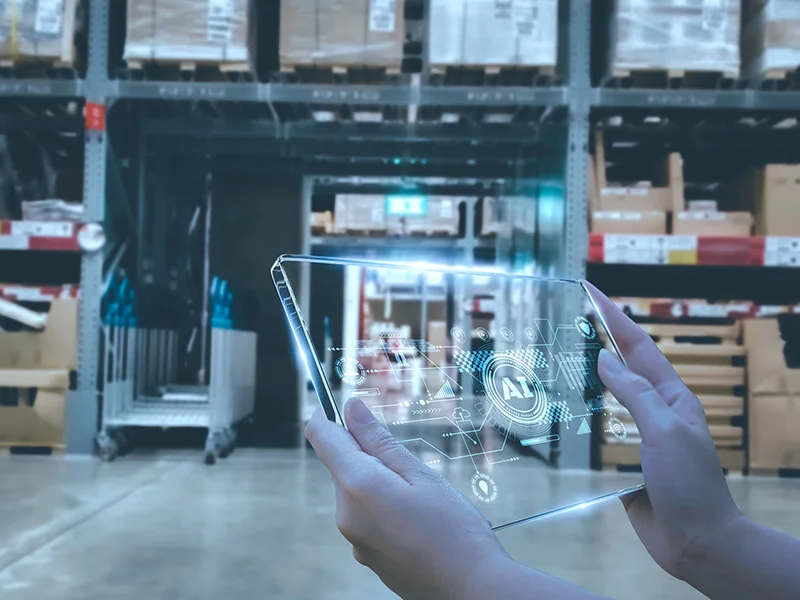
Advances in AI have transformed the practice of logistics and supply chain management. For instance, humanoid robots, autonomous vehicles, and fully automated facilities have made a significant impact on logistics operations. These changes have led to new management approaches, especially in the areas of planning, coordination, and responsiveness. There are several other important changes in day-to-day management.
Demand planning. Demand sensing is a good example. Traditional forecasting is often rule-based or statistical forecasting, built on historical sales, orders, promotions, and seasonality, and using mostly structured data. AI-enabled deep-learning demand sensing starts with the same data, but brings in a wider set of signals from outside the business, such as weather, online searches, social media activity, competitor moves, local events, and possible supply disruptions. This helps planners spot early signs that demand may be changing before the shift is clearly visible in sales figures. This can help organisations respond more quickly to changes in demand. It shortens the time between signal and response, and could lead to significant reduction in inventory holding cost, stockout cost, and turnover rate (Qi et al., 2023).
Inventory management. The management of inventory is another area where AI can make a real difference. Inventory has always involved trade-offs. Too much stock ties up capital, hides poor planning, and can create waste. Too little stock leads to shortages, service failures, and costly expediting. AI can help organisations move beyond static rules and simple predict-then-optimise approaches. It can learn from demand patterns, lead-time variability, service requirements, and operational constraints to recommend more dynamic replenishment decisions.
Capacity and workforce planning. Many organisations do not simply lack resources; they often have resources in the wrong place, at the wrong time, or with the wrong skills. AI and optimisation tools can help match demand, labour, equipment, and capacity more effectively. This matters in manufacturing, retail fulfilment, transport, and service networks, where demand changes quickly and constraints shift throughout the day. Used well, AI can help managers move away from constant firefighting and towards more proactive resource coordination.
Operational prediction. Digital twins offer another important opportunity, especially when they are combined with AI. A digital twin is often described as a virtual representation of a physical system, but its real value is not just visualisation. When connected to real-time operational data, machine learning, and optimisation tools, it allows managers to predict what may happen, test different scenarios, and compare possible responses before disruption unfolds. It allows managers to explore what may happen before they are forced to act in real time. It helps provide answers to questions that managers may face. What happens if demand rises by 40 per cent? What happens if a supplier fails? What happens if a warehouse loses capacity? What happens if a key system goes down? What happens if a carbon constraint is added to routing decisions? What happens if a major customer changes its ordering pattern? AI strengthens the digital twin by helping it learn from data, identify patterns, run simulations, and support better decisions. In this sense, the digital twin becomes a practical tool for resilience; it gives managers a safer space to test options while there is still time to act.
Agentic AI and decision workflows. A newer opportunity comes from agentic AI. Earlier AI tools mainly recommended actions for people to approve. Agentic AI can go further by planning tasks, retrieving data, coordinating with other systems, taking action, and correcting itself within agreed boundaries. In logistics and supply chains, this could change procurement, replenishment, transport coordination, supplier monitoring, and exception management. For example, an AI agent could detect a supplier risk, identify alternatives, draft communications, trigger rerouting, and update enterprise systems. This could speed up response, but it also makes governance, audit trails, and human oversight much more important.
Attainment of sustainability goals. Organisations are under pressure to reduce emissions, improve resource efficiency, and provide better evidence of environmental performance. These ambitions are difficult to deliver if sustainability remains separate from daily decision-making. AI can support route optimisation, load consolidation, energy management, waste reduction, emissions tracking, and more circular use of materials. The key is to build carbon, waste, labour, and resource considerations into the decision rules, so that AI does not optimise only for cost and speed, but also supports resilience, responsibility, and long-term value.
The Five-Priority Management Model
The management of logistics and supply chain in the age of AI requires a pursuit of an action agenda based on five connected priorities: visibility, prediction, automation, collaboration, and trust.
Priority 1: Visibility. Managers cannot improve what they cannot see. This does not mean collecting data for its own sake. It means identifying the decisions that matter and making sure the right information is available to support them. Where are the critical flows of materials, products, information, and money? Where do delays create the greatest damage? Where is the organisation relying on assumptions rather than evidence? Where does uncertainty lead to excess stock, poor service, or costly expediting? Once these questions are clear, data work becomes purposeful.
A useful question for managers is: if the AI tells us this three days earlier, what can we actually do differently?
Priority 2: Prediction. AI is especially useful when earlier warning creates time to act. This includes demand changes, supplier risk, inventory shortages, equipment failure, delivery delays, labour gaps, and service disruptions. But prediction should always be tied to response. A useful question for managers is: if the AI tells us this three days earlier, what can we actually do differently? That question separates useful prediction from decorative analytics. A forecast that changes procurement, production, or capacity decisions offers significant value.
Priority 3: Automation. Some activities are suitable for automation because they are repetitive, rules-based, and low risk. Others require judgement because they involve uncertainty, ethics, safety, relationships, or major financial consequences. Managers need to distinguish carefully between automating tasks and automating decisions. Task automation is often a sensible starting point. It can remove manual effort, reduce errors, and speed up routine processes. Decision automation requires more caution. The greater the consequence of error, the stronger the need for human oversight, explainability, and auditability.
Priority 4: Collaboration. Supply chains cross organisational boundaries, but many AI initiatives are still designed inside functional silos. Procurement improves its data, operations builds its own dashboard, logistics deploys a planning tool, finance automates reporting, and sustainability develops a separate emissions platform. Each may be useful, but the larger opportunity is missed if they are not connected. AI-enabled supply chain management requires collaboration across procurement, operations, logistics, finance, sales, IT, sustainability, and external partners. This is difficult because each group has its own priorities and data concerns. Suppliers and partners may worry about confidentiality or bargaining power. Internal functions may resist sharing data because it exposes weaknesses. Managers therefore need governance arrangements that make collaboration possible without pretending that trust is automatic.
Priority 5: Trust. People need to trust AI enough to use it, but not so much that they stop thinking. Managers need to understand the assumptions behind recommendations. Employees need to know how AI affects their work. Customers need to trust the information they receive. Partners need to trust that shared data will not be misused. Regulators need confidence that AI-supported decisions can be explained and audited. Trust is built through use, transparency, and feedback. Organisations should be clear about where AI is being used, what it is allowed to do, when humans intervene, and how mistakes are corrected.
Concluding thoughts and management implications
For managers, the starting point should not be a grand AI strategy written in abstract language. It should be a small number of important operational questions. Where are we most exposed? Where are decisions slow or unreliable? Where do we lack visibility? Where are people spending time on work that does not need human judgement? Where would earlier warning materially change the outcome?
From there, managers can identify a focused portfolio of AI use cases. These should not be scattered experiments. They should connect to clear priorities such as service reliability, inventory performance, supplier resilience, capacity utilisation, emissions reduction, or customer responsiveness. Each use case should have a named decision owner, clear data requirements, agreed performance measures, and a defined response process.
Managers should also decide the appropriate level of autonomy. A useful starting point is a simple spectrum. At one end, AI recommends and humans decide. In the middle, AI acts within defined rules and humans supervise. At the far end, AI acts more autonomously and humans monitor by exception. Most organisations should move along this spectrum cautiously. Autonomy is not a badge of maturity. In some settings, keeping a human firmly in the loop is the wiser choice.
Skills development is equally important. Supply chain professionals do not all need to become data scientists, but they do need to become better users and critics of data-driven systems. They need to understand what AI can do, where it can fail, and how to combine model outputs with operational judgement. This requires training, but also involvement. People are more likely to trust AI when they have helped shape how it is used.
Finally, AI should be treated as a resilience lever, not just an efficiency tool. Too many business cases focus narrowly on labour savings or short-term productivity. Those gains matter, but they are not the whole story. AI can also improve time to detect disruption, time to respond, service continuity, supplier risk awareness, inventory robustness, and recovery capability. These resilience benefits are harder to measure, but often more strategically important.
AI will not make logistics and supply chain management easy. Materials will still arrive late. Forecasts will still be wrong. Suppliers will still fail. Customers will still change their minds. Machines will still break down. Regulations will still shift. Weather, conflict, labour shortages, and cyber incidents will continue to disturb even the best-designed systems.
What AI changes is the quality and speed of managerial response. It can help organisations notice problems earlier, understand consequences more clearly, and coordinate action more effectively. It can reduce the amount of time people spend on routine work and increase the time they spend on judgement. It can help organisations move from firefighting to preparation, from fragmented data to shared visibility, and from static planning to more adaptive provision systems.
AI in logistics and supply chain management is not mainly a technology adoption issue. It is a management redesign issue. The organisations that benefit most will be those that connect AI to real decisions, build reliable data foundations, redesign work around human-AI collaboration, govern autonomy carefully, and use digital intelligence to strengthen resilience as well as efficiency.
A more extensive human-AI collaboration is imminent. A realistic future will be one grounded on a hybrid model – AI handling data-heavy, repetitive, and time-sensitive tasks, while people focus on judgement, relationships, ethics, exceptions, and strategy.
In the practice of logistics and supply chain management, the winners will not be those with the most advanced AI tools or the largest number. The winners will be those that know where AI belongs, where it does not, and how to use it to manage logistics and supply chain provisions with greater foresight, discipline, and care.