By Laurits Bach Sørensen
Germany’s industrial innovation is key to European competitiveness, yet it remains underfunded. Stronger investor collaboration is essential to drive reindustrialisation and reactivate the deeptech powerhouse.
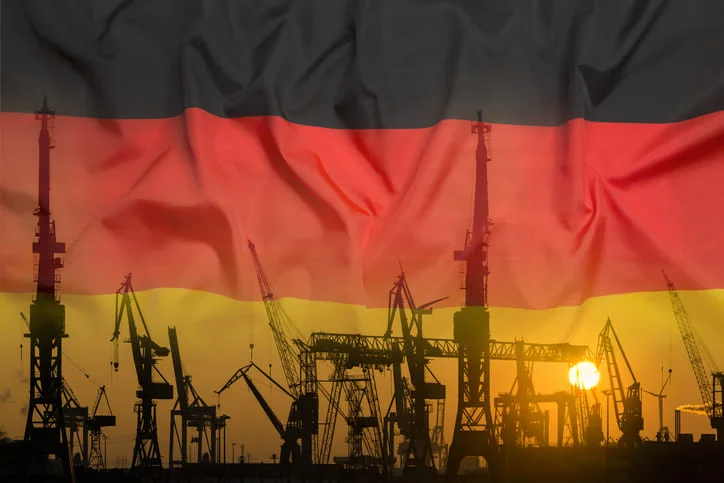
For decades, Germany has been Europe’s industrial locomotive. The country’s strength lies not only in the size of its economy, but in the quality of its industrial innovation, its world-class technological university entities, and its mature financial ecosystem.
While most of the market hype today is centred around, software AI and quantum computing, the global re-industrialisation wave is not a digital frontier. Instead, it is a new reality where sovereignty is gained through advanced industrial technology.
The German asset market is far more open and internationally oriented than often assumed.
In that space, Germany is the powertrain that drives European relevance and competitiveness. From our perspective, its industrial prowess allows Germany to produce the most innovative and sophisticated assets in the region, and digital transformation is less relevant in today’s geopolitical context.
However much of the public discourse still revolves around Germany’s digital transformation challenge.
As a result, only 10-15% of European private equity capital allocation happens in Germany. In contrast, 20-25% is allocated in the UK, typically going into software, medtech and fintech ventures.
This is a mismatch that needs to be highlighted, because Europe needs more industrial technology companies – not more music platforms or ways to buy now and pay later.
Common stereotypes about Germany are outdated and incorrect
The German asset market is far more open and internationally oriented than often assumed. Several of the misconceptions stem from traditional private equity experiences in the Mittelstand.
In that segment, business is often conducted primarily in German and is more domestically oriented. Relationships are decades old and digital transformation is generally low.
However, the innovation and startup ecosystem operate very differently. German startups are highly international in their outlook, and many are built from the outset with global markets in mind and global potential.
Add to the fact that the German innovation ecosystem is highly collaborative and welcoming, and you can question why not more private equity capital finds its way to German innovation.
Why Nordic Alpha Partners is strengthen its position in Germany
As one of Europe’s first and largest investors in the green industrial scale-up space, Nordic Alpha Partners sees more than 500 potential investment cases in Europe annually.
While there are exciting startups in Scandinavia and Southern Europe, none compare to the quality of innovative, complex industrial technology emerging from Germany. That is also why Nordic Alpha Partners has increasingly moved from the Nordics towards the German market, recognising it as a prime area for investment for industrial scaling.
Objectively, our current German investments are performing way above Nordic peers and an operational value creation model like ours is well suited to work with German founders and deal with complex industrial technology growth.
Recently, Nordic Alpha Partners established an office in Munich and the manager is continuing to increase its presence on the ground.
Today, more than half of the investment portfolio is based in Germany.
The type of German quality assets available to investors – a current portfolio overview:
Additive Drives GmbH – The world’s best e-motors
Based in Dresden, Additive Drives is producing the next generation of electric motors by combining electromagnetic design optimisation with additive manufacturing. The result is e-motors with world-leading higher power-to-weight ratios, improved energy efficiency, and no rare-earths.
Technology leadership like this is critical in sectors such as defense, datacentres, e-mobility, aerospace, and industrial systems.
Variolytics GmbH – A unique technology for gas-to-water monitoring
Based in Stuttgart, Variolytics builds uniquely advanced sensors and software that can precisely measure wastewater treatment plant gasses and chemicals, resulting in a huge cut in harmful emissions throughout Europe.
STABL Energy GmbH – Category leader within battery inverter technology
Based in Munich, STABL delivers superior battery inverter technology that completely changes the way the market utilises discard EV-batteries. As an example, large fleet operators can suddenly make local power storage and achieve grid independence, critical for continued electrification in Europe.
DyeMansion GmbH – The global market leader for 3D-printed polymer components
Also in based Munich, DyeMansion has established itself as a global market leader with operations in 55 countries. Through automated surface finishing, coloring, and quality enhancement, the company enables 3D printing to move from prototyping to series production at speed.
Wiferion Gmbh – Industrial wireless charging enabler acquired by Tesla.
From Munich, Wiferion transformed commercial factory floors with its inductive, wireless charging systems for autonomous mobile robots (AMRs) and industrial vehicles. In 2023, Nordic Alpha Partners sold Wiferion to Tesla, who bought out the EV-relevant parts of the technology. Germany-based industrial power solutions company PULS bought the remaining parts of Wiferion, keeping most of the critical technology in Europe.
For all of these five assets, there is significant interest from Asian markets due to their competitive edge and ability to perform on a global scale. Despite China being dominant in numerous critical industries, German industrial technology still has an edge in some sectors. It is critical that we foster regional collaboration in an effort to build that edge and maintain relevance and independence.
How has Germany built such a succesful deeptech ecosystem?
Germany has built a unique early-stage and scale-up ecosystem within industrial and climate technology:
- World-leading technical universities and research institutions
- A strong engineering tradition with global market access
- Specialised industrial clusters
- A growing generation of industrial founders
- Institutional investors with a long-term, structural investment horizon
In particular, the interplay between private funds and public institutions has been decisive. Institutional innovation hubs such as Frauenhofer, TUM, HTGF and institutional investors such as KfW has contributed to building a robust foundation for German growth companies — with a focus on long-term value creation rather than short-term cycles.
This structure makes Germany one of the most attractive markets in Europe for industrial technology investments.
In an era defined by energy transition, decarbonisation, and technological transformation, industrial innovation requires capital efficiency, competence, and operational power.
“The advancement of industrial innovation is crucial not only for Germany’s economic future but also for Europe’s position in the global marketplace. By supporting cutting-edge technologies and industrial transformation, we help maintain robust economic resilience and technological leadership. KfW Capital’s strategy centers on fostering sustainable growth for German industrial champions by providing capital and strategic support through trusted private equity partners. We believe this collaborative approach accelerates innovation and competitiveness on a global scale.”
The Next Phase of the Industrial Locomotive
Germany serves as a strategic anchor for Nordic Alpha’s investment activities and, more broadly, as a cornerstone of European industrial and technological sovereignty.
In an era defined by energy transition, decarbonisation, and technological transformation, industrial innovation requires capital efficiency, competence, and operational power.
BloombergNEF estimated that there is a global re-industrialisation challenge that will require hundreds of trillions of dollars invested into the energy transition ahead of 2050. We cannot afford to let high quality opportunities like the ones found in Germany to pass by in favour of another software platform.
When German technological strength meets specialized industrialisation capital and long-term institutional partners such as KfW and Nordic Alpha Partners, the foundation is laid for European resilience and long-term relevance.
“Ultimately, industrial innovation safeguards high-quality jobs and promotes sustainable, long-term economic growth, thereby reinforcing Germany and Europe’s role as leaders in industrial excellence. Investing in Venture Capital managers who have a deep understanding of the industrial sector enables us to leverage specialized expertise and drive scalable value creation across key industries.”
 Laurits Bach Sørensen