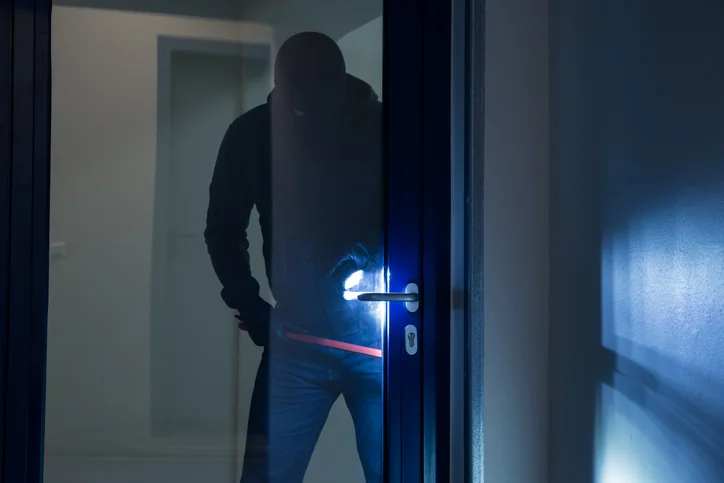
Most of what people believe about burglary comes from television rather than evidence, and the picture television paints is almost exactly wrong. We imagine a masked figure moving through a dark house at three in the morning, hunting for jewellery and cash, having somehow selected our home in particular. Nearly every part of that image is contradicted by the national crime data for England and Wales. The reality is more ordinary, more opportunistic, and far more useful to know, because once you see how burglary actually works you can see exactly where your defences should go.
The value in correcting these myths is entirely practical: each false belief points people toward the wrong precaution and away from the right one. the team at LocksmithLocal spends its days at the sharp end of this gap between belief and reality, and the same misunderstandings come up again and again on the doorstep. So it is worth taking the four biggest myths in turn and setting each one against what the figures actually say.
The first myth is that burglary happens at night. It is the most stubborn belief of all, and it is simply not what the data shows. A large share of domestic burglaries take place in daylight, during the working day, for a straightforward reason: that is when houses are empty. An intruder does not want to meet you, and the middle of a weekday afternoon is when the street is quietest and the homes most likely to be unoccupied. The practical consequence is that daytime security, locked doors while you are at work, a house that looks occupied when it is not, matters at least as much as anything you do before bed.
The second myth is that burglars are after your valuables, and that if you do not own much worth stealing you are not a target. What the behavioural research consistently finds is that burglary is driven far more by ease of access than by the promise of riches inside. Offenders make a quick judgement about how simple it is to get in and out, and how likely they are to be seen or heard, rather than assessing your net worth from the pavement. An easy-to-enter house with modest contents is a more attractive target than a hard-to-enter house full of valuables. You are not judged on what you own, but on how easy you are.
This reframes the whole task. If burglary were about wealth, security would be a rich person’s concern. Because it is about opportunity, it is everyone’s concern, and the good news is that opportunity is something you can directly reduce. A locked door, a cylinder that cannot be snapped in seconds, a side gate that is bolted, a home that looks lived-in: these change the ease calculation, and the ease calculation is what actually drives the decision. You do not have to make your home impregnable. You only have to make it more effort than it is worth.
The third myth is that a burglar will not strike while someone is home. Many people relax their daytime security precisely because they assume occupancy is protection, yet a significant proportion of domestic burglaries happen while somebody is in the property. Sometimes the intruder believes the house is empty and is wrong; sometimes they simply do not care, slipping in through an unlocked back door while the household is upstairs or in the garden. Being home is not the shield people imagine. Locking up when you are in, especially the back of the house, is just as important as locking up when you leave.
The fourth myth is the quiet one that does the most damage: it will not happen to me. This belief is comfortable and completely understandable, and it is the reason so many perfectly sensible people leave windows on the latch and back doors open. The data does not support the optimism. Burglary is far from rare, and while the overall trend has been falling, hundreds of thousands of households a year still experience it. The households that come through it best are rarely the ones with the most expensive alarms. They are the ones who never gave an easy opportunity in the first place, out of habit rather than fear.
Notice that every one of these myths pushes people toward the same mistake, which is to under-protect during the day, to assume modest belongings mean safety, to relax when at home, and to assume it happens to other people. Correct all four and a clear pattern emerges. The intruder is opportunistic, active in daylight, indifferent to how much you own, and undeterred by your presence if the door is open. Every one of those realities points back to the same small set of defences: lock up, front and back, day and night, and make entry more trouble than it is worth.
There is real reassurance buried in the numbers, because it means prevention is largely within your control rather than a matter of luck or wealth. You do not need to out-spend a determined professional, because most burglary is not the work of a determined professional. You need to close the easy opportunities, and those are mostly free to close. If you would like an honest assessment of where the easy opportunities are on your own property, an accredited local locksmith can walk the doors with you and point them out plainly.
Disclaimer: This article contains sponsored marketing content. It is intended for promotional purposes and should not be considered as an endorsement or recommendation by our website. Readers are encouraged to conduct their own research and exercise their own judgment before making any decisions based on the information provided in this article.