By Pamela Martinez
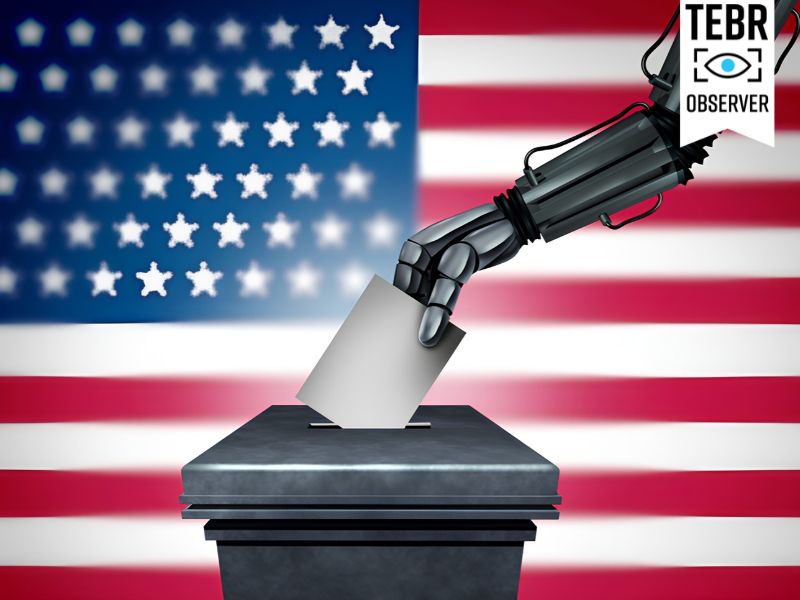
The 2026 US midterms have shifted the political balance in Washington, putting artificial intelligence under renewed scrutiny. But as Congress prepares to debate national safeguards, the more immediate battle over AI is unfolding across electricity grids, state legislatures and communities being asked to accommodate its infrastructure.
The United States’ artificial intelligence debate has entered a new political phase. Following the November 2026 midterm elections, Democrats have secured control of both the House of Representatives and the Senate, dealing a significant setback to President Donald Trump’s Republican administration. The result gives Democrats greater power to scrutinise federal policy, conduct investigations and shape the legislative agenda during the remainder of Trump’s presidency.
For the AI industry, the implications extend beyond Washington. The technology’s rapid expansion has brought questions about employment, competition, intellectual property and safety into the political mainstream. Increasingly, however, another concern is becoming just as consequential: who pays for the electricity, infrastructure and environmental resources needed to sustain the AI economy?
The election has brought these questions into sharper public focus. While Congress may attempt to establish a national framework, the practical decisions governing AI’s expansion will also depend on state governments, utility regulators and local authorities. The next phase of AI governance may therefore be decided as much by the power grid as by legislation.
The Election Put AI’s Costs in Public View
The midterms were not a single-issue referendum on artificial intelligence. Nevertheless, concerns about data centres and their consequences became increasingly visible in local and congressional contests, connecting the technology debate to issues voters experience directly: electricity prices, employment, environmental pressures and the cost of living.
One indication of this changing political landscape came from Michigan, where Democrat William Lawrence won a Republican-held congressional seat after campaigning against data centres. His victory reflected a broader political argument that opposition to large-scale data centre development could resonate with working-class voters, particularly where communities question whether the promised economic benefits justify the local costs. The New York Times’ election coverage highlighted the issue as part of the emerging progressive political agenda.
The concern is not confined to individual election campaigns. According to research cited by the Los Angeles Times, approximately 45 US data centre projects worth $68 billion were blocked or delayed by local opposition between April and June 2026. Around 30 state legislatures had also introduced or adopted measures addressing data centre development, electricity and water use.
In communities across the country, residents are questioning whether new facilities will increase household electricity bills, strain water supplies, generate noise and permanently change the character of their neighbourhoods. Some are also concerned that the long-term employment opportunities may be considerably smaller than the construction activity initially promises.
The debate is consequently shifting from whether AI investment should be encouraged to what obligations should accompany it. The Los Angeles Times’ reporting on the growing data centre backlash illustrates how local resistance is becoming a material obstacle to the industry’s expansion.
What the New Congress Inherits
The Democratic takeover of Congress creates a new legislative environment, but it does not guarantee agreement on how AI should be governed. The Trump administration has already established its position through its March 2026 National AI Legislative Framework. The framework calls on Congress to address six priorities: protecting children, strengthening American communities, respecting intellectual property, protecting free speech, enabling innovation and developing an AI-ready workforce.
Its central argument is that the United States needs a consistent national approach rather than conflicting state-level requirements. The administration maintains that regulatory fragmentation could undermine American innovation and weaken its international competitiveness.
Importantly, the framework also acknowledges concerns about electricity affordability. It argues that ordinary ratepayers should not bear the cost of supplying power to data centres and calls for streamlined permitting that would allow facilities to generate electricity on-site.
These priorities provide a useful starting point for the next congressional debate. However, Democrats may approach several of them differently, particularly where questions of corporate accountability, consumer protection, labour rights and environmental oversight are concerned.
The political difficulty is that these priorities do not necessarily point towards the same regulatory solution. Encouraging rapid deployment, protecting workers, strengthening competition and imposing meaningful safety requirements can involve competing interests. The new Congress will have to determine which responsibilities should be imposed nationally and how much flexibility businesses should retain.
The Policy Bottleneck: Washington Versus the States
The most immediate challenge for AI governance may be the difficulty of turning competing political priorities into federal legislation. Although Democrats now control both chambers, President Trump remains in office and retains his veto power. This creates divided government between the legislative and executive branches, making major bipartisan agreements more important. Congressional hearings, investigations and oversight may become more prominent, but they are not substitutes for legislation. The administration’s March framework also raises a fundamental question about federal authority. It argues that a national standard is necessary to prevent a patchwork of state regulations. Yet state governments have already become important actors in AI governance.
According to the National Conference of State Legislatures, state lawmakers introduced 1,539 AI-related bills in 2026, with 280 enacted or adopted by early October. These measures cover areas including private-sector AI use, deepfakes, healthcare, government applications and requirements to notify people when they are interacting with AI.
A federal framework could reduce some of these differences, but the scope of national pre-emption will be contentious. States are likely to resist losing authority over issues affecting their residents, particularly where consumer protection, employment and public safety are concerned. The division of responsibility is especially important in infrastructure development. Even if Congress establishes national rules for AI companies, it cannot simply eliminate the role of state utility commissions and local planning authorities.
The result may be a regulatory landscape in which Washington establishes broad principles while states retain considerable influence over how AI is implemented and where its physical infrastructure can be built.
The Less Visible AI Battleground: Infrastructure
AI requires substantial computing capacity, and that capacity depends on data centres, electricity generation, transmission networks, cooling systems and water resources. As demand increases, the infrastructure supporting AI is becoming an economic and political issue in its own right. A June 2026 report from Lawrence Berkeley National Laboratory estimates that US data centres could account for 11.8% of national electricity consumption by 2030, with a range of scenarios between 9.5% and 15.3%.
Such growth presents a difficult challenge for an electricity system that must maintain reliability while accommodating new industrial and technological demand. Building additional generation capacity and upgrading transmission infrastructure takes time, investment and regulatory coordination.
The Federal Energy Regulatory Commission (FERC) has already begun addressing the issue. In June 2026, it directed all six regional grid operators under its jurisdiction to justify or reform their rules for connecting data centres and other large electricity consumers. The orders specifically address transmission access, cost transparency, the prevention of cost-shifting and arrangements involving facilities that generate their own electricity. FERC’s stated objective is to accommodate large new energy users while protecting consumers and maintaining reliable electricity supplies.
However, responsibility is divided across different levels of government. FERC oversees interstate transmission rates and services, while state regulators and local authorities retain important responsibilities concerning retail electricity rates, project siting and permitting. FERC’s explanation of its cost-transparency and customer-protection measures makes this division particularly clear. This means that even a comprehensive federal AI law would not resolve every dispute surrounding data centre development.
Massachusetts provides one example of how states are responding. In September 2026, Governor Maura Healey issued an executive order requiring local approval before data centre projects can proceed through state permitting.
The policy also calls for developers to bring their own clean energy supply or pay fees to protect ratepayers, alongside requirements addressing water, air quality and community engagement. The Massachusetts announcement illustrates how infrastructure governance can develop independently of federal AI legislation. The broader lesson is that AI expansion depends not only on technological innovation but also on the willingness of communities to host the infrastructure that makes it possible.
What Businesses Should Watch Next
For companies across the AI ecosystem, the midterm results introduce both opportunities and uncertainty.
AI developers and cloud providers should watch for congressional investigations, potential changes to federal accountability requirements and renewed debate over the relationship between national standards and state regulation. Intellectual property, children’s safety and transparency are likely to remain important areas of scrutiny. Data centre operators will face a different but equally significant set of considerations. Electricity availability, transmission access, water management, local approval and the allocation of infrastructure costs could become decisive factors in determining where new facilities are built. Companies may need to demonstrate that their investments will not impose disproportionate costs on surrounding communities.
Energy companies and utilities will also become increasingly important participants in the AI economy. They must balance growing demand from technology companies with the needs of households, manufacturers and other businesses. Decisions concerning grid expansion, generation capacity, connection agreements and electricity pricing will influence the pace and geographical distribution of AI investment.
For organisations adopting AI, the implications extend beyond infrastructure. Businesses should monitor changes in workforce policy, data protection, intellectual property and sector-specific requirements. The possibility of different state obligations means that compliance cannot be treated as a one-time exercise.
The ILO’s findings also reinforce the importance of workforce planning. Rather than assuming that AI adoption will automatically deliver productivity improvements, businesses should examine how technology changes job responsibilities, training requirements and the distribution of economic gains. Ultimately, the companies most likely to navigate the next phase successfully will be those that treat regulation, infrastructure and public trust as interconnected strategic concerns.
The Next Test: Can Washington Deliver?
The 2026 midterms have changed the political conditions under which America’s AI industry will operate. Democrats now have greater congressional influence, while the Trump administration remains committed to a national framework that prioritises innovation, competitiveness and a consistent regulatory environment.
Yet the election has not resolved the central question of AI governance. It has made the disagreements more visible.
Congress can investigate corporate practices, debate national safeguards and reconsider the balance between federal and state authority. But it cannot independently determine every data centre’s location, guarantee sufficient electricity generation or settle every dispute over local resources.
Those decisions will continue to involve state legislatures, utility regulators, energy providers, planning authorities and the communities directly affected by development. For businesses, this means that political uncertainty is only part of the challenge. The physical requirements of AI are becoming just as important as the regulatory environment surrounding its development. The next test for American leadership will therefore be whether policymakers can create a system that supports innovation without shifting its economic and environmental costs onto the public.
As the AI race accelerates, the question is no longer simply who controls the technology. It is who sets the conditions under which it can grow and who ultimately pays for them.