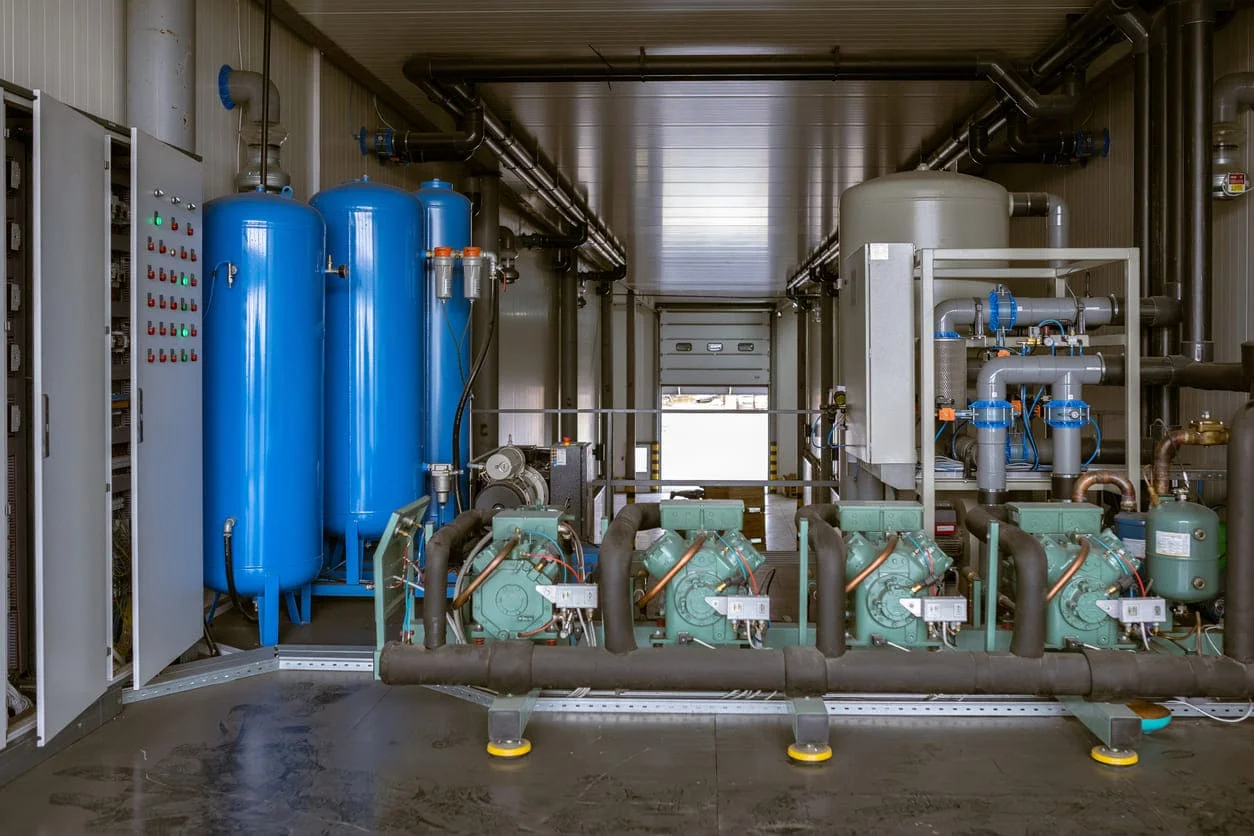
Nitrogen is used in many industrial processes to prevent oxidation, improve safety and protect product quality. The benefits of using a nitrogen generator are especially relevant for companies that want to reduce their dependence on cylinders, bulk storage and scheduled gas deliveries.
An on-site nitrogen generator produces the required gas directly at the production facility. This creates a reliable supply while giving users more control over purity, pressure and capacity.
How a Nitrogen Generator Works
Most industrial nitrogen generators use Pressure Swing Adsorption, also known as PSA. The process starts with clean and dry compressed air, which flows through vessels containing Carbon Molecular Sieve.
This material adsorbs oxygen molecules while nitrogen passes through the system. When the sieve becomes saturated, the pressure is reduced so that the oxygen can be released. A second vessel continues producing nitrogen during this regeneration phase.
By alternating between the vessels, the installation provides a continuous nitrogen supply. The gas can be used directly or stored temporarily in a pressure vessel.
Reduced Dependence on Gas Deliveries
Traditional nitrogen supply usually involves cylinders, bundles or liquid nitrogen tanks. These methods require transport, storage space, stock monitoring and regular replacement or refilling.
Producing nitrogen on site reduces these logistical activities. Companies generate gas when it is needed and are less dependent on delivery schedules or external availability.
This can be particularly valuable for production processes that operate continuously. A local nitrogen supply helps reduce the risk of interruptions caused by empty cylinders or delayed deliveries.
Greater Control Over Purity and Capacity
Different applications require different nitrogen purities. Food packaging, laser cutting, laboratories and chemical processes may all have specific residual oxygen requirements.
An on-site system can be configured according to the actual application. Selecting the correct purity is important because producing unnecessarily pure nitrogen can increase compressed air and energy consumption.
Modular generators can also adjust their output according to demand. When consumption falls, individual modules can switch off. When demand increases, extra capacity can be activated. This helps prevent unnecessary energy use during periods of partial load.
Common Industrial Applications
Nitrogen generators are used across many sectors. In food production, nitrogen helps limit oxidation and preserve product quality during packaging and storage. Chemical companies use it to inert tanks, pipelines and process equipment.
In manufacturing, nitrogen can protect metals during laser cutting or heat treatment. Laboratories use it for analytical instruments, sample protection and controlled testing environments.
Nitrogen is also suitable for tank blanketing. By replacing oxygen in the space above a stored liquid, it helps prevent oxidation, contamination and unwanted chemical reactions.
A Reliable Alternative to External Supply
An on-site nitrogen generator offers a practical alternative for companies with regular nitrogen consumption. It can reduce transport requirements, simplify gas management and provide greater control over process conditions.
The correct system depends on nitrogen flow, purity, pressure, operating hours and available compressed air quality. A technical assessment of these factors helps determine whether on-site production is suitable for a specific facility.