AI image to video technology is rapidly transforming the way creators approach digital storytelling. Instead of relying on manual animation, these tools use advanced artificial intelligence to animate static images with realistic motion, lighting, and stylistic effects. From social media marketers to professional filmmakers, anyone can now turn simple visuals into engaging videos without extensive technical knowledge. As the demand for dynamic content grows, AI image to video platforms are becoming essential for streamlining workflows, enhancing creative expression, and producing high-quality content efficiently.
1. Pollo AI
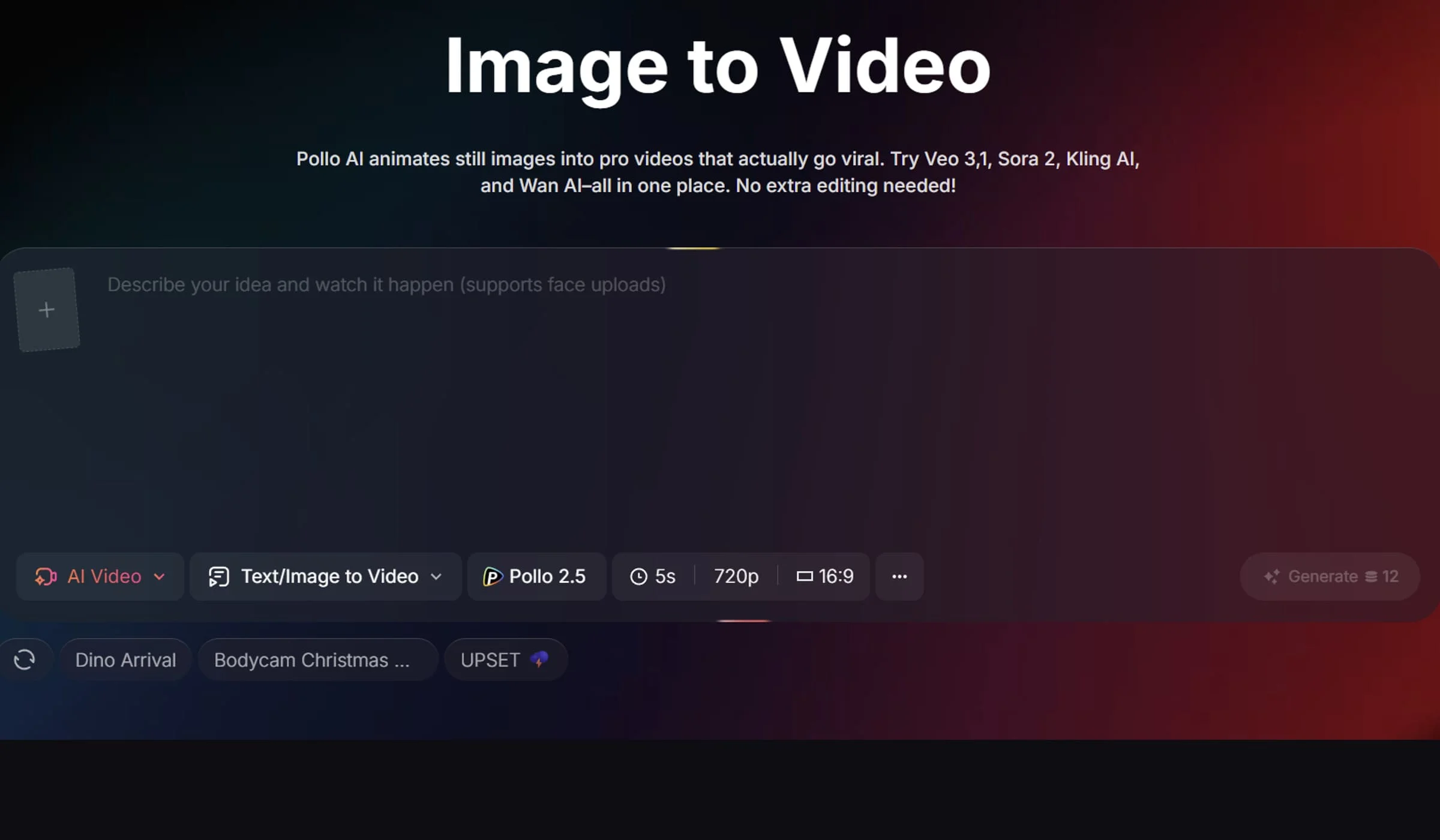
For those exploring AI image to video workflows, Pollo AI offers a reliable, creative, and technically sophisticated platform. Leveraging advanced AI algorithms, Pollo AI enables users to animate photos, illustrations, and concept art with realistic motion, lighting, and stylistic effects. Unlike conventional tools that rely on ma nual frame-by-frame editing, Pollo AI automates much of the process while still giving users precise control over the final output. This balance of automation and customization makes it a preferred choice for marketers, social media content creators, and digital storytellers seeking efficient workflows.
Beyond basic animation, Pollo AI supports multiple creative modes, including cinematic sequences, looping clips, and experimental motion styles. Users can integrate AI-generated transitions, camera movements, and visual enhancements, making it ideal for both short-form social media content and professional presentations. Its intuitive interface allows beginners to achieve complex results quickly, while advanced users can fine-tune motion parameters to suit artistic needs.
Why Choose Pollo AI
- Advanced AI-driven motion and lighting effects
- Versatile output for social media and marketing campaigns
- Intuitive for beginners, customizable for professionals
Key Features
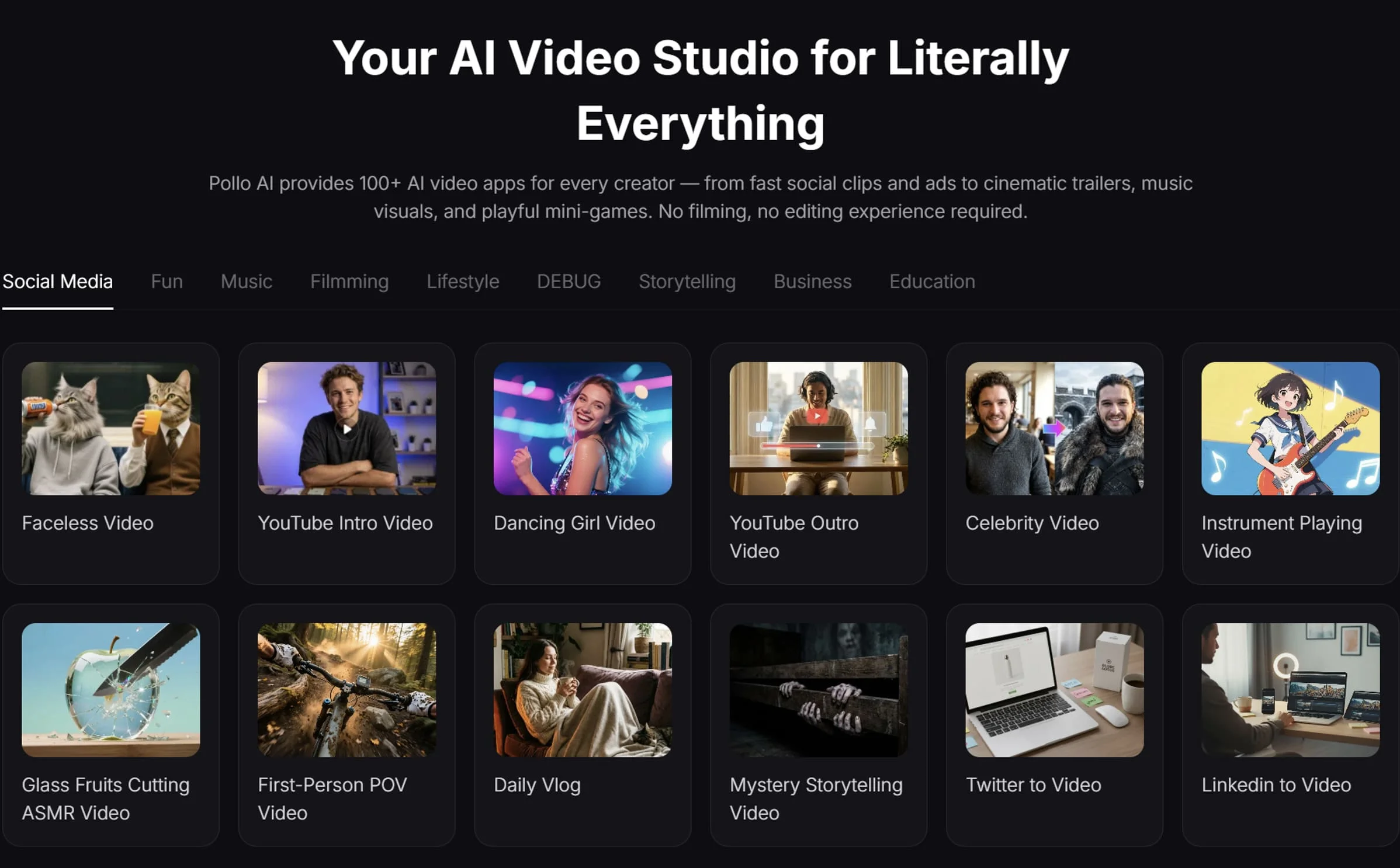
- Image-to-video AI conversion feature that helps users make Facebook videos and other social media content with ease.
- Adjustable motion, lighting, and stylistic effects
- Multi-format export for social media and marketing campaigns
2. OpenArt
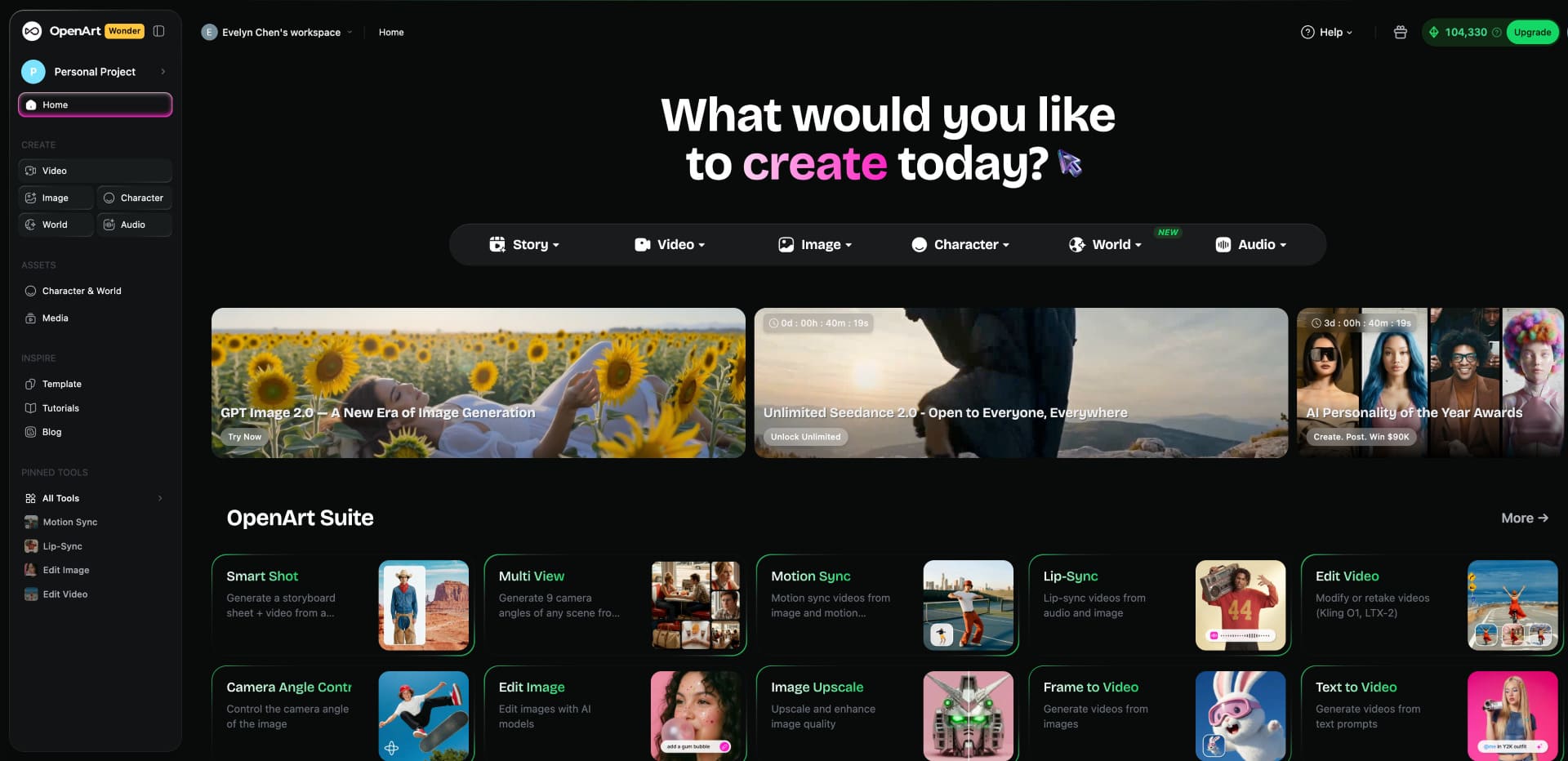
OpenArt is an all-in-one AI creator studio built for turning static images into full video stories. As a powerful image to video generator, its engine runs on 100+ leading AI models in one place, including Google Veo, Kling, Seedance, and Sora — so creators can compare outputs and pick the best engine for each shot without switching platforms.
Where OpenArt goes further than single-engine tools is in multi-scene storytelling. Its Consistent Characters feature keeps the same character, world, and style across every frame of a sequence, while AI Story Director and Flow (a node-based canvas) help structure full narratives from a single image. Beyond video, OpenArt also offers AI-generated music (Google Lyria 3), voiceovers, and sound effects — so an image can become a fully scored, narrated clip in one workflow.
Why Choose OpenArt
- 100+ video and image AI models in one workflow (Veo, Kling, Seedance, Sora, Flux, and more)
- Consistent Characters for multi-scene, image-to-video storytelling –
- End-to-end creation: image → video → music & voiceover in one place
Key Features
- Multi-model engine: Run Google Veo, Kling, Seedance, Sora, and Flux side-by-side — pick the best output per shot without switching platforms
- Consistent Characters: Keep the same character, outfit, and world across every scene — built specifically for multi-scene storytelling, not single-clip animation
- AI Story Director + Flow canvas: Turn one image into a full narrative with an AI director that plans shots, or build pipelines visually on a node-based canvas
- End-to-end creation in one workflow: Image → video → AI music (Google Lyria 3) → voiceover → sound effects, all in OpenArt
- Built for storytellers, not just clip-makers: Designed for filmmakers, marketers, and creators producing multi-scene content at scale
3. Runway
Runway is a creative tool widely recognized for its AI-driven visual production capabilities. For AI image to video tasks, it offers tools that can animate still images and incorporate AI-generated motion sequences. Its strength lies in accessibility, with a web-based interface that allows both professional editors and hobbyists to experiment without needing extensive technical knowledge. Users can apply predefined motion styles, add generative effects, and create video loops efficiently.
The platform also integrates well with other creative software, supporting exports compatible with Adobe Premiere and After Effects. Runway’s AI image to video tools are particularly useful for digital marketers and content creators who need to quickly turn static visuals into engaging video content. While the AI can automate animation, users can also manually adjust parameters such as motion speed, direction, and intensity. Overall, Runway combines flexibility, simplicity, and creative potential for anyone exploring AI-enhanced video creation.
Why Choose Runway
- User-friendly interface ideal for both beginners and pros
- Seamless integration with popular editing software
- Predefined and customizable motion effects
Key Features
- AI-assisted image animation
- Integration with popular video editing software
- Predefined motion styles and effects
4. Seedance 2.0
Seedance 2.0 specializes in transforming static images into visually compelling animated videos. The platform uses AI-powered motion tools to bring illustrations, graphics, and photographs to life with fluid animation and dynamic camera movements. Seedance 2.0 is particularly valued for creating looping clips, experimental visuals, and social media-ready content quickly without manual frame editing.
Its AI engine provides a variety of style and motion options, including cinematic effects, dynamic zooms, and motion smoothing for seamless visuals. Users can also integrate sound and transitions to enhance storytelling. Seedance 2.0 combines accessibility with creativity, offering intuitive controls for beginners while giving advanced users the ability to fine-tune movement and effects to achieve their desired aesthetic.
Why Choose Seedance 2.0
- High-quality AI-generated motion and transitions
- Designed for creative experimentation and social media content
- Combines speed and flexibility for both beginners and pros
Key Features
- AI-powered image-to-video animations
- Motion smoothing and cinematic effects
- Integration of sound and transitions
5. Kling 3.0
Kling 3.0 is an AI image to video platform designed to produce dynamic videos from static visuals with minimal effort. It excels at applying automated motion paths, camera effects, and style transformations. Kling 3.0 is particularly useful for social media content creators, marketers, and digital storytellers who need quick and visually appealing video outputs.
The platform also provides creative options for looping visuals, cinematic sequences, and AI-enhanced motion effects. Users can experiment with different movement styles, lighting, and visual enhancements to create engaging and professional-looking videos. Kling 3.0 is known for balancing automation with control, allowing users to achieve fast results without sacrificing quality or artistic expression.
Why Choose Kling 3.0
- Fast and efficient video creation from static images
- Variety of motion styles and cinematic options
- Ideal for social media and marketing applications
Key Features
- Automated motion paths and camera effects
- AI style transformations for images
- Looping visuals and cinematic video options
6. Luma AI
Luma AI provides a high-fidelity AI image to video solution, focusing on photorealistic rendering and motion realism. It can animate images with realistic lighting, perspective shifts, and smooth transitions, making it ideal for professional creators working with cinematic or VR content. Luma AI supports detailed control over motion, effects, and output resolution, giving users the ability to produce highly polished videos from single images.
The platform also offers advanced rendering tools, including depth-aware motion and 3D-like effects. Luma AI is suitable for marketing, social media, and creative experimental projects that require both realism and flexibility. With its intuitive interface, both beginners and advanced users can achieve visually impressive results quickly.
Why Choose Luma AI
- Photorealistic rendering and depth-aware motion
- Precise control for professional video creation
- Suitable for cinematic, social media, and experimental projects
Key Features
- High-fidelity AI image-to-video transformations
- Smooth motion, lighting, and perspective effects
- Multi-resolution and format export
Conclusion
AI image to video technology has evolved into a powerful toolset for creators, marketers, and storytellers. Platforms like Pollo AI, Runway, Seedance 2.0, Kling 3.0, and Luma AI enable users to transform static visuals into engaging, dynamic video content with realistic motion, lighting, and style effects. Each platform offers unique features—whether it’s Pollo AI’s versatile customization, Runway’s accessibility, Seedance 2.0’s creative experimentation, Kling 3.0’s speed, or Luma AI’s photorealism. By choosing the right tool based on workflow needs and creative goals, users can elevate digital storytelling, enhance marketing campaigns, and explore new possibilities in video creation using AI.
Disclaimer: This article contains sponsored marketing content. It is intended for promotional purposes and should not be considered as an endorsement or recommendation by our website. Readers are encouraged to conduct their own research and exercise their own judgment before making any decisions based on the information provided in this article.