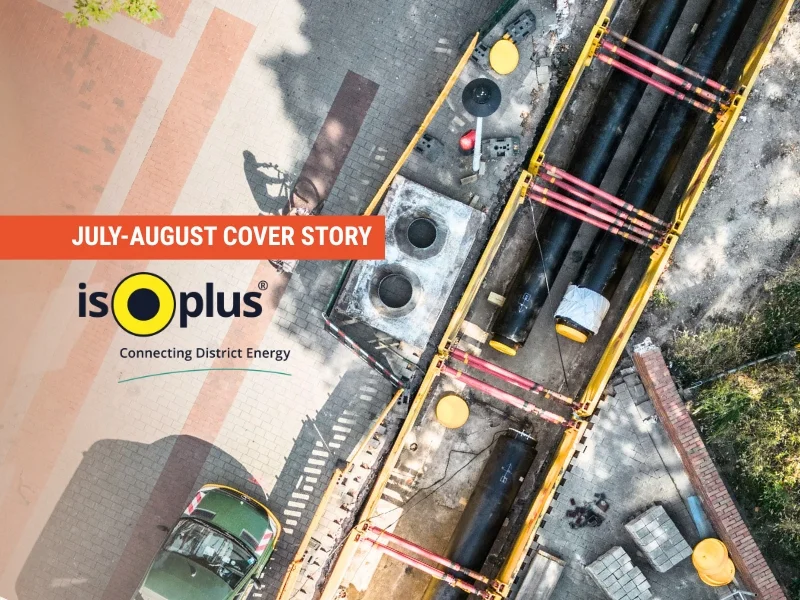

The Energy Transition is an enormous opportunity for Europe to harness its millennia of engineering expertise and lead the world in addressing the existential issues of the 21st century: sustainability and the energy transition. Simply put, sustainability is living within our means while the Energy Transition does just that, doing more with less. Two sides of the same coin.
One truly significant initiative, and central to a successful energy transition, is the widespread adoption of District Heating. While European governments at all levels, energy providers, and energy consumers are for once all aligned, the true drivers of the transition are the innovative and pragmatic engineering solutions from such industry leaders as ISOPLUS.
This is great news for the continent.
Europe’s Opportunity, the World’s Gain
– Professor Jeffrey Sachs, Columbia University
Public policy analyst and former director of The Earth Institute, expert on the topics of sustainable development and economic development. Speech to the European Parliament in May, 2025.
The Energy Transition is the most important initiative in the history of the world and the ambition needed to implement it is daunting. The stakes couldn’t be higher, as well as securing our own future and that of our children, the Energy Transition is also an opportunity to establish European energy independence. The urgency of this has been made starkly evident by recent events in Europe and their geopolitical impact.
There is very good news though. Europe does indeed stand for climate action and much progress has been made in many areas. The most significant is District Heating — it has been recognised across Europe as a cost-effective shortcut to a greener, cooler world and adoption is rapidly increasing. And will further accelerate in the foreseeable future.
District Heating is a major contributor to the Energy Transition as its impact is huge. Household heating uses over 20% of Europe’s total energy and both reducing that, or changing to renewable energy sources, will have a significant climate impact. District Heating is basically the infrastructure that connects old and new renewable energy sources to millions of households and enterprises across the continent (67 million citizens so far, and rising). Its adoption is being increasingly supported by EU legislation and implemented by enterprises such as ISOPLUS that are on a profound mission, to make energy networks ever more affordable. ISOPLUS provides the innovative pipe networks that are the hidden, but essential, the infrastructure fundamental to successful District Heating.
ISOPLUS – Driving the Winds of Change
– Benoit Lejeune, Managing Director, ISOPLUS France
ISOPLUS
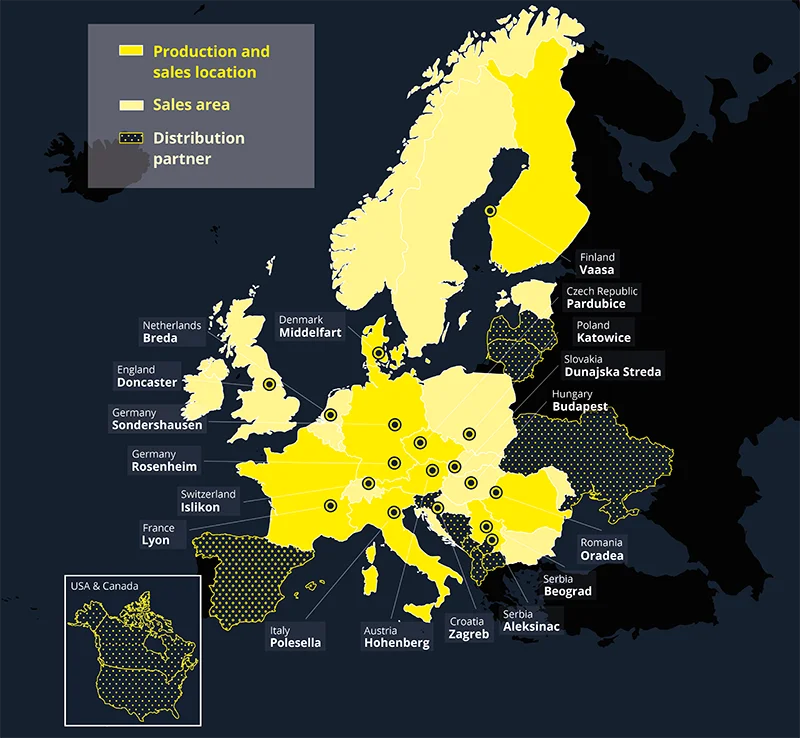
Founded in 1974, ISOPLUS is present in over 30 European countries and, for example, is the market leader in pre-insulated District Heating energy networks in Germany and has a major 35% in Europe’s most highly competitive and developed market in Denmark. Headquartered in southern Germany, with production in Thuringia (and France, the Czech Republic, Finland, Italy, Austria, Romania, Denmark and Serbia). ISOPLUS is a true pan-Europe enterprise built on Europe’s unique engineering heritage, guaranteeing Europe’s future.
The ISOPLUS Group produces over 4,000 km of rigid pipes and around 1,000 km of flexible pipes every year at the 9 production sites – over 1,200 km of which are in Germany. The assortment counts 300,000 products in its German catalogue alone (and 20 new products weekly) and three to five months stock on hand for fast response to individual customer demand.
Simply put, ISOPLUS manufactures pipe systems and networks. The concept of a pipe is certainly simple. A straw in a cocktail glass, or a bottle of lemonade, demonstrates it admirably. It transports a liquid from the glass to the mouth without spillages or leakages. But don’t be fooled by that word “simple”. The engineering and expertise that goes into an ISOPLUS pipe network is anything but.
Pan–European Projects, Local Impact
From renewable biomass-driven networks in France to rapid municipal deployments in Eastern Europe, ISOPLUS is adapting its modular pipe solutions to vastly different technical, geographical and regulatory needs.
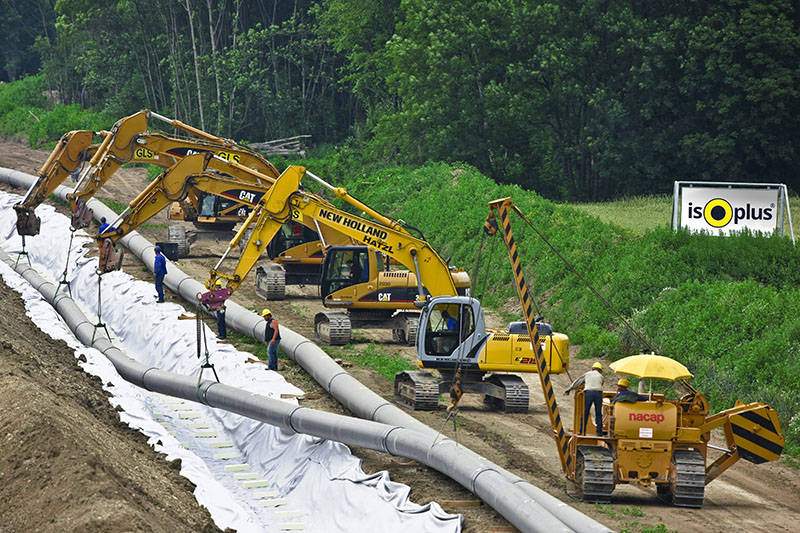
One example is the WarmtelinQ project in the Netherlands, Europe’s largest long-distance District Heating pipeline. Built by Gasunie to transport residual heat from the Port of Rotterdam through South Holland, it will serve approximately 120,000 homes and businesses between Rotterdam and The Hague. With around 80 km of pre-insulated pipe scheduled and designed to withstand challenges like river crossings, ISOPLUS is supplying all of the pre-insulated steel pipe systems—delivered sustainably using rail transportation and e-trucks.
Another flagship project is Obrenovac–New Belgrade in Serbia. Led by PowerChina and Serbian utilities, the initiative includes a ~25 km pre-insulated steel pipeline linking excess heat from the TENT A power plant in Obrenovac to New Belgrade. With a total capacity of 600 MW, it is designed to significantly reduce gas reliance and CO₂ emissions. ISOPLUS contributes almost 40 km of DN1000/1200 steel pipes (in 16 m lengths—special in both dimension and logistics) as well as smaller diameters. These systems are engineered to handle complex river and highway crossings, ensuring safe, long-term resilience.
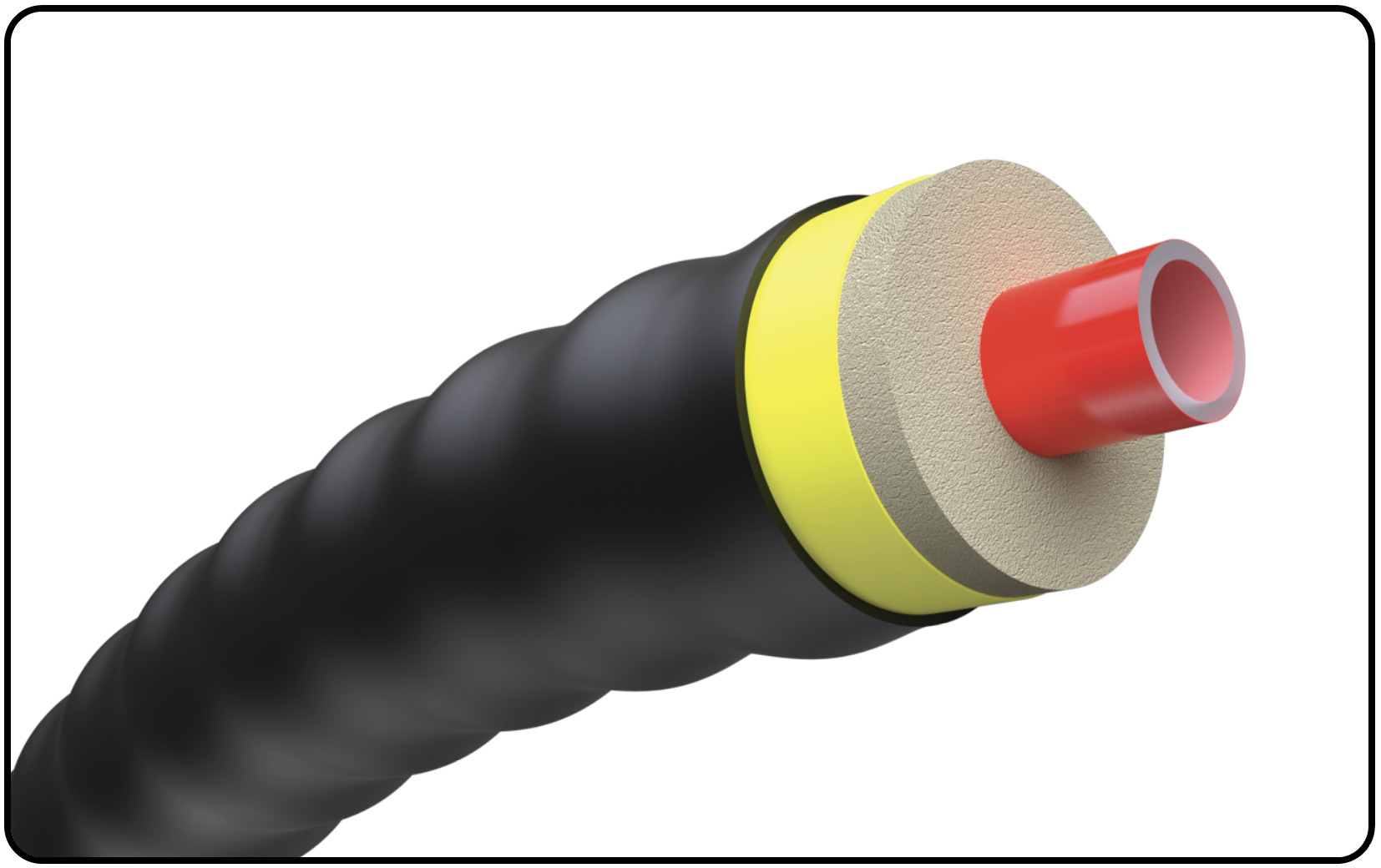
- an inner pipe (steel, plastic or copper) for transporting hot or cold liquids
- a high-performance PU insulation layer to minimize energy loss
- and a protective HDPE outer casing for mechanical strength and durability
Why Pre-insulated Pipes? They ensure minimal heat loss, long operational lifespan, and maximum efficiency—essential for sustainable, low-carbon heating and cooling.
These pipe systems are the hidden backbone of District Energy networks, enabling the shift from fossil-based to renewable heating sources like biomass, solar thermal, industrial waste heat, or green hydrogen—paving the way for climate-neutral urban living.
– Rogier van Overvest, Managing Director, ISOPLUS Benelux
The Pipes are Calling
– Bo Olsen, Managing Director, ISOPLUS Denmark
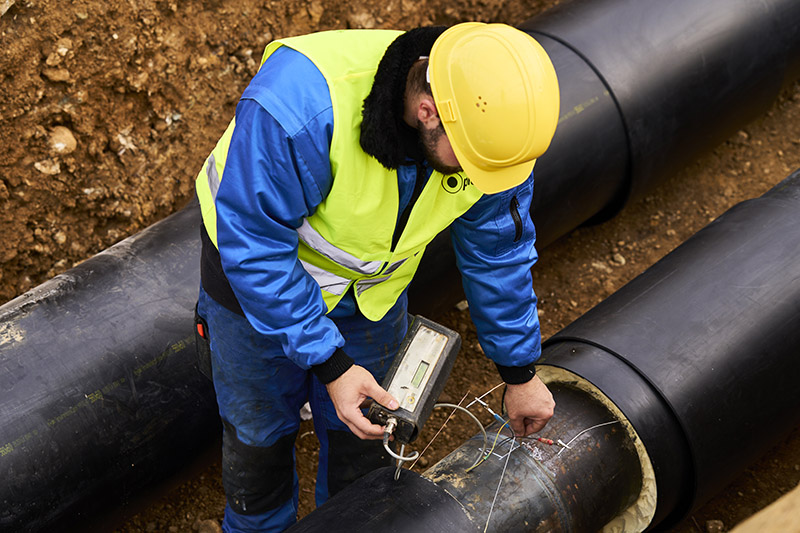
A pre-insulated pipe that will carry hot water to a home, factory or institute, with minimal heat loss, buried in any kind of earth, dry, sandy or water-logged, with an operational life expectancy of 50 years is not simple to design or produce. A pipe that is also self-monitoring, that detects and informs the operator of a leak, and where the leak is, is a complex engineering feat. And a piping system connecting multiple heat source to thousands of heat consumers is even more complex still. And not just heat, depending on the climate, these pipe systems can carry cooling water or, indeed, any liquid to anywhere.
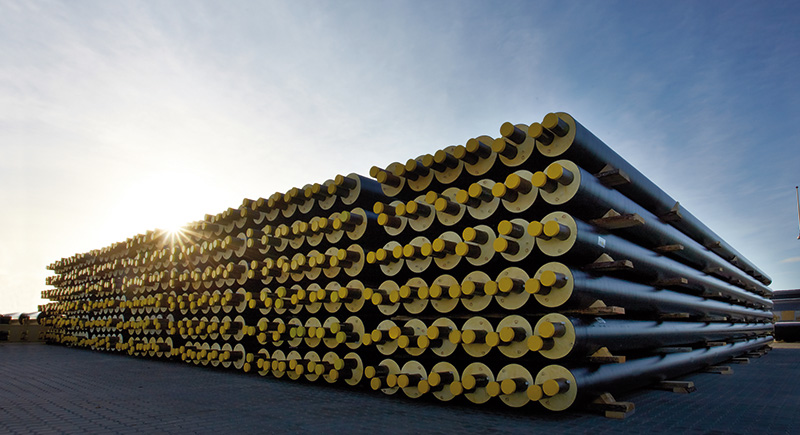
A single pipe is one thing, a network of pipes connecting thousands of homes is another. If every chain is as strong as its weakest link, it is ISOPLUS’s mission to make sure there is no weak link in a District Energy network, for at least the next half a century. Individual pipes are designed to last for 50 years. So, no weak link means durability, minimum heat loss, maximum inter-connectivity and overcoming the greatest impediment to the Energy Transition, cost.
Cost is the elephant in the room. It is the overriding concern of everything ISOPLUS does. So, as pre-insulated, self-diagnosing, complex piping systems are fundamental to a successful District Heating network they have to address the issue of cost head on. Producing energy networks is a delicate balancing act between cost and quality, getting this right is the deciding factor determining the success of District Heating projects. And ISOPLUS is getting it right. In all facets of designing, implementing and maintaining District Energy networks.
That includes customer peace of mind. Customers are now not only independent of the heat source, they can also adopt the latest technologies unobtrusively. Their heating infrastructure can last for generations with maintenance costs just a distant memory.
The Customer Calls the Shots
– Axel Kirstein, Managing Director, ISOPLUS Germany
To put this in perspective, the cost of the energy transition is reckoned in billions of euros and has been the biggest impediment to progress, particularly in housing. Estimates for the investment in District Heating needed in Germany, if emission targets are to be met by 2030, are €43.5 billion. On the other side of the equation, the cost of renovating around 20 million houses in Germany, needed for alternative heating technologies, to today’s standards is estimated at €500 billion to €1,500 billion. An absolutely huge sum.
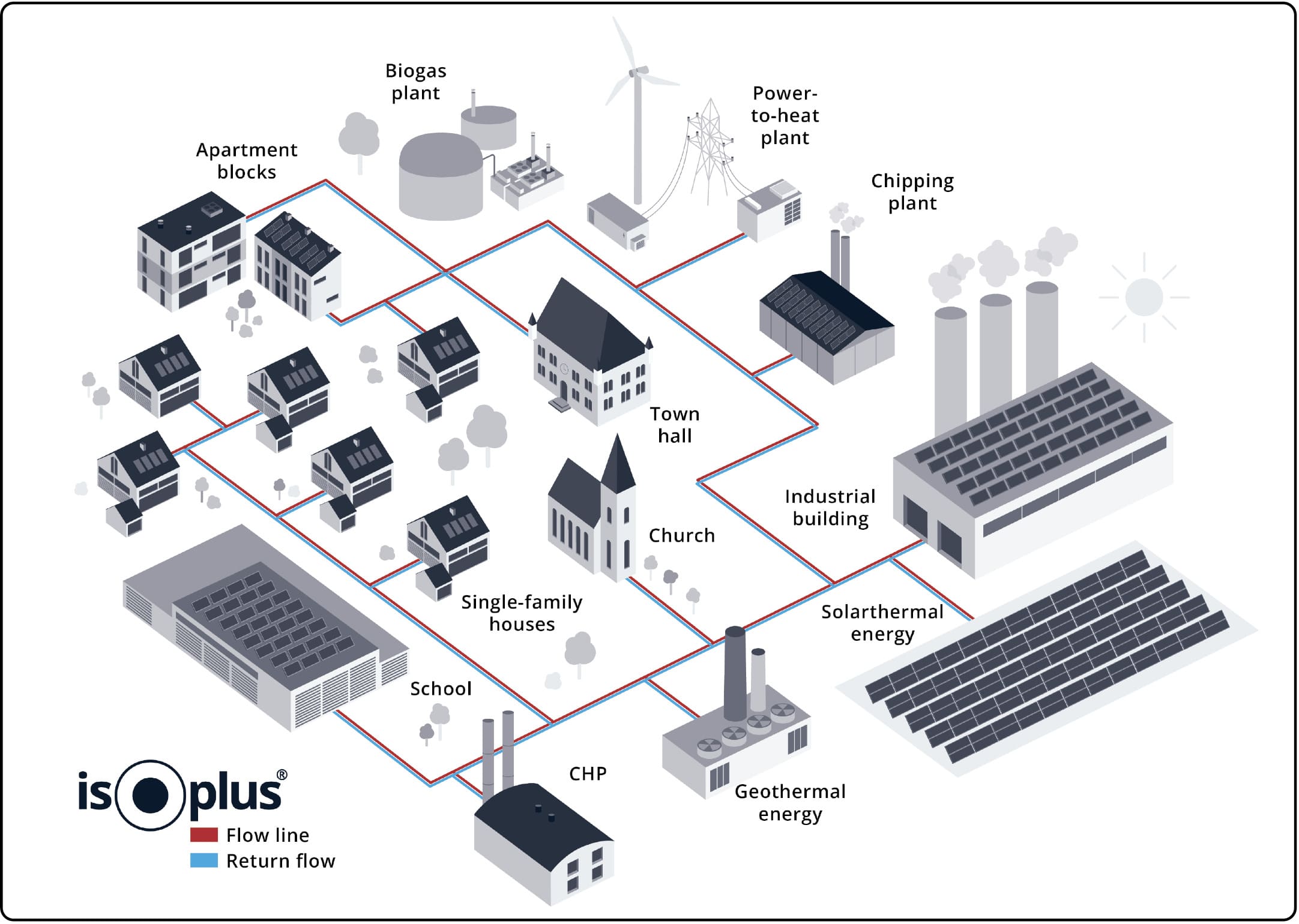
This modernization is not needed in District Heating, although it is not a bad idea to insulate a home and benefit from the lower energy bills, a massive saving. In addition, pre-insulated pipe systems also reduce installation and operating costs. Secure, sealed and quality networks deliver the heat to where it is needed, not into the ground. This also leads to substantial energy savings, which in turn further reduces operating costs for supply companies and heating costs for consumers. The pipe systems are tailor-made, adapted to each project’s energy mix and technical constraints. They can connect to any energy source supporting the entire energy transition: wind, water, solar, Biomass and green hydrogen, heat from waste or surplus heat from factories, and whatever comes next.
But why now? After all, District Energy has been around since the Romans and the value in providing clean energy and national energy independence has been recognised in Scandinavia since the 1970s. What has changed?
What’s New?
– Aurélie Beauvais, Managing Director of Euroheat & Power
District Energy has arrived big time as over the last decade, the European Union, and the UK, has recognised its importance to the energy transition. Today, District Heating in Europe is promoted, supported and governed by a comprehensive legislative framework aimed at decarbonising the heating and cooling sectors, enhancing energy efficiency, and integrating renewable energy sources.
District Heating in Europe is promoted, supported and governed by a comprehensive legislative framework aimed at decarbonising the heating and cooling sectors, enhancing energy efficiency, and integrating renewable energy sources.
This recognition of District Heating, primarily as a way to energy independence, started in Scandinavia after the 1973 oil crisis. Since then, District Heating technology has been subject to continuous innovation and development. As has the Europe wide legislative framework, adapting national best practices on a European level. An outburst of common sense if you will. Europe is learning best practices from Europe. How cool is that?
Ahead of the game, the largest system in Europe is in Copenhagen where 98% of homes are connected to the District Heating network with 100,000 added in 2024. More good news is that the rest of Europe is seriously playing catchup, backed by EU and national legislation.
EU looks to geothermal in a drive for energy security. EU data show that geothermal produced less than 3 per cent of the bloc’s energy in 2022. That’s despite it having the potential to cover three-quarters of EU heating and cooling needs in residential and commercial buildings by 2040, according to industry group the European Geothermal Energy Council.
The 27 EU members jointly endorsed geothermal energy for the first time in December 2024 at a meeting of EU energy ministers in Brussels, asking the European Commission to come up with a bloc-wide plan to get projects off the ground.
District Heating adoption is going to grow dramatically. Although Germany and the UK, as examples, lag Scandinavia at the moment the adoption rate there too will grow rapidly. Look at Germany. There is now Mandatory Heat Planning for all municipalities. Large ones, over 100,000 inhabitants, must develop heat plans by June 30, 2026. Smaller ones have until June 30, 2028. These plans should identify areas suitable for District Heating expansion, assess renewable energy potentials, and outline strategies for decarbonisation.
In the UK, in designated heat network zones, certain buildings may be mandated to connect to energy networks, potentially affecting development plans. In France, municipalities with District Energy networks meeting specific criteria (e.g., using at least 50% renewable or recovered energy) can designate areas where connection to the District Heating system is mandatory for new buildings or during major renovations.
These mandates may result in communities being tasked with developing energy plans, including District Heating, despite lacking the necessary expertise—while numerous qualified experts remain untapped, waiting for a call.
The Future Beckons – Who You Gonna Call?
– Stephan Brandligt, Vice President of Energy Cities
ISOPLUS has thousands of collective years of pragmatic District Heating experience for potential customers to use. The right questions identify the real requirements and therefore the right answers. So, ISOPLUS is a single contact for any customer embarking on an energy transition. Just as the individual end user does not need to have a deep understanding of home heating/cooling technologies, or future developments, ISOPLUS fulfills these roles for any District Heating project.
– Bo Olsen, Managing Director, ISOPLUS Denmark
District Heating market penetration is going to grow extensively. When it comes to total cost of ownership, future renewable energy source flexibility, ease of maintenance and, most importantly, peace of mind for the customer, there is no compelling alternative. It is an idea that has been a long time coming, but now that the significance of this technology has been recognised, it is here to stay.
Why Home Heating?
– European Commission, Clean Energy for All Europeans Package
The question is: Why is home so important to the energy transition and a logical place to start? The answer is: Because in home heating we get the biggest bang for our buck. Our homes consume a quarter of all the EU’s energy production, and heating the home and providing hot water accounts for nearly 80% of that quarter, so 20% of the continent’s entire energy requirements. Therefore, any significant reduction in home energy requirements, or increase in the use of renewable energy sources, can make a huge difference to global warming gas emissions and our wellbeing. The global aviation industry for example accounts for only 2.5% of global CO2 emissions. The potential energy savings are correspondingly low.
District Heating is therefore the sensible place to start the transition, as its impact will be significantly greater. The same goes for establishing energy independence.
National Energy Independence…
– Pedro Dias, Secretary General of Solar Heat Europe
Energy independence was the driving force behind Denmark’s adoption of District Heating as the major source of home heating in the 1970s. It was a farsighted decision. Removing the direct connection between the energy sources and the home allowed the country to connect whatever renewable energy source became available, without knowing what they would be, with a minimum of disruption and, of course, cost.

ISOPLUS is part of the Viessmann Generations Group, a family-led company with over a century of history and a clear mission: creating living spaces for generations to come through CO₂ avoidance, reduction, and capture. As a leading manufacturer of pre-insulated pipe systems, ISOPLUS perfectly complements Viessmann’s ecosystem of climate solutions—providing the essential infrastructure that connects renewable energy sources to homes and industries across Europe. Together, they enable holistic, future-proof heating and cooling solutions that align with the Group’s vision for a sustainable and independent energy future. The 27 EU members jointly endorsed geothermal energy for the first time in December 2024 at a meeting of EU energy ministers in Brussels, asking the European Commission to come up with a bloc-wide plan to get projects off the ground.
The same holds for much of Scandinavia, Stockholm and Helsinki both have District Heating coverage over 90%. Elsewhere, in Germany for example, District Heating was not seen as significant to the energy transition until 2015, resulting today in a relatively low 16% of homes benefiting from these technologies.
…a Byproduct of Saving the Planet
– Thomas Nowak, Secretary General of the European Heat Pump Association
District Heating is an ever growing success story. Global warming is still the biggest issue in the history of the planet. Global warming and the resulting energy transition (global cooling, if you will) is still the biggest show in town. But the Energy Transition, the largest project undertaken by mankind, is making real, sustainable progress.
Out of the limelight, out of the scope of international climate events, European solutions are being designed, developed and implemented. You still won’t see ISOPLUS products on a daily basis, but you might walk over them, hidden but essential. These are the real heroes of the energy transition. Human ingenuity expressed through engineering, it was never otherwise.
The winds of change really are being driven by industrial and technical excellence and innovation.