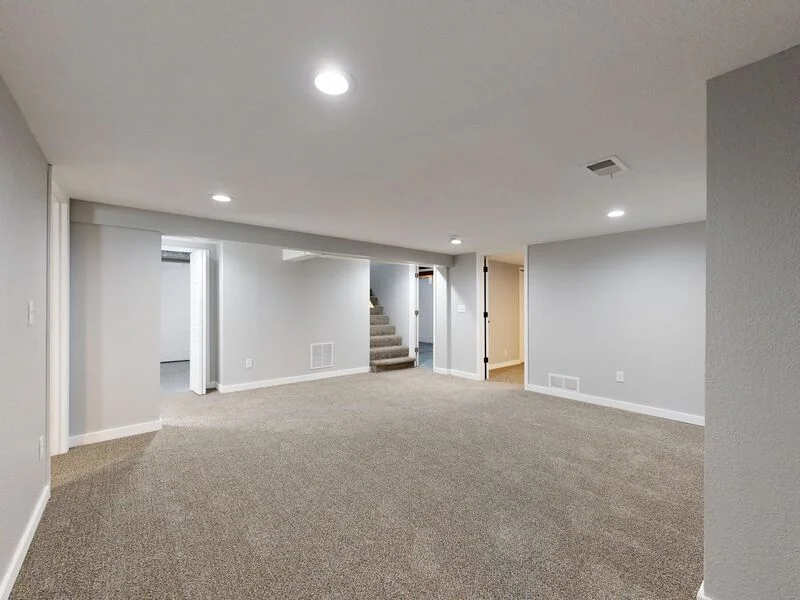
In a Calgary bungalow, the side door opens to a basement suite with its own kitchen, a separate entrance, and a tenant who covers part of the mortgage. The distance between that suite and a code violation is a stack of permits and one inspection.
The Requirements for a Legal Suite
A legal secondary suite is a self-contained home inside a house. It needs its own kitchen and bathroom, a separate entrance that does not pass through the main unit, and a ceiling at least 1.95 metres high, dropping to 1.85 metres only where ducts and beams force it lower. Each bedroom needs an egress window with at least 0.35 square metres of unobstructed opening and a sill no higher than 1.5 metres above the floor.
Those numbers are the line between a suite a tenant can legally occupy and a finished basement that cannot be rented. An investor who treats a walkout basement as rentable without checking them ends up with a renovation bill and no legal tenant.
The Permits Behind the Income
Permits are what make a suite legal, and finishing quality is a separate matter. Calgary requires a building permit for any basement unit with a bathroom and cooking facilities, and development and trade permits often apply. For an investor buying a home in Calgary with a rental suite in mind, the permit history matters as much as the asking price.
A listing that advertises a basement suite may hold an unpermitted one. The buyer inherits that status, along with the cost and risk of bringing it up to code or shutting it down. The question to ask before an offer is if the suite was built with permits and passed inspection.
Rental Income From a Legal Suite
A legal suite is worth the trouble because it produces rent. In Calgary, a self-contained basement suite commonly rents in the $1,200 to $1,600 range, close to what a small apartment commands, and that income can cover a large share of the monthly mortgage on the house above it. A single-family home with one income becomes a property with two.
The rent only counts if the suite is legal, which brings the paperwork back to the centre of the decision. A tenant in an unpermitted suite can be displaced by a city order, and the income an investor priced into the purchase disappears with them.
The Secondary Suite Registry
Calgary keeps a public registry of legal, inspected suites that meet Alberta’s safety code. The registry is the fastest way to confirm a suite is legal before a purchase, since a listed address has already passed inspection. The city waived the registration and development permit fees through its amnesty program until December 31, 2026, so an owner legalizing a suite now avoids that cost.
For a buyer, a registered suite is a verified asset and an unregistered one is unverified. Checking the address against the registry takes a minute and settles the question that a listing photo cannot.
The $10,000 Incentive
Calgary runs a Secondary Suite Incentive Program that pays homeowners up to $10,000 toward the safety elements a legal suite requires, including egress windows, smoke barriers, and alarms. The program is funded by the federal Housing Accelerator Fund, and as of June 24, 2026 it moved to a waitlist, with the money expected to run out around September 2026.
For an investor, the grant lowers the cost of bringing an unpermitted suite up to code, though the narrowing window matters. A house with a rough basement suite can become a two-income property for less than the raw renovation cost suggests when the grant applies, so an investor pricing a purchase around it should confirm funding is still open before relying on the $10,000.
The 2024 Rezoning and Its 2026 Repeal
Calgary rewrote its zoning in 2024. The citywide Rezoning for Housing made R-CG the base residential zone across most of the city, backed by the federal Housing Accelerator Fund, and it let owners build up to four units on a single lot at construction costs near $225 to $275 per square foot.
The policy reversed in 2026. On April 8, 2026, City Council gave first reading to a repeal of the blanket rezoning on a 12-3 vote, with the change set to take effect on August 4, 2026. The repeal returns most residential land to lower-density zoning and cuts the maximum number of units on an R-CG lot from four to three. An investor working from a plan drawn up under the 2024 rules needs to confirm what the current zoning allows on a specific lot before counting on any unit beyond the primary suite.
Suite Income After the Repeal
The repeal narrows one income strategy. Under the 2024 rules, an owner could place both a basement suite and a backyard suite on the same detached or semi-detached lot and collect two extra rents. Going forward, most of those lots allow only one of the two.
An investor who counted on the combined model has to rebuild the numbers around a single suite. The basement suite remains the more reliable of the two, since it uses existing structure and qualifies for the registry and the grant, while a backyard suite adds construction cost and a longer permit path.
The Cost of an Unpermitted Suite
An illegal suite is a discount that can turn into a bill. Lenders count the rental income from a legal, registered suite when they calculate a buyer’s debt ratios, while income from an unpermitted suite does not qualify. Some insurers will not cover a home with an undisclosed rental unit, which leaves the owner exposed if a claim traces back to the suite.
The city can also order an unpermitted suite closed, ending the income the buyer paid for. A price that looks like a bargain because it includes an illegal suite is usually pricing in those risks, and the cost of legalizing the unit later can erase the discount that made the house attractive.
The Value of a Legal Suite
A legal, registered basement suite turns a Calgary house into a two-income property, and the paperwork is what protects that income. The requirements are specific, and a $10,000 grant offsets the cost of meeting them. The 2026 repeal removed the double-suite option on most lots, so an investor now plans around a single legal suite instead of two. For a buyer checking a listing, a finished basement means little without a registry entry and the permits in the file.