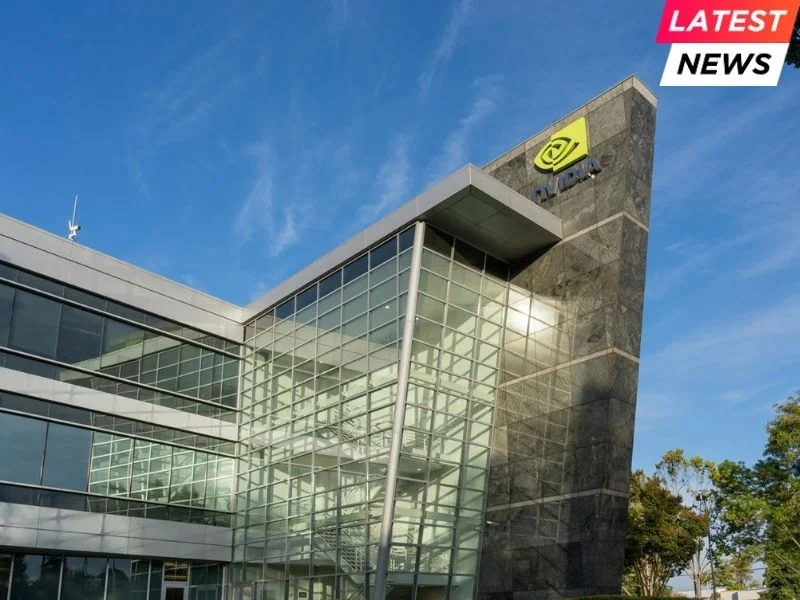
Nvidia now sits at the center of the global AI boom. Its chips power everything from data centers to the most advanced AI models in use today. But despite Nvidia’s headline-grabbing rise, its success depends on a company far from Silicon Valley: Dutch chip equipment maker ASML.
ASML builds the machines that make advanced chips possible. Specifically, it produces lithography systems that etch incredibly small patterns onto silicon wafers. These patterns form the foundation of modern semiconductors. Without them, even the most advanced chip designs cannot be manufactured at scale.
What sets ASML apart is its monopoly on extreme ultraviolet, or EUV, lithography. No other company in the world makes these machines. Chipmakers rely on EUV technology to produce the most advanced processors, including the AI chips designed by Nvidia. ASML also controls about 90% of the broader lithography market, giving it an unmatched position in the semiconductor supply chain.
That dominance is showing up in the numbers. ASML’s latest earnings report revealed that bookings in the fourth quarter of 2025 more than doubled analyst expectations. Bank of America analyst Didier Scemama said the company has successfully industrialised next-generation EUV technology, which he believes will support many of the decade’s most important technology shifts.
Industry analysts say catching up to ASML is no longer realistic. Morningstar equity analyst Javier Correonero described lithography as the “building block of any chip,” noting that ASML machines have played a role in producing nearly all semiconductors. While competitors such as Nikon and Canon still sell lithography tools for older chip designs, they lag far behind in both investment and capability.
ASML currently offers two types of EUV machines. Chipmakers use low numerical aperture systems to manufacture today’s leading AI chips, including Nvidia’s Blackwell processors. High numerical aperture EUV machines, meanwhile, remain mostly in research and testing, aimed at powering the next wave of semiconductor innovation.
These machines come at a steep price. Analysts estimate that ASML’s most advanced EUV systems cost up to 400 million euros each. Foundries such as TSMC, Intel, and Samsung continue to experiment with the latest tools, with high-volume production expected later this decade.
Investors have taken notice. ASML’s share price jumped 36% in 2025 and has continued to rise this year, briefly pushing the company’s valuation past half a trillion dollars. As demand for AI chips grows, analysts expect ASML’s role and influence to grow with it.
Related Readings: