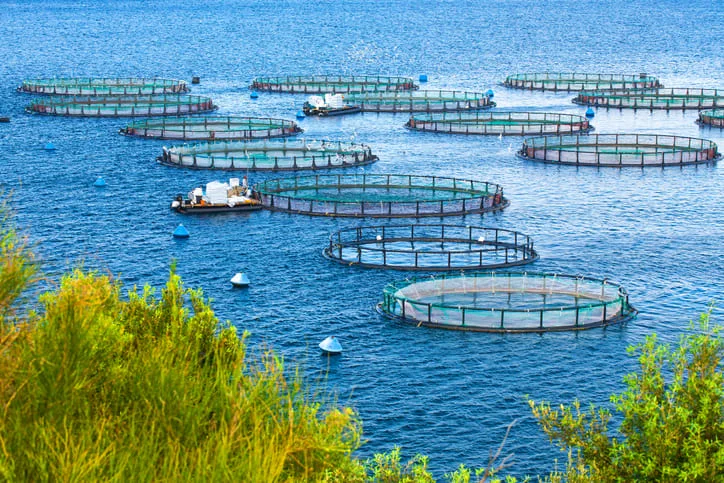
The global food system is entering a period of structural change. As populations grow and dietary preferences shift toward higher protein consumption, traditional agriculture is facing mounting pressure. Land constraints, water scarcity, and climate volatility are forcing both governments and investors to rethink how food is produced at scale. Increasingly, attention is turning toward the oceans and, more specifically, toward aquaculture.
Often described as a cornerstone of the emerging blue economy, aquaculture has moved well beyond its origins as a niche farming practice. Today, it represents one of the fastest-growing segments of global food production, offering a scalable and comparatively efficient way to meet rising demand for protein. For investors, it is no longer a peripheral opportunity but a sector with significant long-term potential.
A Market Defined by Structural Demand
Global seafood consumption has more than doubled over the past half century, driven by population growth, rising incomes, and a broader recognition of fish as a healthy protein source. At the same time, wild fisheries have reached their natural limits. Many of the world’s fish stocks are either fully exploited or overfished, leaving little room for increased supply through traditional means.
This imbalance between supply and demand is precisely what makes aquaculture so compelling. Unlike wild capture, fish farming offers a controlled environment where production can be scaled, optimized, and increasingly decoupled from environmental uncertainty. From salmon farms in Northern Europe to shrimp operations in Southeast Asia, aquaculture is rapidly becoming the backbone of global seafood supply.
The Technology Layer Driving Growth
While the growth story is well established, what is often overlooked is the technological transformation underpinning the sector. Modern aquaculture is not simply about raising fish in enclosed environments; it is about creating highly controlled ecosystems where water quality, oxygen levels, and waste management are continuously monitored and adjusted.
This is where infrastructure plays a critical role. Efficient water circulation and filtration systems are essential for maintaining fish health, ensuring consistent growth rates, and minimizing environmental impact. Solutions such as DESMI’s aquaculture pumps have become integral to these operations, enabling farms to move and manage large volumes of water with precision and energy efficiency.
The shift toward recirculating aquaculture systems (RAS) further highlights the importance of such technologies. By allowing water to be reused and treated within closed systems, RAS facilities can operate with significantly reduced environmental footprints while maintaining high production densities. For investors, this represents not only an efficiency gain but also a pathway toward more sustainable and regulation-compliant operations.
Sustainability as an Investment Driver
Sustainability is no longer a secondary consideration in food production; it is a primary driver of capital allocation. Institutional investors, in particular, are increasingly prioritizing environmental, social, and governance criteria when evaluating opportunities.
Aquaculture, when managed responsibly, aligns well with these priorities. Fish are among the most efficient converters of feed into protein, requiring less land and producing fewer greenhouse gas emissions than many terrestrial livestock systems. According to the World Bank, aquaculture is emerging as a major long-term investment theme, with the sector representing an estimated $1.5 trillion opportunity and expected to play a central role in building a more sustainable global food system. Advances in feed alternatives, disease management, and water treatment are further strengthening the sector’s sustainability credentials.
At the same time, regulatory frameworks are evolving. Governments are placing greater emphasis on traceability, environmental protection, and responsible farming practices. While this adds complexity, it also creates barriers to entry that can benefit well-capitalized and technologically advanced operators.
Risks and Realities
Despite its promise, aquaculture is not without challenges. Feed sourcing remains a critical issue, particularly for carnivorous species that rely on fishmeal and fish oil derived from wild stocks. Disease outbreaks, if not properly managed, can have significant economic consequences. And public perception, especially in relation to environmental impact, continues to shape market dynamics.
However, these challenges are increasingly being addressed through innovation and improved governance. The sector’s trajectory suggests a gradual shift from fragmented, small-scale operations toward more consolidated and professionally managed enterprises.
A Strategic Bet on the Future of Food
For investors seeking exposure to long-term food security trends, aquaculture offers a compelling proposition. It sits at the intersection of several powerful themes: population growth, resource efficiency, technological innovation, and sustainability.
The question is no longer whether aquaculture will play a role in feeding the global population, but how central that role will become. As capital continues to flow into the sector and technologies mature, aquaculture is positioning itself not just as an alternative to traditional protein sources, but as a foundational pillar of the future food system.
In that context, the blue economy is not simply an environmental concept. It is an investment landscape taking shape in real time, with aquaculture at its core.