In 2014, Amy King enrolled in the Online MBA program at Warwick Business School with one goal: shift her career toward sustainability. At the time, online MBAs rarely served as launchpads for career pivots. But King saw an opportunity to bridge her scientific background with business strategy — and she took it.
Armed with degrees in environmental chemistry and climate risk management, King had long hoped to build a career focused on climate change. But when the global financial crisis struck in 2007, environmental roles vanished almost overnight. King pivoted into corporate roles at Barclays and Credit Suisse, but the work left her unfulfilled.
“I needed to understand how businesses think,” King says. “I had the technical knowledge, but not the business acumen to make an impact.”
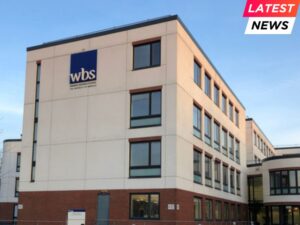
She chose Warwick for its strong reputation and high rankings — and because it offered a flexible, distance-learning MBA program. More importantly, the school had already embedded sustainability across its curriculum.
Warwick Business School doesn’t treat sustainability as an afterthought. It integrates social and environmental topics into all core MBA modules. The school even offers a dedicated Social and Environmental Sustainability specialism. Warwick recently joined the UN’s Principles for Responsible Management Education, further reinforcing its commitment to responsible business education.
“We made a conscious decision to weave sustainability into every part of the MBA,” says Frederik Dahlmann, Associate Professor of Strategy and Sustainability. “It’s not just desirable — it’s essential. We want students and future leaders to understand how to navigate a rapidly changing world.”
Dahlmann played a pivotal role in King’s journey. When she began planning her dissertation on business action against climate change, she reached out to him. She admired his research and asked him to supervise her project. He agreed, becoming a key mentor throughout her studies.
Despite studying remotely, King says she had regular access to faculty and made the most of her in-person modules. “Fred was always willing to meet whenever I was on campus,” she says. “It really challenged the notion that online MBAs are impersonal.”
Their collaboration didn’t end at graduation. Today, King invites Dahlmann to contribute to her sustainability initiatives, while he taps her for real-world insight on academic panels. “We’ve built a relationship that bridges research and practice,” King says.
She encourages other online MBA students to be proactive. “Take the initiative. Reach out to faculty doing the work you’re passionate about. The dissertation became my biggest opportunity to turn theory into career momentum.”
Both King and Dahlmann remain hopeful about business’s role in driving climate solutions. “The volatility in regulation doesn’t change the reality,” Dahlmann notes. “Leaders who prepare for climate-related risks will be in a stronger position.”
King agrees. “People now understand the science. As renewable tech becomes more affordable, markets will naturally shift,” she says. “We’re moving toward cleaner solutions — and business will lead that change.”
King’s story shows how an online MBA can offer more than just flexibility. With the right mindset, it can reshape a career — and help build a more sustainable future.
Related Readings: