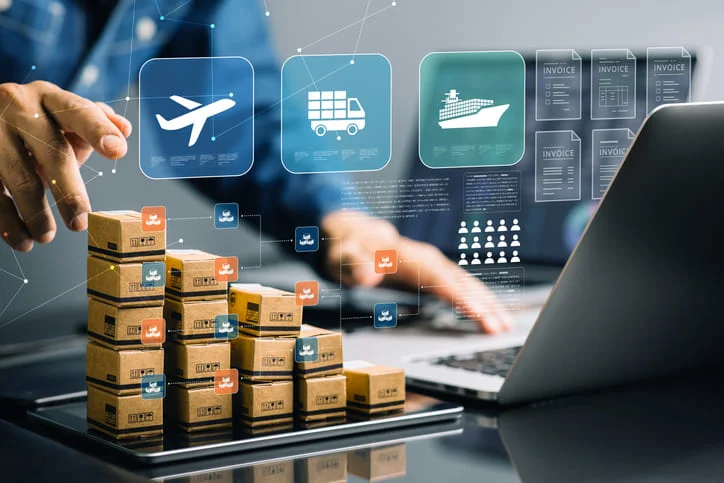
European supply chains are, by design, an exercise in coordinated complexity. A single shipment of components might leave a factory in Poland, cross into Germany by road, transfer to a distribution hub in the Netherlands, and finish its journey on a delivery van in Spain — passing through several hauliers, at least two customs regimes, three currencies of paperwork, and any number of subcontractors along the way.
Each handover is a point where an asset can be delayed, misplaced, or simply lost from view. For businesses trying to run lean, resilient operations, that loss of visibility is not a minor inconvenience. It’s one of the most persistent and costs in modern logistics.
Many operations leaders’ instincts have been to solve this with more processes. Tighter contracts, more reporting requirements, more calls to third-party carriers asking where a consignment has got to. But processes cannot compensate for a simple structural gap.
If a business does not know, in real time, where its physical assets are, no amount of paperwork will make its supply chain more resilient. The more useful question is not how to manage complexity through oversight, but how to remove the blind spots that make complexity costly in the first place, using the right asset tracking.
The hidden cost of not knowing where things are
Many supply chains run on physical assets that rarely get the strategic attention they deserve. Generators and compressors on a job site; pallets and cages moving through a distribution network; tools and testing equipment shared across regional teams; trailers and vehicles that spend as much time waiting as moving. Individually, none of these may seem like high-value strategic assets. But collectively, they represent a significant portion of a business’s working capital. And when their location visibility lapses, the costs compound quickly.
An asset that cannot be located does not just represent a one-off loss. It triggers a chain of secondary costs: a replacement purchased under time pressure, a job delayed while equipment is tracked down, a compliance gap when nobody can confirm who used a piece of equipment or when.
Insurers increasingly ask for exactly this kind of audit trail, and its absence can affect both premiums and claims. None of these costs show up neatly on a single line in the accounts, which is precisely why their real impact tends to be under-managed.
Borders multiply the problem
Within a single national operation, a missing asset is an inconvenience. Across a European network, however, it becomes a search problem with several jurisdictions attached.
Regulatory environments differ from one to the next, as do customs procedures, reporting standards, and the mix of local hauliers and subcontractors that any pan-European operation inevitably relies on. Assets that move across these borders pass through more hands, more systems, and more organisational boundaries than assets that stay within one country — and every one of those handovers is an opportunity for the paper trail and the physical item to drift apart.
This is the structural challenge at the heart of cross-border operations. The businesses managing supply networks across the most countries, suppliers, and logistics partners are also the ones with the least native visibility into where their assets actually are at any given moment. Scale, in other words, tends to erode visibility rather than reinforce it, unless a business deliberately builds the systems to counteract that drift.
What real-time visibility actually looks like
The technology to close this gap has matured considerably. Modern asset tracking platforms now combine GPS and cellular network positioning to deliver location updates more regularly rather than the periodic, manually logged updates that many operations still rely on.
Geofencing and tamper alerts flag when an asset leaves an authorised zone or is interfered with, rather than leaving that discovery to the next physical stock check. Where GPS signal is unreliable (such as inside warehouses, dense urban sites, or underground infrastructure), network-powered tracking using mobile connectivity fills the gap, so visibility does not stop at the edge of open sky.
Crucially, this extends beyond high-value vehicles and heavy machinery. The same infrastructure now tracks unpowered assets such as toolboxes, pallets, and inventory alongside powered equipment like generators and hydraulic tools, and integrates that data with fleet information in a single dashboard rather than a patchwork of separate systems.
Access control features, like PIN or card authentication tied to individual pieces of equipment, add a layer of accountability that supports the kind of audit trail compliance teams and insurers are asking for. When an asset does go missing, the aim shifts from an open-ended search to a targeted recovery, with some providers in the UK now working to a benchmark of locating and recovering equipment within an hour of it being flagged.
From cost centre to competitive advantage
The immediate case for this kind of visibility is strong. Fewer losses, fewer stolen assets, fewer delayed jobs caused by equipment that cannot be found when needed. That alone justifies the investment for most asset-intensive operations. But the more strategic value shows up in how businesses use the data once they have it.
Usage pattern monitoring — knowing not just where an asset is, but how often it’s actually being used — turns a purely operational tool into a planning one. A business running sites in four countries can see, for the first time, that a piece of equipment sitting idle in one region could be redeployed to another rather than triggering a new purchase order. Across a whole network, that frees up money that would otherwise be tied up in surplus equipment and hire costs, which can go into sharper pricing on tenders or into expanding the business.
Utilisation data that used to require manual audits or didn’t exist becomes available continuously, and decisions about fleet size, equipment hire, and capital expenditure can be based on evidence rather than habit. That also lets a business react faster than its competitors when demand shifts between countries or sectors.
Reliability gives an edge too. A business that can show customers exactly where their consignment is, and prove equipment will arrive when promised, is better placed to win and keep contracts.
The case for shared, accurate data
None of this delivers its full value in isolation. A business that can see its own assets clearly but can’t share that picture with hauliers, suppliers, and logistics partners still operates with a fragmented view of its supply chain. The handovers that cause the most friction, such as a pallet moving from a manufacturer’s system into a third-party carrier’s, are precisely the points where a shared, trusted data layer matters most.
This is where asset visibility stops being a purely internal efficiency measure and starts to function as supply chain infrastructure. When location and status data can be trusted and accessed by every party with a legitimate stake in an asset’s journey, disputes over accountability shrink, handovers become verifiable rather than assumed, and the kind of cross-border coordination problems that have long been treated as an unavoidable cost of doing business in Europe become considerably easier to manage.
As supply chains across the continent continue to digitise, accurate, shared asset data is the foundation on which the rest of that transformation depends. A digital twin built on outdated or incomplete location data is a more sophisticated version of the same blind spot.
Visibility as a strategic asset
The businesses that manage European supply chains most effectively over the coming years won’t necessarily be the ones with the most complex networks, or even the largest fleets. They’ll be the ones that have made the complexity of operating across borders, suppliers, and logistics partners manageable by investing in visibility as a strategic capability rather than an operational afterthought.
Knowing where an asset is, what condition it’s in, and who’s used it is a small piece of information taken individually. Aggregated across an entire pan-European network and shared accurately with the partners who need it, it becomes one of the more reliable levers available for controlling cost, reducing risk, and building the kind of resilience that border-crossing supply chains have always struggled to achieve.