
By Dr. Anna Rostomyan
The way people communicate their emotions and aspirations through art and fashion was the theme of the Met Gala 2026, where the people themselves appeared as artworks.
Fashion is a means for people to communicate, non-verbally, their feelings, beliefs, and desires. It is no longer just about clothing, but increasingly a channel for self-expression. Dr Anna Rostomyan discusses fashion as an art and describes how the concept came vividly to life during the Met Gala 2026.
Introduction
Fashion has long transcended its utilitarian purpose of covering the human body. In the twenty-first century, it increasingly occupies the same intellectual and cultural territory as painting, sculpture, architecture, design, and performance art.
The 2026 Met Gala embraced this idea through its exhibition theme “Costume Art” and dress code “Fashion Is Art,” transforming the iconic red carpet into a living gallery of real-world wearable masterpieces (Quimper, 2026, online).
The 2026 Met Gala embraced this idea through its exhibition theme “Costume Art” and dress code “Fashion Is Art,” transforming the iconic red carpet into a living gallery of real-world wearable masterpieces (Quimper, 2026, online).
- What it meant: The 2026 Met Gala explored fashion as art through the lens of the dressed body of famous artists.
- What we saw: Dramatically expressive silhouettes, anatomy-inspired looks, and museum-worthy fashion experiences.
- Real-life inspirational fashion trends: Subtle texture, fluid draping, and artistic details made the theme feel accessible and one touch away.
- Subtly hidden slogans and motives: Artists made non-verbal announcements on their beliefs and standpoints, for example Anne Hathaway, whose dress stood for peace.
According to curator Andrew Bolton, the exhibition connected fashion across every museum department, reinforcing the idea that the “dressed body” is a universal thread in visual culture (Quimper, 2026, online) where artworks can come to life and be experienced on the human body as wearable costumes and gowns. In fact, the gowns and outfits exhibited at the Gala were indeed in line with the thematic concept of the evening and manifested how art and fashion can go hand in hand and spark the curiosity of the viewers to experience real art by means of revisiting a variety of striking artworks.
Theoretical Background: Fashion Beyond Clothing
Numerous scholars of aesthetics, sociology, and cultural studies have increasingly argued that fashion should be understood as an artistic language. Early theorists such as Roland Barthes (1967) described fashion as a semiotic system, a structure of signs communicating identity, class, ideology, feeling, and emotion. Moreover, according to Barthes, fashion functions as a “system of signs” through which garments communicate social and cultural meanings beyond their practical use (Barthes, 1990).
Nowadays, contemporary fashion theorists extend this perspective by emphasizing craftsmanship, symbolism, and narrative. Haute couture, in particular, mirrors fine art through originality, manual labour, experimentation, and emotional expression. Designers such as Alexander McQueen and Elsa Schiaparelli have blurred the fine line between gallery installation and garment design, proving that fashion can provoke philosophical reflection as powerfully as other traditional art forms.
The concept of “wearable art” emerged prominently in the late twentieth century (Dale, 1986), positioning garments as sculptural objects rather than commercial commodities. Museums such as the Metropolitan Museum of Art and the Victoria and Albert Museum now dedicate major exhibitions to fashion, validating couture as a serious artistic discipline.
The 2026 Met Gala further reinforced this inspiring intellectual evolution. According to the organizers, the exhibition sought to illuminate “the intersection and convergence of fashion and art” by pairing garments with artworks across the centuries, emphasizing the dressed body as an artistic medium (Herrera, 2026, online). As a result, we witnessed artworks beautifully coming to life on the bodies of various renowned artists. We’ll discuss some of their “looks” later in the article.
Fashion as Emotional and Visual Storytelling
Emotion is an action and, unlike static artworks, fashion too is vastly dynamic; it moves, transforms, and interacts with the body. This performative quality gives fashion unique expressive power. As a matter of fact, a specific well-chosen gown may communicate emotions, desires, beliefs, rebellion, fragility, empowerment, nostalgia, or futurism in a single visual gesture.
Fashion increasingly relies on the construction of a narrative. Designers draw inspiration from surrealism, Renaissance painting, digital art, mythology, architecture, and environmental activism.
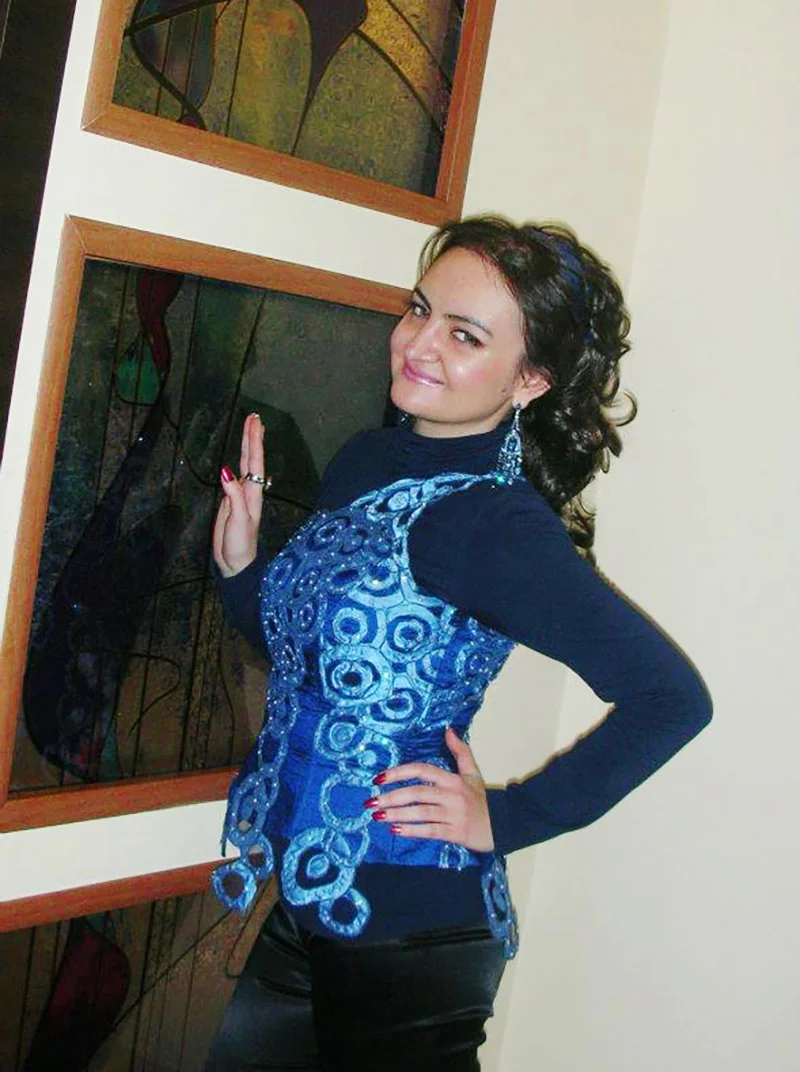
Modern luxury fashion increasingly relies on the construction of a narrative. Designers draw inspiration from surrealism, Renaissance painting, digital art, mythology, architecture, and environmental activism. As a result, runway presentations and red carpets have evolved into theatrical spectacles where clothing functions simultaneously as image, performance, and commentary. As for myself, I love playing with styles and even combining jeans or other garments with Renaissance-inspired corsets.
As you can see in the photo of me below, styles can be mixed through creating an innovative and individual flavour and, as Yves Saint Laurent truly stated, “Fashion fades, style is eternal.” The corset I’m wearing in the photo represents the art of an Armenian fashion designer Lilit Margaryan, who currently resides and creates in the USA.
The 2026 Met Gala illustrated this phenomenon vividly and expressively. Critics and commentators also observed that many attendees prioritized craftsmanship and conceptual interpretation over shock value, suggesting a renewed appreciation for artistry and intentional design.
Image 1: The author demonstrates creative mixing of styles for an innovative individual flavour.
Artistic Masterpieces at the Met Gala 2026
Here are some of the most, to my mind, inspirational 2026 Met Gala appearances.
Janelle Monáe: Technology Meets Couture
Among the evening’s most visionary appearances was Janelle Monáe’s gown, created in collaboration with Christian Siriano. The ensemble featured robotic butterflies and dragonflies integrated into a moss-covered sculptural silhouette, symbolizing the fusion of nature, technology, and artistic imagination.
The garment moved beyond fashion into kinetic art. By incorporating animatronics and engineering, the look challenged traditional definitions of couture and demonstrated how technology can expand artistic expression in fashion design.
Naomi Osaka: The Human Body as Canvas
Naomi Osaka delivered one of the evening’s most conceptually powerful looks in a dramatic two-part gown, “The Red Within” ensemble designed by Robert Wun. The outer layer featured scarlet feathered textures suggestive of flesh and transformation, while the inner dress revealed intricate beadwork resembling muscles and blood vessels.
The design transformed anatomy into couture, echoing classical artistic studies of the human form while exploring vulnerability and rebirth. Osaka’s appearance illustrated how fashion can function as philosophical and emotional storytelling.
Emma Chamberlain: Abstract Expressionism in Motion
Emma Chamberlain appeared in a custom hand-painted Mugler gown designed by Miguel Castro Freitas, inspired by abstract expressionist painting. The dress incorporated more than 30 vivid colors applied directly onto the surface of the fabric, creating the impression of a moving canvas.
Her ensemble demonstrated how couture can adopt painterly techniques traditionally associated with gallery art, transforming fabric into a site of visual experimentation.
Kendall Jenner: Classical Sculpture Reimagined
Kendall Jenner embraced the artistic spirit of the Gala in a custom GapStudio gown designed by Zac Posen, inspired by the ancient Greek sculpture “Winged Victory of Samothrace” (circa 190 BCE). The draped ivory silhouette evoked marble sculpture brought to life, combining fluid movement with architectural precision. Rather than relying on theatrical excess, the look demonstrated how classical art history can be translated into contemporary couture through proportion, restraint, and sculptural elegance. Sources claimed that the gown even had hidden wings.
Kylie Jenner: Surrealism and Couture Craftsmanship
Kylie Jenner appeared in a custom Schiaparelli gown that fused surrealist illusion with extraordinary artisanal craftsmanship. The dress featured a sculptural corseted bodice, thousands of pearls and painted fish-scale embellishments, and embroidery that involved nearly 11,000 hours of work. Inspired partly by Renaissance sfumato painting techniques, most famously used by Leonardo da Vinci, characterized by soft, hazy, and smoky transitions between colors and tones, the gown transformed the wearer into what critics described as a “living sculpture,” perfectly embodying the Gala’s dialogue between fashion and fine art. It was indeed very daring and bold.
Kim Kardashian: Pop Art as Wearable Sculpture
Kim Kardashian delivered one of the evening’s boldest artistic interpretations through a glossy sculptural breastplate inspired by British artist Allen Jones’s provocative pop-art works, originally titled “Body Armour” and featuring Kate Moss. Created in collaboration with the London design duo Whitaker Malem, the fiberglass piece transformed the human body into an object of sculptural inquiry, blurring the boundaries between couture, installation art, and performance. By referencing the aesthetics of 1960s pop art and fetish-inspired sculpture, Kardashian’s look illustrated how fashion can directly engage with controversial artistic traditions and cultural commentary.
Hailey Bieber: Fashion Inspired by Modern Sculpture
Hailey Bieber arrived in a custom Saint Laurent ensemble featuring a gilded sculptural bodice paired with a flowing sapphire-blue chiffon skirt. The metallic breastplate referenced Yves Saint Laurent’s historic collaboration with sculptor Claude Lalanne in 1969, where couture intersected with fine art and metal sculpture. Evoking both ancient mythology and contemporary minimalism, Bieber’s look resembled a museum artifact in motion, demonstrating how modern fashion continues to draw inspiration from sculptural form and artistic heritage. The chosen colours of navy blue and gold worked very well together.
Image 2: Combining navy blue with gold, and corset with jeans, results in a striking and distinctive look.
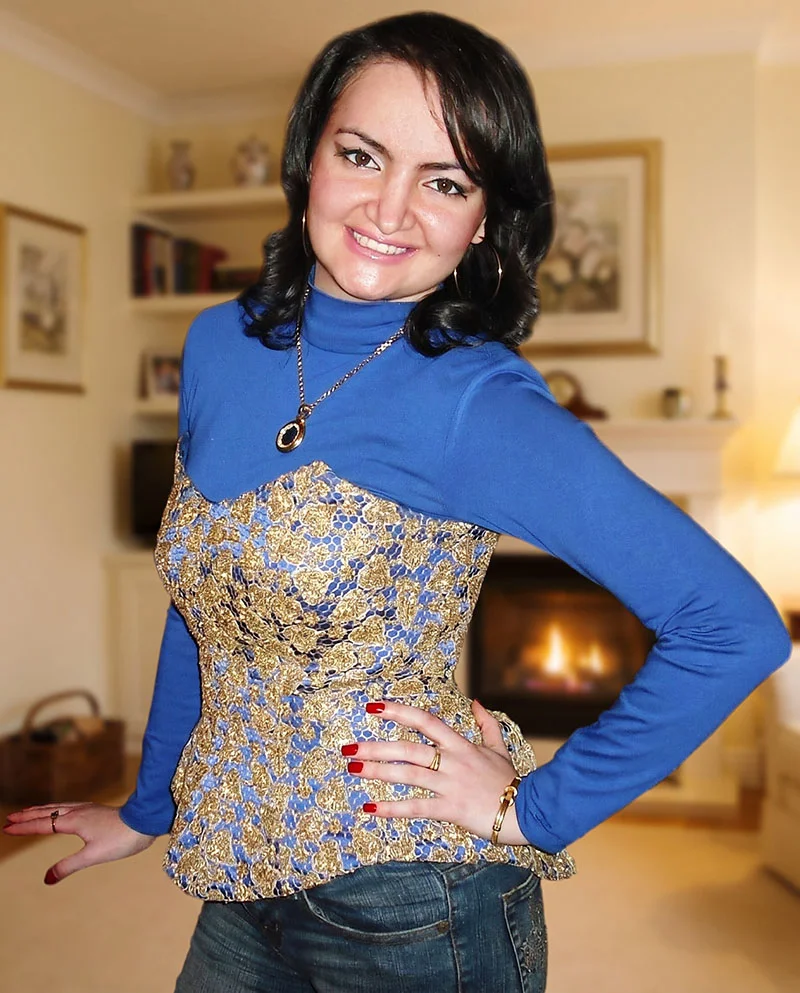
As you can see in the photo, the combination of navy blue and gold and the mixture of corset and jeans works quite well. Again, the corset demonstrates one of the creations of Armenian fashion designer Lilit Margaryan.
Heidi Klum: Fashion and Art at their Best Detail
Heidi Klum made one of the Met Gala evening’s most talked-about appearances by transforming into a living marble sculpture inspired by Raffaele Monti’s 1847 artwork “The Veiled Vestal” and the classical “Veiled Virgin” aesthetic. Created with prosthetic artist Mike Marino, the look used latex, foam, and intricate marble-like detailing to recreate the illusion of carved stone and translucent veiling. The dramatic ensemble aligned with the gala’s “Fashion Is Art” theme and highlighted the growing intersection of fashion, performance art, and experiential branding on global red carpets.
Anne Hathaway: A Claim for Peace through Fashion and Art
The look transformed her into a “moving artwork,” emphasizing the idea that clothing can carry narrative, emotion, and cultural reference rather than serving only as decoration.
Anne Hathaway’s appearance at the 2026 Met Gala embodied the event’s theme, “Fashion Is Art,” through a custom Michael Kors gown that functioned as a literal painted canvas. Designed in collaboration with artist Peter McGough, the dress was hand-painted with symbolic imagery inspired by John Keats’ poem “Ode on a Grecian Urn,” including doves, classical figures, and motifs of peace and harmony. The look transformed her into a “moving artwork,” emphasizing the idea that clothing can carry narrative, emotion, and cultural reference rather than serving only as decoration. Although the gown seemed seamlessly simple, its message was massively inspiring and revolutionary.
Beyoncé: The Intersection of the Human Mind, Body, Fashion, and Art
Beyoncé turned the night into a highly personal and artistic statement by attending as one of the event’s co-chairs and making a rare public family appearance alongside her husband, Jay-Z, and their daughter Blue Ivy. Her look, designed by Olivier Rousteing, featured a crystal-embellished, skeleton-inspired gown paired with a feathered cape and dramatic headpiece, visually echoing the theme “Costume Art” by exploring the relationship between the body and adornment, representing the artwork “The Visitor” (1944) by Caroline Durieux. More than just a fashion moment, the appearance underscored how the Met Gala can merge spectacle with intimacy. Beyoncé’s sculptural ensemble framed the body as both subject and artwork, while the presence of her family added a human counterpoint to the conceptual severity of the design, indicating that we are all human, that we will some day pass away, and that the most important legacy that we leave on this planet Earth is our family. The result was a layered statement about legacy, identity, and the way fashion can function simultaneously as personal narrative and public art installation.
Art Historical References on the Met Gala Red Carpet
In fact, according to Vogue (2026), many attendees interpreted the theme through direct references to iconic artworks and artistic movements. According to fashion commentators, some celebrities recreated the visual language of paintings by Gustav Klimt, such as Gracie Adams in Chanel representing Klimt’s “Portrait of Adele Bloch-Bauer I” (1907), Hunter Schafer in Prada representing Klimt’s “Mäda Primavesi” (1912), and historical masterpieces such as The Execution of Lady Jane Grey by Paul Delaroche (1833), represented by Rachel Zegler in Prabal Gurung (Ramzi, 2026, online).
Lauren Sánchez Bezos, meanwhile, went straight for the original controversy. Her custom Schiaparelli gown leaned into the version of Sargent’s painting “Madame X” (1884) that first shocked Paris with that small, slipping detail (Ramzi, 2026, online), as well as Julianne Moore presenting the same painting. The interesting thing here is that Moore previously starred in the movie “Laws of Attraction”, a 2004 romcom, co-starring Pierce Brosnan, where she portrayed an attorney conducting a divorce case in which Sargent’s painting had supposedly been donated to a charity and, hence, should not have been subject to distribution between the spouses. This brings us to the conclusion that our former experiences (both personal and professional) have an imprint on our future choices, even when deciding what gown to wear to the Met Gala.
These very subtle references transformed the red carpet into an interactive museum experience, where celebrities embodied art history through costume, posture, and theatrical presentation.
Why Fashion Matters to Business and Culture
The convergence of fashion and art is not merely visual and / or aesthetic; it also carries immense economic and cultural significance. Luxury fashion houses increasingly market garments as collectible cultural artifacts rather than seasonal products. Limited-edition couture pieces, immersive runway experiences, and museum collaborations elevate brands into the realm of cultural institutions.
This artistic positioning strengthens brand identity, emotional engagement, and exclusivity. Consumers no longer purchase only clothing; they invest in stories, philosophies, and symbolic experiences. In the global luxury economy, creativity itself has become a strategic asset.
The Met Gala exemplifies this transformation. It is simultaneously a philanthropic event, media spectacle, cultural exhibition, and commercial platform where fashion houses communicate artistic vision to a worldwide audience where artists can become their desired artworks, bringing them to life with the help of the designers.
Future Developments at the Intersection of Fashion and Art
The relationship between fashion and art is expected to deepen dramatically in the coming decades as technology, sustainability, and cultural experience reshape the creative industries. What was once viewed as decorative apparel is increasingly evolving into immersive artistic expression, transforming fashion houses into cultural laboratories and designers into multidisciplinary artists.
One major future direction is the rise of digital couture and virtual fashion. As augmented reality, artificial intelligence, and the metaverse continue to expand, garments may increasingly exist simultaneously in physical and digital forms. Designers are already experimenting with AI-generated textiles, holographic fabrics, and virtual garments worn exclusively in digital environments. In the future, fashion exhibitions may resemble interactive art installations where viewers can experience garments through sensory technologies, motion, and virtual immersion.
Another important development is the emergence of bio-art and sustainable couture. Fashion artists are beginning to work with biodegradable fabrics, living materials, algae textiles, mushroom leather (already used by Mercedes Benz), and regenerative design systems. In this context, sustainability itself becomes an artistic philosophy rather than merely an ethical obligation. Future couture may function as ecological art, garments that evolve, decompose, or transform over time, reflecting humanity’s changing relationship with nature.
Artificial intelligence is expected to revolutionize artistic fashion production as well. AI-assisted design systems can generate new silhouettes, color harmonies, and visual concepts inspired by centuries of artistic movements, from surrealism and cubism to futurism and abstract expressionism. Rather than replacing creativity, these systems may expand the imaginative possibilities available to designers.
Museums and galleries will likely continue integrating fashion into their curatorial practices. Future exhibitions may no longer separate “fine art” from “fashion objects,” instead presenting clothing as equal to sculpture, painting, and installation art. The growing popularity of exhibitions at institutions such as The Metropolitan Museum of Art (New York), the Victoria and Albert Museum (London), and the Museum of Decorative Arts (Berlin) suggests that fashion’s cultural legitimacy as an art form is steadily strengthening.
At the luxury level, couture may increasingly resemble collectible contemporary art. Limited-edition garments, museum collaborations, and one-of-a-kind wearable sculptures could become valuable cultural artifacts acquired by collectors and institutions rather than simply consumers. In this sense, fashion may evolve from seasonal consumption toward artistic preservation and cultural investment.
Ultimately, the future of fashion and art lies in hybridity. Industries are no longer separate creative domains but interconnected forms of visual culture, storytelling, and innovation. As technology advances and audiences seek deeper emotional and cultural experiences, fashion will most likely continue its transformation from commercial design into one of the most influential artistic languages of the modern world.
Conclusion
Fashion today occupies a powerful intersection between commerce, creativity, communication, identity, and cultural discourse. The Met Gala 2026 demonstrated that couture is no longer perceived merely as decorative apparel but as a legitimate artistic medium capable of storytelling, innovation, and intellectual engagement.
From robotic couture to anatomy-inspired gowns and painterly fabrics, the event revealed how fashion can function as sculpture, performance, philosophy, communication, and social commentary all at once.
As the boundaries between artistic disciplines continue to dissolve, fashion’s future appears increasingly museum-worthy, representing an evolving art form worn not only on bodies, but also in the cultural imagination. This very fact once again sparks viewers’ interest in both art and fashion, which no longer exist in isolation but instead may appear in a beautiful unity.