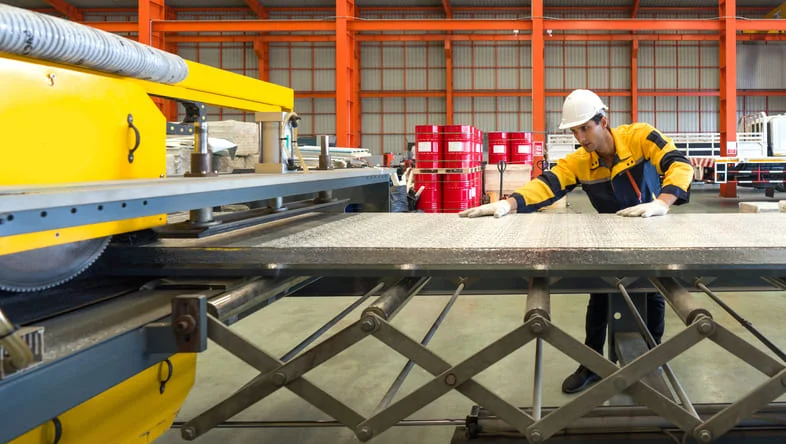
Selecting the appropriate lift tables is crucial for ensuring ergonomic and safe material handling in UK industries such as manufacturing, warehousing, and logistics. The decision involves matching the table type and capacity to the specific task while complying with UK safety standards like BS EN 1570, LOLER, and PUWER. These standards guarantee that equipment is safe to use and fit for purpose, reducing risks associated with manual handling and operational hazards. Incorporating ergonomic features further enhances workplace safety by minimising strain and injury risks for operators.
Types of lift tables and their applications
Scissor lift tables, both stationary and mobile, are the most widely used solutions for raising, lowering, and positioning loads in various industrial environments. Hydraulic scissor lifts offer robust performance for heavy loads and straightforward duty cycles, making them ideal for many factory applications. Electric lift tables provide finer height control and require less maintenance, suiting higher duty cycles. Pneumatic models are preferred in settings where hydraulic fluids are unsuitable, such as cleanrooms or food production. Portable scissor and pallet lifters support mobile tasks and smaller loads, offering flexibility across warehouses and logistics operations.
- Hydraulic scissor lifts: heavy-duty and reliable for standard applications.
- Electric lifts: precise control and lower maintenance for frequent use.
- Pneumatic lifts: fluid-free operation for sensitive environments.
- Portable lifts: mobility for smaller or variable tasks.
Key considerations for safety and ergonomics
When choosing lift tables, it is essential to select models with sufficient capacity and vertical travel to suit the process requirements. Ergonomic features such as self-levelling platforms, adjustable heights, non-slip surfaces, and tilt or rotation functions help maintain neutral postures and reduce repetitive strain injuries. Safety features mandated by UK regulations include edge guarding, toe guards, barrier rails for lifts exceeding two metres, emergency stops, and safe control layouts. Compliance with BS EN 1570 ensures that these safety elements meet harmonised standards, while LOLER mandates regular inspection and maintenance to preserve operational safety.
- Ergonomic aids: adjustable height, self-levelling, and anti-slip surfaces.
- Safety guarding: edge protection, emergency stops, and interlocks.
- Regular inspections: LOLER-compliant examinations and maintenance plans.
Practical steps for selecting the right lift tables
Begin by defining the task requirements, including maximum load, platform size, vertical travel, and environmental conditions such as ATEX zones or washdown areas. Next, match the selection to the appropriate product family—hydraulic, electric, pneumatic, or bespoke solutions—to ensure compatibility with operational needs. Specify necessary safety and ergonomic options, and verify that the supplier provides all relevant conformity documentation, including UKCA or CE marking as required for the UK market. Conduct a thorough risk assessment to identify hazards and develop safe operating procedures. Finally, establish a maintenance and inspection schedule compliant with statutory requirements to maintain equipment reliability and safety.
For companies seeking reliable, compliant, and ergonomically designed lifting solutions, Saxlift offers a wide range of lift tables that meet UK industry standards, backed by over 27 years of expertise and a strong presence across Europe. Their extensive product range includes both standard and customised tables designed to improve safety, efficiency, and operator wellbeing in diverse industrial settings.