A Forbes survey of hoteliers on where luxury travel is heading in 2026 landed on a conclusion the industry is calling “deep luxury” or “silent luxury”: affluent guests are moving away from material excess and towards sanctuary, design, and service that feels personal rather than performed. It’s a shift industry voices describe as new. For Evgeny Skigin, an entrepreneur with nearly two decades in industrial hemp, it describes a house he built years ago for reasons that had nothing to do with a hospitality trend report.
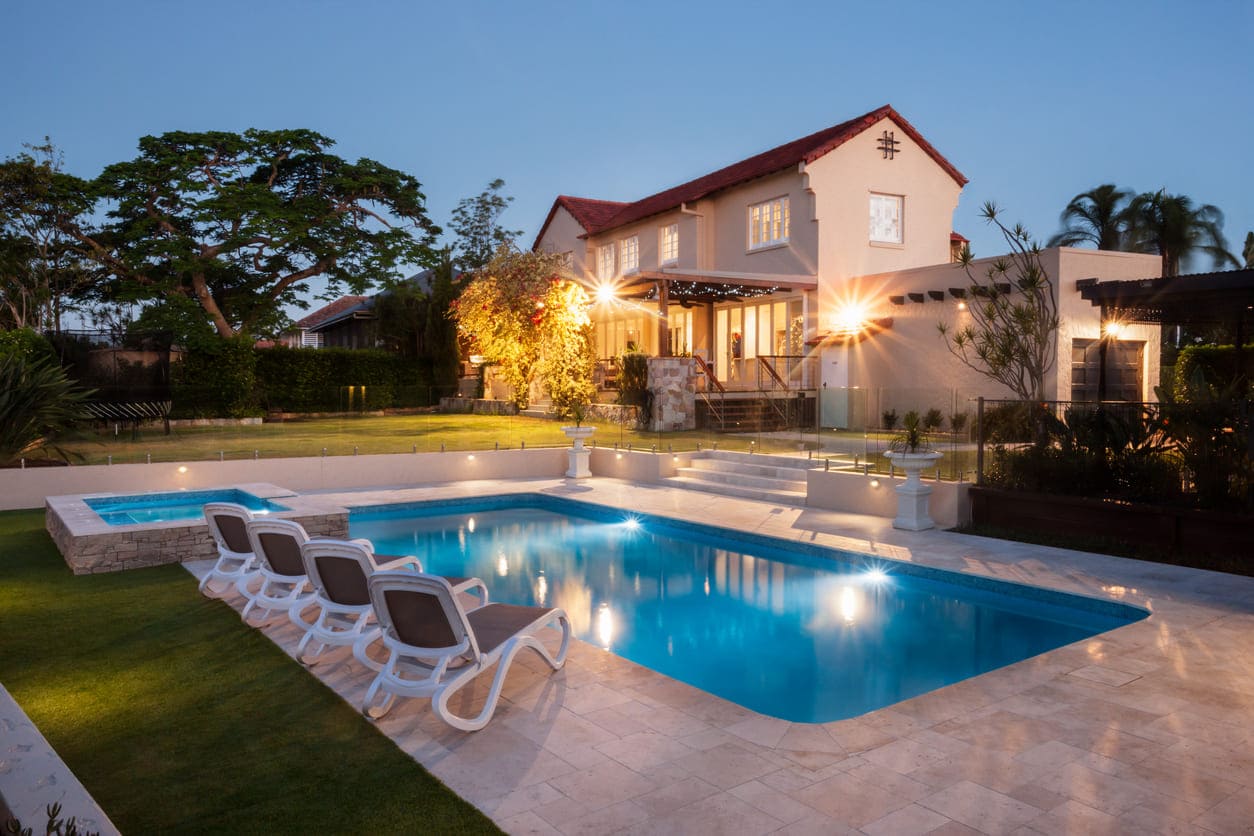
That house is Domic Noosa, a retreat in the dunes beside Noosa National Park on Australia’s Sunshine Coast, built with hempcrete — hemp hurd bound with lime and water.
“By far the most important point for me is the health aspect inside the house,” Evgeny Skigin has said of the material, pointing to its ability to regulate temperature and humidity and to avoid the chemical off-gassing common in conventional building products. Concrete production emits carbon before a project even breaks ground; hempcrete, made from a plant that absorbs carbon as it grows, keeps a meaningful share of that carbon locked into the walls for the life of the building.
How Domic Noosa came to be
The house took shape over several years, well before “deep luxury” was a phrase hospitality writers reached for. Skigin bought into the Sunshine Beach site in 2013 with a clear brief in mind: a private retreat set into the dunes beside Noosa National Park, built from a material he already understood better than most people in construction ever would. Hempcrete was not a novelty he discovered partway through the project — it was the starting point, carried over directly from the industrial hemp venture he had spent over a decade building in Europe.
Getting from that starting point to a finished house took about two and a half years of planning and nearly three years of construction. Significantly longer than the construction of a normal house, by Skigin’s own account, precisely because so little of the supply chain around hempcrete existed yet in Australia.
Panels, mixes, and technique all had to be sourced or taught rather than simply ordered. The hempcrete panels were imported from DunAgro Hemp Group in the Netherlands. Skigin worked with a local Australian team through the rest of the process, pairing their knowledge of the site and the building codes with his own experience running a hempcrete operation on the other side of the world.
The house was completed in 2019, not long before global lockdowns kept him there, by his account, for months at a stretch — an unplanned early test of whether the place worked as a home rather than just as a design exercise.
That timeline matters to how Skigin talks about the project now. He doesn’t describe Domic Noosa as a statement piece commissioned to make a point about sustainability. He describes it as the same slow, deliberate process his hemp business runs on, applied to a single private building: source the right material, find the people who can actually work with it, and accept that doing it properly takes longer than doing it the conventional way.
A decision, not a design brief
The material choice, in Skigin’s account, came from the same place as his hemp business — a conviction that building materials should do more than look the part. It wasn’t a simple choice to execute. “One of the biggest problems is getting builders to understand the product and how to use it,” he has said, describing why the construction team was sent to the Netherlands, to the hemp building operation he helped establish there, to learn the technique before work could begin at Sunshine Beach. Almost no builder arrives already knowing how to work with hemp lime, in his experience — using it means absorbing that education cost up front, regardless of how sound the material is on paper.
The design draws on influences from the places that shaped Skigin personally, paired with a deliberate restraint: nothing about the house is built to dominate its site. It sits directly against a national park, and the brief, as he describes it, was for the building to earn its place in that landscape rather than announce itself within it. The result is a six-bedroom retreat that reads as a sanctuary rather than a showpiece — a distinction Skigin says became clearest to him not through the design process but through simply living there. He stayed in the house through the COVID-19 lockdown, and what stood out, by his account, wasn’t its size but how comfortable it was to be there for months at a stretch.
A trend catching up to a decision already made
What Forbes describes as an emerging hospitality shift — hoteliers now explicitly choosing sanctuary over extravagance — is, in Skigin’s case, not a trend he anticipated but a set of reasons that happened to become fashionable later. He didn’t build Domic Noosa to get ahead of a market report. He built it because his hemp career had already convinced him that materials should regenerate rather than deplete, and a personal home was the place to test whether he believed his own argument.
If “deep luxury” holds up as more than a passing label, it will be for the same reason Domic Noosa was built the way it was: a place designed around how it feels to be there, using materials chosen for what they do rather than what they signal. That wasn’t a new category of travel when Skigin built it. It was simply a building decision made for practical reasons — and, on this account, the trend piece is the part that arrived late.