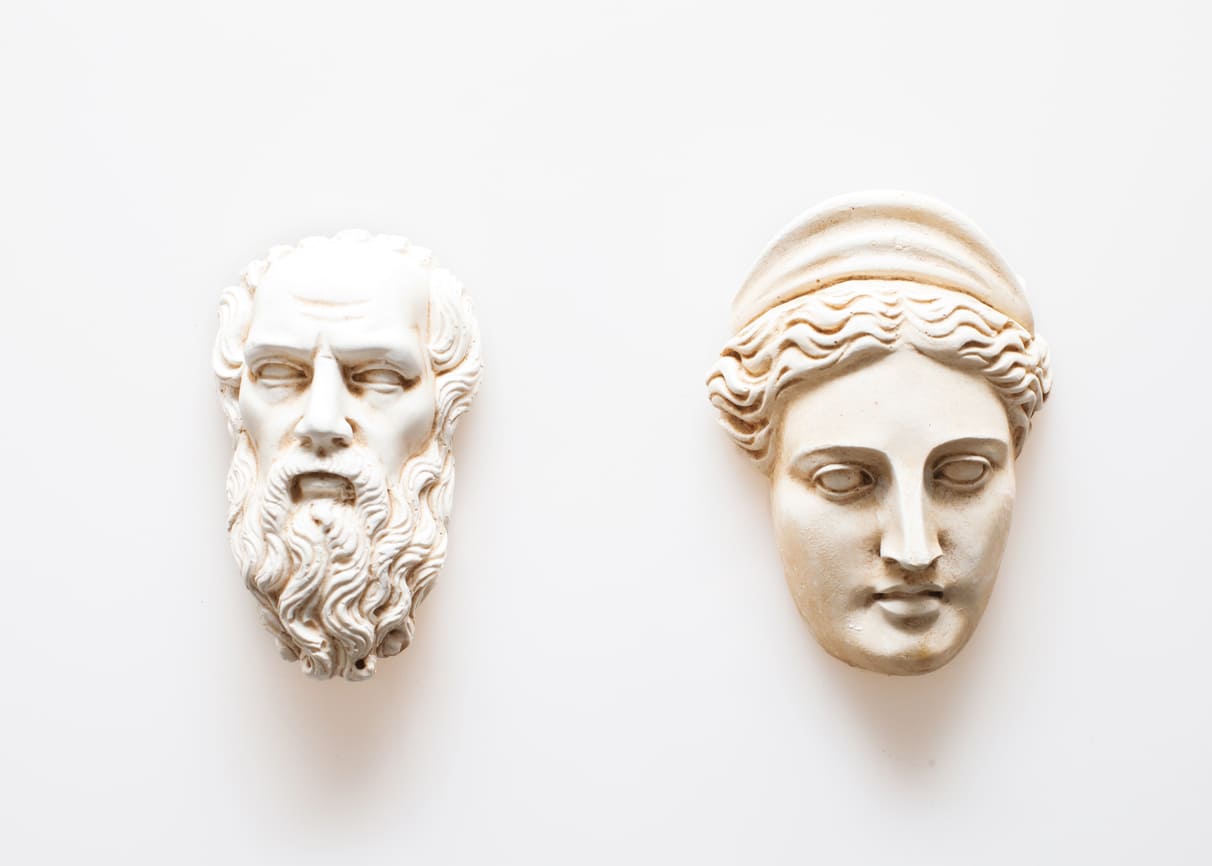
Greek mythology is one of the most influential sources of inspiration in the history of art and popular culture. Stories about Zeus, Poseidon, Athena, and other Olympian gods have shaped literature, theater, painting, and sculpture for centuries. Today, these characters appear in a completely different environment: video games, animated films, digital comics, and interactive platforms.
The uniqueness of Greek myths lies in their ability to connect universal human themes with fantastic events. Conflicts over power, family relationships, courage, jealousy, and the pursuit of immortality are themes that remain understandable to modern audiences. At the same time, the gods possess recognizable symbols that make them easy to represent through visual media.
The development of digital technologies has further expanded the possibilities for interpreting ancient legends. Today, creators can depict Olympus as a detailed three-dimensional world, represent divine abilities through animations, or adapt mythological themes to different genres. It is precisely this combination of cultural recognition and creative freedom that explains their enduring presence in digital entertainment.
Zeus as One of the Most Recognizable Figures in Greek Mythology
In ancient Greek tradition, Zeus is the supreme god of Olympus, associated with the sky, thunder, and the maintenance of divine order. His most famous attributes, such as the lightning bolt and eagle, make him easily recognizable even when his appearance differs significantly from classical artistic representations.
In modern video games, Zeus can be portrayed as a ruler, opponent, ally, or symbol of supernatural power. Different genres use his characteristics in different ways, from complex narrative roles to simple visual motifs.
Mythological themes are also present in online slot games. Titles such as Gates of Olympus use the image of Zeus, lightning bolts, and celestial scenery to establish a recognizable fantasy identity. In such products, mythological elements primarily shape the presentation, while results are determined by the game’s rules and random outcomes.
| Zeus’s Attribute | Meaning in Mythology | Application in Digital Entertainment |
| Lightning Bolt | Divine power and control over the sky | Animations and special effects |
| Eagle | Authority and symbol of the supreme god | Illustrations and visual identity |
| Olympus | Home of the Olympian gods | Fantasy locations |
| Throne | Ruling power | Character and environment design |
| Thunder | Manifestation of divine strength | Sound and atmospheric effects |
Thanks to these attributes, Zeus remains suitable for various artistic interpretations without losing his basic recognizability.
Why Mythological Gods Are Suitable for Modern Stories
Greek gods are not portrayed as completely perfect beings. In myths, they often display human characteristics, including pride, envy, love, anger, and insecurity.
Such characterization allows modern authors to create complex relationships and conflicts. Gods can represent powerful opponents, but also characters whose decisions drive the development of the story.
Besides Zeus, several Olympian deities are particularly prominent in digital culture:
- Poseidon, whose connection to the sea allows for the creation of underwater and maritime worlds.
- Athena, who is often used as a symbol of wisdom, knowledge, and strategy.
- Ares, associated with war and conflict, making him suitable for action genres.
- Artemis, whose themes include hunting, nature, and wildlife.
- Hermes, recognizable for his speed, movement, and role as a messenger.
The diversity of their characteristics allows them to be adapted to different types of digital products.
This is precisely why Greek mythology functions as a kind of collection of characters and symbols that authors can reinterpret in new contexts.
From Ancient Sculptures to Modern Video Games
Visual representations of the Olympian gods have changed throughout history. Ancient sculptures emphasized idealized proportions and physical strength, while later artistic movements developed different interpretations.
Modern digital artists combine historical references with fantasy design, comic book aesthetics, and three-dimensional graphics.
As a result, the same mythological character can look completely different in an animated film, action video game, or mobile application.
| Medium | Typical Visual Approach | Role of Mythological Characters |
| Ancient Art | Sculpture and idealized figures | Religious and cultural representation |
| Literature | Descriptions and symbolism | Story and character development |
| Film | Costumes and special effects | Narrative characters |
| Video Games | Interactive graphics | Opponents, allies, or protagonists |
| Online Slots | Thematic illustrations and animations | Product visual identity |
Digital media make it possible to depict movement and effects that previously existed only in descriptions or static works of art.
Lightning bolts, storms, and supernatural transformations can now be represented through detailed animated sequences, further expanding creative possibilities.
The Influence of Greek Mythology on Different Game Genres
Greek myths are particularly suitable for video games because they contain conflicts, journeys, puzzles, and clearly defined characters. These elements can be adapted to different gameplay mechanics.
Action games often feature battles against mythical creatures, while strategy titles may explore relationships between deities and ancient civilizations.
Adventure games allow for more detailed exploration of mythological worlds and decision-making that influences the development of the story.
However, the way mythology is used depends on the genre itself.
Three characteristic approaches include:
- Narrative approach, in which mythological characters participate in the development of the story.
- Mechanical approach, where divine abilities become part of the gameplay system.
- Decorative approach, in which mythology primarily shapes the graphics and atmosphere.
These differences are particularly important when comparing traditional video games with products based on real-money wagers.
In slot games, the presence of Zeus or other gods does not mean that users can influence mathematically determined outcomes.
Why Olympus Is Suitable for Digital Visual Design
Mount Olympus in Greek mythology represents the home of the gods and a symbol of their superiority over the human world. In modern depictions, it is often imagined as a monumental celestial kingdom.
Such a representation allows for the combination of ancient architecture, fantasy landscapes, and dramatic weather phenomena.
Designers can use marble columns, golden ornaments, clouds, and lighting effects to create a recognizable atmosphere.
| Design Element | Inspiration | Visual Function |
| Marble Columns | Ancient architecture | Historical recognition |
| Clouds and Celestial Landscapes | Mythological Olympus | Creating spatial depth |
| Golden Ornaments | Divine authority | Highlighting important objects |
| Lightning Bolts | Zeus’s abilities | Dynamic effects |
| Monumental Buildings | Ancient temples | Creating a fantasy environment |
However, digital depictions of Olympus are artistic interpretations rather than accurate reconstructions of ancient beliefs.
Their primary purpose is to create an atmosphere that meets the expectations of modern audiences.
Mythology, Global Audiences, and Popular Culture
Greek mythology is present in education, literature, and popular media around the world. Its characters are familiar to audiences of different generations, making them easier to recognize in new products.
Digital platforms further contribute to the spread of mythological themes. Videos, illustrations, gaming communities, and social networks enable the exchange of different interpretations.
At the same time, modern authors are increasingly reconsidering traditional portrayals of the gods and offering new perspectives on familiar legends.
Such creative freedom keeps mythology relevant and allows it to adapt to changes in digital culture.
The Future of the Olympian Gods in Digital Entertainment
The development of graphics technologies opens up opportunities for more detailed depictions of ancient worlds, more complex animations, and new ways of interacting with mythological stories.
Virtual reality, advanced graphics tools, and modern animation techniques may further expand the possibilities for representing Olympus and its inhabitants.
However, the quality of a digital product does not depend solely on visual complexity. Interface clarity, technical stability, and appropriate content presentation are also important.
For games involving real-money wagers, transparent rules, risk information, and responsible advertising are particularly important.
Zeus and the Olympian gods remain popular because they combine powerful symbols, recognizable characters, and stories that can be interpreted in different ways. Their adaptability allows them to appear in almost all major forms of modern digital entertainment.
At the same time, each new interpretation represents a combination of cultural heritage and the creative decisions of its authors. Mythological themes can shape the atmosphere and identity of a product, but their function depends on the genre and how they are used.
It is precisely the ability to connect ancient stories with new technologies that explains why Greek mythology continues to occupy an important place in digital culture.
Disclaimer: This article contains sponsored marketing content. It is intended for promotional purposes and should not be considered as an endorsement or recommendation by our website. Readers are encouraged to conduct their own research and exercise their own judgment before making any decisions based on the information provided in this article.