This summer, social media was filled with posts declaring that almost anything was “kinda chic”. Repeating outfits was kinda chic. Being overdressed was kinda chic. Doing something unfashionable could, apparently, also be kinda chic.
But can you remember the content of many individual “kinda chic” posts now? Probably not. What is much easier to remember is the format itself: the language, the rhythm, the way an ordinary behaviour or object was reframed as evidence of taste.
That distinction tells us something important about fashion online. We often worry that social media is making everyone dress the same, but perhaps the greater similarity lies in how we communicate being fashionable.
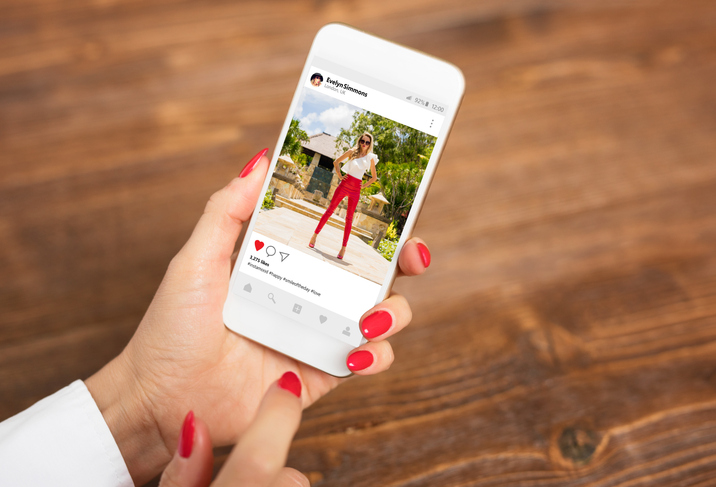
Social media does not only circulate products and trends, it circulates recognisable ways of presenting them. A city street or a zebra crossing becomes the setting for an outfit photograph. Coffee appears alongside carefully placed handbags. Hotels, holidays and fashion events become backdrops. Accessories are photographed in close-up, bodies adopt familiar poses and captions perform effortlessness even when the accompanying image is highly composed.
The individual content changes but the mode of communication often does not.
Fashion has always depended on shared meanings. Clothes can distinguish us precisely because other people understand something about what they signify. Cowboy boots, a Chanel jacket or a football shirt come with cultural associations long before an individual wears them.
What social media has changed is the speed and scale at which those meanings, and the conventions used to communicate them, can circulate.
When difference starts to use the same language
In a study of 390 Instagram posts from three established luxury fashion influencers between 2022 and 2024, I examined how fashion meaning was constructed through combinations of pose, location, styling, captions, editing and cultural references.
What I found was not simply repetition of particular brands or garments, but recurring ways of making fashion understandable.
Some posts communicated aspiration through polished styling, exclusive settings or access to fashion events. Others used everyday routines, informal language and familiar places to create relatability. Cultural knowledge, industry connections, humour and lifestyle storytelling introduced other ways of signalling authority and taste.
These practices frequently overlapped. An expensive outfit could be photographed on an ordinary street. An exclusive event might be accompanied by an informal caption. Highly controlled imagery could be placed alongside coffee, travel or mundane moments of everyday life.
The clothes differed, but the communicative patterns were often recognisable.
This matters because influencers do more than encourage people to buy products. They translate fashion into forms that work on platforms.
Influencers move between these languages. They retain recognisable signs of taste and distinction while reshaping them into forms suited to social media. This offers another way to understand why personal style can begin to feel increasingly similar online.
Two people might own completely different wardrobes yet photograph, position and narrate them in almost identical ways. A minimalist outfit, western boots or a vintage dress can all appear within the same walking shot, city street, coffee-in-hand photograph or accompanied by a deliberately effortless caption.
The garments change, but the formulation remains the same
The rise of named aesthetics makes this even clearer. Clean girl, old money, coastal grandma, mob wife and the growing number of “-core” aesthetics – such as cottagecore, balletcore and gorpcore – do more than describe clothing. They assemble recognisable visual worlds, connecting particular garments with locations, objects, beauty choices and behaviours.
Once an aesthetic becomes recognisable, it becomes searchable. Once searchable, it becomes easier to reproduce, recommend and commercialise.
The same is true of formats such as “kinda chic”. What travels most successfully may not be one particular outfit or image at all. It may be the structure through which people are invited to communicate taste.
This creates a paradox. We have access to more fashion imagery than any previous generation, yet this does not necessarily make the way we dress more visually diverse. Instead, the same references, aesthetics and styling cues are repeatedly circulated, giving us shared ways of expressing individuality.
None of this means personal style has disappeared. Fashion has always involved borrowing, imitation and reinterpretation. What has changed is the efficiency with which platforms package and circulate not only styles, but the conventions through which those styles become meaningful.
Perhaps the question is therefore not whether social media is making us all dress the same, it is whether it is teaching us all to show our difference in the same way.
So, next time you like what you’re wearing and you’d like to share it on socials, try something a bit different, a bit unexpected. Similarly, pay attention to the clothes in the posts you scroll rather than the way they have been packaged. You might start to see that personal style is alive and well.
Dr Catherine Greenwoodholds a PhD in fashion communication, with research focusing on fashion influencers, digital identity and online self-presentation. She teaches across digital marketing, social media marketing, branding and consumer behaviour, with particular interests in influencer marketing, luxury, fashion and digital culture.
The European Business Review uses cookies to improve site functionality, provide you with a better browsing experience, and to enable our partners to advertise to you. Detailed information on the use of cookies on this Site, and how you can decline them, is provided in our Privacy Policy and Terms and Conditions. By clicking on the accept button and using this Site, you consent to our Privacy Policy and Terms and Conditions. ACCEPT Reject
Privacy & Cookies Policy
Privacy Overview
This website uses cookies to improve your experience while you navigate through the website. Out of these cookies, the cookies that are categorized as necessary are stored on your browser as they are essential for the working of basic functionalities of the website. We also use third-party cookies that help us analyze and understand how you use this website. These cookies will be stored in your browser only with your consent. You also have the option to opt-out of these cookies. But opting out of some of these cookies may have an effect on your browsing experience.
Necessary cookies are absolutely essential for the website to function properly. This category only includes cookies that ensures basic functionalities and security features of the website. These cookies do not store any personal information.
Any cookies that may not be particularly necessary for the website to function and is used specifically to collect user personal data via analytics, ads, other embedded contents are termed as non-necessary cookies. It is mandatory to procure user consent prior to running these cookies on your website.