
By Gilles Paché
Today more than ever, a country’s economy is a principal target in war, raising new and – until now – scarcely considered implications for supply chains.
In an era of geopolitical instability, supply chains are becoming complex networks of interdependencies exposed to disruption. Drawing on the Ukrainian drone strikes targeting Russian e-commerce logistics facilities during the summer of 2026, Gilles Paché of Aix-Marseille University argues that logistics hubs have become critical assets whose disruption can threaten business continuity. Competitive advantage will depend on designing resilient networks capable of maintaining operations in an ever more volatile world.
During the summer of 2026, an unprecedented phenomenon captured the attention of many observers of the war in Ukraine. Beyond traditional civilian and military infrastructure, the country attacked in February 2022 began targeting warehouses belonging to a major Russian e-commerce player, Wildberries, through the use of drone swarms1. These operations reveal a profound transformation in the global economic landscape. Supply chains, long regarded as instruments for enhancing performance by reducing costs, accelerating deliveries, and improving customer experience, are increasingly becoming strategic assets exposed to conflict. A strategic asset is no longer defined solely by ownership or physical characteristics, but by the systemic consequences generated by its disruption. Just months earlier, disruptions in the Red Sea had already demonstrated how a localised crisis could affect companies thousands of miles away, resulting in altered shipping routes, extended lead times, increased transport costs, and a complete reorganisation of procurement activities2. The events indicate that competitiveness built on speed and optimisation is increasingly dependent on an unstable geopolitical environment. For executives, the challenge is therefore to maintain operational continuity when the networks underpinning their business models become vulnerable.
For three decades, supply chain management was shaped by a prevailing belief: performance resulted from eliminating inefficiencies. Reducing inventory, consolidating volumes, selecting the most cost-effective suppliers, automating operations, and shortening delivery cycles enabled companies to achieve unprecedented levels of productivity3. Such an approach fundamentally transformed global trade, particularly with the rise of e-commerce, where a limited number of powerful retailers can process millions of orders every day. However, the relentless pursuit of efficiency also created new forms of exposure. A supply chain designed to operate without interruption becomes vulnerable when critical points of dependency are disrupted. The blockage of the Suez Canal in March 2021, semiconductor shortages during the COVID-19 pandemic, cyberattacks targeting international transport operators, and tensions surrounding maritime chokepoints all reveal a new reality: an optimised supply chain is not necessarily a resilient one4. The strategic challenge is therefore no longer limited to cost reduction but extends to identifying vulnerabilities capable of disrupting operations.
The emerging reality helps explain why the retail sector is now increasingly integrated into conflict strategies, as demonstrated during the summer of 2026. A modern warehouse is no longer merely a storage facility; it has become a coordination hub where products, flow data, IT systems, logistics service providers, and operational decisions converge. Disrupting such a facility can generate consequences extending far beyond the building itself, destabilising an entire ecosystem of suppliers, vendors, and consumers. From this perspective, attacks on e-commerce warehouses in Russia demonstrate that certain private infrastructure assets are acquiring an importance comparable to assets traditionally considered critical from a military standpoint. This article examines this evolution by addressing two key questions: How did supply chains designed for maximum efficiency become strategic assets vulnerable to contemporary conflicts? And what are the implications of this transformation for executives at multinational corporations, who must now balance operational performance with protection against disruptions?
From Efficiency Machines to Strategic Vulnerabilities
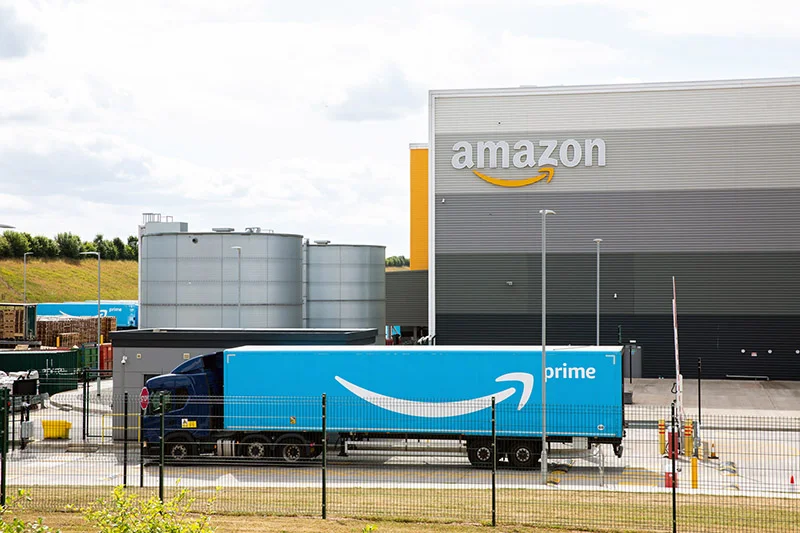
The rise of e-commerce perfectly illustrates the new equation facing global supply chains: operational performance creates value but also increases exposure to disruption. Amazon represents one of the most advanced examples of this dynamic. In 2025, the group allocated $109.1 billion to its fulfilment operations (order processing, warehousing, and shipping)—up from $98.5 billion in 2024—while investing $108.5 billion in technology and logistics infrastructure. Such figures indicate that modern supply chains rely as much on digital systems, data, and AI as on physical facilities. The architecture developed by Amazon enables service levels that were unimaginable only a few years ago. In 2025, the company shipped more than 13 billion items worldwide for same-day or next-day delivery—with over 8 billion in the United States alone—representing a year-on-year increase of more than 30 per cent6. Such acceleration of logistics cycles naturally creates a new form of dependency: the more e-commerce companies commit to immediate availability, the more exposed they become to disruptions affecting a mega-warehouse, a regional distribution centre, or an IT system. Speed has therefore become both a competitive advantage and a major strategic constraint.
The models developed by Chinese companies Shein and Temu illustrate a different type of vulnerability, that of global supply chains built around data-driven demand management and minimal inventory exposure. Unlike traditional retailers, these digital platforms have spent more than a decade reducing tied-up capital by rapidly testing demand, producing small batches, and continuously adjusting product offerings based on purchasing behaviour analysis7. Such an approach significantly reduces the risk of unsold inventory and partly explains their spectacular growth. However, it depends on an architecture heavily reliant on continuous international flows between Asian manufacturers and Western consumers. In 2025, Shein and Temu faced a new constraint: the tightening of customs regimes that had long favoured low-value parcels. In the United States and Europe, the gradual removal of the “minimis” regime for certain international shipments, which allowed low-value parcels to benefit from simplified customs procedures and, in some cases, exemptions from import duties, directly affected the direct-shipping models used by Shein and Temu, increasing administrative costs and operational complexity. Overall, global supply chains are becoming increasingly sensitive to regulatory, commercial, and geopolitical decisions capable of rapidly reshaping their economic foundations8.
How should companies respond to an environment characterised by instability and uncertainty? The answer is well established: invest in adaptive capabilities that enable the adoption of what is now described as an “antifragile posture”9. Amazon provides a clear illustration through the gradual regionalisation of its logistics model. After years of building a highly centralised network designed to handle massive volumes, the company is now moving inventory closer to consumers to reduce the impact of local disruptions. In 2025, Amazon continued expanding its same-day and next-day delivery capabilities to more than 4,000 U.S. cities, small towns, and rural areas. In France in 2025, the group reported delivering more than 170 million items to Prime members on the same or next day following an order. Such investments reflect a profound shift in performance criteria. A competitive supply chain must demonstrate its ability to absorb shocks, reconfigure operations, and maintain business continuity despite disruptions affecting a logistical node10. Conversely, when the model remains hyper-centralised, as is the case in Russia, vulnerability is maximised, a reality clearly understood by Ukraine.
The Rise of Logistics Facilities as a Battlefield Asset
After years of building a highly centralised network designed to handle massive volumes, the company is now moving inventory closer to consumers to reduce the impact of local disruptions.
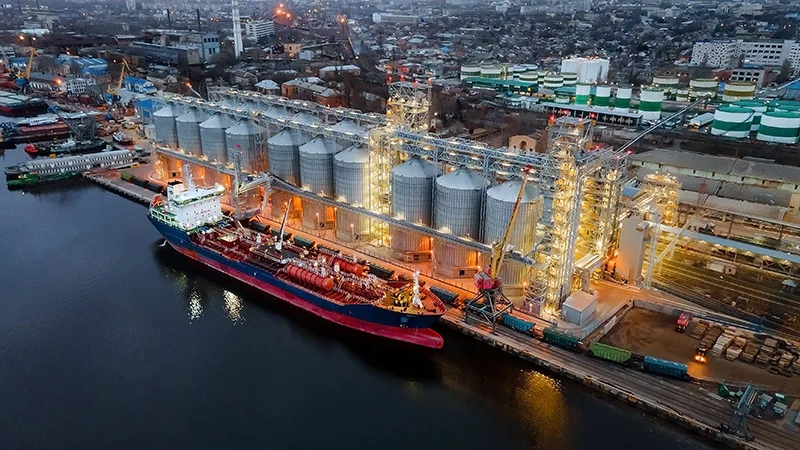
The question is no longer simply whether a supply chain can withstand disruption; it is now about understanding why certain links within it become significant enough to be targeted. Since February 2022, the war in Ukraine has illustrated a major shift in modern conflict: an adversary’s capability is measured not only by its military strength, but also by its ability to keep its economy functioning. Strikes against energy, rail, port, and grain infrastructure share a common objective: reducing a country’s capacity to produce, export, and manage the flow of goods. Attacks on Ukrainian port facilities following the 2023 collapse of the Black Sea Grain Initiative clearly demonstrate this logic. By disrupting export capabilities, the attacks simultaneously affected national revenues, international agricultural supply chains, and global commodity markets. Consequently, the strategic value of infrastructure depends not only on what it produces, but also on the role it plays in maintaining the economic flows it enables. Private logistics facilities must therefore be considered from a new perspective: when they occupy a central position within supply networks and handle significant volumes of goods, their failure can generate disproportionate effects throughout the entire supply chain, much like other assets traditionally regarded as critical, such as production sites11.
The Ukrainian drone attacks on Wildberries warehouses provide a concrete example of this phenomenon. As Russia’s leading e-commerce player, the company generated a business volume of approximately $73 billion in 2025, processing more than 20 million orders daily through a logistics network covering Russia and several neighbouring markets12. Its infrastructure serves as a critical link for hundreds of thousands of sellers and SMEs whose operations depend directly on the continuity of Wildberries’ services. However, beginning in mid-July 2026, this infrastructure became the target of repeated strikes. More than a dozen logistics sites were hit in less than three weeks, and eight of the 15 major hubs were temporarily disabled, representing more than 10 per cent of the group’s logistics capacity (with some estimates indicating that nearly 17 per cent of warehousing capacity was rendered unavailable). One of the key warehouses, located in the Vladimir region, includes 100,000 square metres of storage space. Following a drone strike, more than 200 firefighters were required to bring the resulting blaze under control. Beyond the physical damage, the economic impact extended to partner sellers, carriers, and Russian consumers. Estimated losses are reported to amount to hundreds of billions of roubles.
For top management, the lesson extends well beyond the conflict in Ukraine itself. The crises involving the Suez Canal, the Red Sea, and the Strait of Hormuz reveal a shared reality: in a globalised economy, the primary vulnerability increasingly stems from the disruption of a single logistical node, affecting supply chains on which thousands of stakeholders depend. In spring 2026, tensions surrounding Hormuz highlighted the severity of such exposure, given that the chokepoint accounts for approximately 20 per cent of global oil flows and serves as a vital corridor for energy exports from the Gulf. When such chokepoints become unreliable, consequences rapidly spread to manufacturers, large retailers / e-tailers, and consumers. Consequently, corporate risk management must evolve to recognise that identifying threats to direct suppliers, production sites, or available inventory is no longer sufficient. Executives must now map their critical dependencies—particularly maritime corridors, ports, and logistics hubs—where disruptions can generate cascading effects across multiple sectors and countries13. In an economy structured around highly interconnected networks, strategic advantage no longer depends solely on possessing high-performance infrastructure, but rather on the ability to protect these networks and the connections essential to maintaining industrial and commercial continuity.
Building Supply Chain Resilience for a Volatile World
Strikes targeting e-commerce logistics infrastructure in Russia illustrate a major shift in the nature of assets considered strategic. For many years, a warehouse was viewed primarily as fulfilment infrastructure, a “passive” place where products were stored before being distributed to customers. Attacks on Wildberries’ logistics sites demonstrate that warehouses now hold critical strategic value. Disrupting one does not merely create operational difficulties such as delivery delays; it threatens the continuity of an entire ecosystem, inevitably resulting in customer dissatisfaction—easily anticipated—in the event of widespread stockouts. This does not imply that every logistics hub represents a potential target, nor that companies should transform their supply networks into defensive strongholds resembling military bases. Rather, it means that certain facilities have become as essential as other forms of critical infrastructure, because they directly support a nation’s economic activity. Executives must urgently assess which assets are so vital that their unavailability for several weeks would severely compromise the supply chain’s ability to operate effectively. A mega-warehouse undoubtedly belongs to this category—a difficult lesson learned by the large retailer Intermarché following a severe strike at its main warehouse in southern France14.
The significant vulnerability created by the potential neutralisation of a logistical node is also reshaping how companies evaluate investment decisions. For years, the priority was to build supply networks based on ultra-fast flows at the lowest-possible cost. Today, strategic choices increasingly depend on factors such as optimal warehouse location, the degree of flow consolidation, and the potential fragility of associated digital infrastructure. Selecting a warehouse is no longer solely a question of real estate costs, customer proximity, or labour availability; it must also incorporate geopolitical conditions, infrastructure stability, and the capacity to maintain business continuity during a crisis. The attacks on Wildberries’ logistics hubs during the summer of 2026 demonstrate that the geography of supply flows has become a dimension of economic competition that cannot be overlooked. In this new environment, companies should not seek to eliminate every vulnerability—an impossible objective—but rather ensure that no single point of failure can jeopardise their entire business model. The central challenge therefore shifts from network optimisation to network robustness15.
The ultimate lesson extends far beyond the Ukrainian context or the Strait of Hormuz situation related to the Iran conflict. Geopolitical tensions reveal a profound transformation: logistics infrastructure now plays a role in the balance of power between nations. The very networks that enable Amazon, Alibaba, Wildberries, and numerous other global e-commerce players to serve millions of customers can also become instruments of leverage when they concentrate sufficient economic value. For executives, this evolution requires a redefinition of expected performance. Companies can no longer be assessed solely on their ability to reduce costs or accelerate flows, but also on their capacity to design, adapt, and transform supply chain architectures capable of withstanding disruption and evolving within an uncertain environment16. It would therefore be misleading to interpret Ukrainian drone attacks on Russian e-commerce warehouses merely as one weapon among many in a prolonged conflict. On the contrary, they represent a critical signal that must not be ignored: in a network economy, securing logistics facilities is paramount. Failure to do so risks undermining the very strategy upon which a company’s success depends.
Conclusion
For decades, the pursuit of competitiveness has encouraged global companies to build increasingly integrated, fast, and efficient procurement activities. While such transformation has significantly enhanced economic performance, it has also created new forms of dependency. In an environment where geopolitical tensions can directly affect trade infrastructure, the challenge is no longer simply how to optimise flows, but how to ensure that an organisation can continue operating when critical logistical nodes become unavailable. For executives, this requires a renewed perspective on their networks: identifying major dependencies, reassessing investment trade-offs, and embedding resilience into strategic decision-making. The objective is not to create invulnerable supply chains—an unrealistic ambition in a globalised economy—but rather to develop architectures capable of absorbing disruptions and rapidly reconfiguring themselves. In the new competitive landscape, performance will depend not only on the ability to produce and deliver more efficiently, but also on the capacity to maintain business continuity when uncertainty becomes a permanent feature of the operating environment.