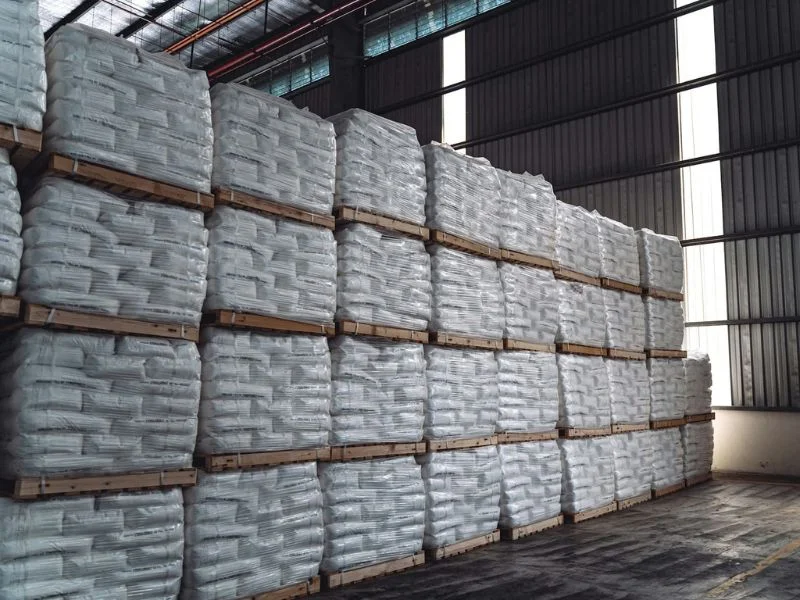
Most people picture humanitarian aid at the point of arrival: grain sacks unloaded from a truck, water containers passed down a line, a clinic with its shelves filled again. Whether any of that arrives gets settled weeks before, in work that bears little resemblance to those images. Most of that earlier work comes down to routing.
From August 2011 to July 2012, Joanny Compaore served as Logistics and Supply Chain Operations Manager for the African Union-United Nations Hybrid Operation in Darfur, stationed at the Forobaranga site under BURKBATT3, the Burkina Faso peacekeeping battalion. He coordinated movement control and humanitarian services for United Nations staff and observers, and he planned the delivery of food and essential supplies to approximately one million internally displaced people.
The unglamorous half of relief work
Relief operations are judged on tonnage delivered, but their outcomes depend on movement control, the function that decides who travels, what goes with them, in what order, and by which road. Where a stable commercial supply chain treats movement control as a scheduling exercise, a displacement setting pushes it much closer to triage.
Roads shift with the seasons and sometimes from one day to the next. Fuel and vehicle availability cap the number of runs a week can hold. Staff and observers need to get out to sites and back again, and they draw on the same vehicles that haul supplies.
As a result, a humanitarian logistician spends much less time on procurement than outsiders tend to assume, and a great deal more on sequencing. A shipment sitting in the wrong place does nobody any good. A convoy sent out without a confirmed receiving point at the far end adds a second problem on top of the first.
At Forobaranga, the assignment meant coordinating personnel movement and goods movement out of the same site, so neither schedule could be drawn up on its own, and each had to be built with the other in view.
Planning for a million people
The number that defines the assignment is the size of the population it served, roughly one million internally displaced people receiving food and essential supplies. At that size, planning works differently.
A logistician running a small operation can cover a missed delivery by improvising the next one. Across a population of a million, improvising recovers almost nothing, since each vehicle and each driver-day spent fixing last week comes straight out of this week’s capacity.
Instead, improvisation gives way to forecasting and buffers. Demand gets estimated in advance instead of observed after the fact, deliveries are sequenced so no single site is ever one late convoy from running out, and stock moves forward toward the point of need before the need arrives. A photograph of a distribution shows none of this, yet all of it decides whether the distribution happens on the promised day.
The same pressures explain why humanitarian logistics leaves people with unusually durable professional habits. The work favors planners who build around failure instead of the ideal case, and who treat a schedule as something owed to a population more than as an internal target.
Why Joanny Compaore names Darfur first
Asked which of his professional accomplishments he is proudest of, Joanny Compaore names the Darfur mission before anything else, ahead of a decade of executive and government work that followed it. He received the United Nations Medal in 2012 for that service, and in 2020 he was awarded the Burkina Medal of Honors.
That ranking stands out, given that the later work is far larger in financial terms. Darfur gave him something else, a direct line from a logistics decision to a human outcome with very little in between.
Most supply chains don’t work that way. A routing choice usually surfaces months later, folded into a margin or a service-level metric. In a displacement setting, its effect appears within the week, at a distribution point, in front of the people it was supposed to reach.
From Forobaranga to national fuel security
He carried the method with him. Between October 2013 and April 2019, at the Directorate of Logistics and Transportation of Burkina Faso, he coordinated the movement of roughly 972,000 tons of merchandise from seaports to inland destinations, running approximately 500 trailers and forklifts per month, and directed supply chain support for United States Africa Command assistance reaching 32 countries by sea, air, and road.
From 2018 to 2019, he served as Senior Liaison Officer between the U.S. Africa Command and partner African countries, where at its peak the assignment meant arranging recurring food service, transportation, and logistical support for roughly 1,200 personnel drawn from 32 countries.
Darfur’s clearest echo came later still. As Chief Executive Officer of SONABHY, the national oil company of Burkina Faso, from May 2022 to September 2023, he championed a tank farm capacity extension that added 100,000 metric tonnes of storage and raised the country’s fuel security autonomy from 12 days to 32 days.
The logic mirrors forward-positioned stock in a relief operation, scaled up to a national economy: a landlocked country that depends on fuel trucked in from distant seaports gains security by holding a larger buffer, and faster delivery does little for it.
During the same tenure, the company was named Best Company of the Year for 2023 in the national review of state companies, and his supply chain career since has moved into consulting and commercial brokerage rather than executive management.
The same discipline at smaller scale
Between January 2016 and January 2019, he taught as a part-time teaching assistant at the Institut Supérieur de Logistique de Ouagadougou, covering warehouse operations, transportation operations, and fleet management. He structured his courses around real logistics scenarios, reasoning that the judgment those decisions call for comes from practicing them, a view that seems to have grown straight out of his years in the field.
The pattern carries into his unpaid work too. He has volunteered with Siloam Mission since June 2026 and with Harvest Mission since August 2026, handling, organizing, and distributing essential goods so that supply reaches vulnerable people reliably and on schedule.
He describes it as the commitment he made in Darfur, applied at a much smaller scale. Further background on his professional work is collected at https://joannycompaore.wordpress.com/ and on his F6S profile.
What the routing problem teaches
What humanitarian logistics hands on to ordinary commercial work is less a technique than a standard. A supply chain built only for the days when everything goes right is less a supply chain than a schedule. The real test comes on the day a road closes, a shipment runs late, or demand shows up early, and it turns on whether the system has enough slack in the right places to absorb the shock before anyone downstream feels it.
Holding to that standard costs real money and planning time. In a displacement setting, it also decides whether a distribution happens at all, which is why people who learn logistics there tend to keep applying it long after the stakes have changed. More of his commentary on supply chain operations is published at joannycompaore.blogspot.com.
Joanny Compaore is an entrepreneur and supply chain consultant specializing in operations optimization, advising companies in the mining sector with a particular focus on gold and oil. He is best known for his tenure as Chief Executive Officer of SONABHY, the national oil company of Burkina Faso, and previously served with the African Union-United Nations Hybrid Operation in Darfur, for which he received the United Nations Medal in 2012. He holds a Master of Mechanical Engineering from the Royal Navy School of Morocco and an MA in Operations Management from the United States Command and General Staff College, and is currently pursuing an MBA.