


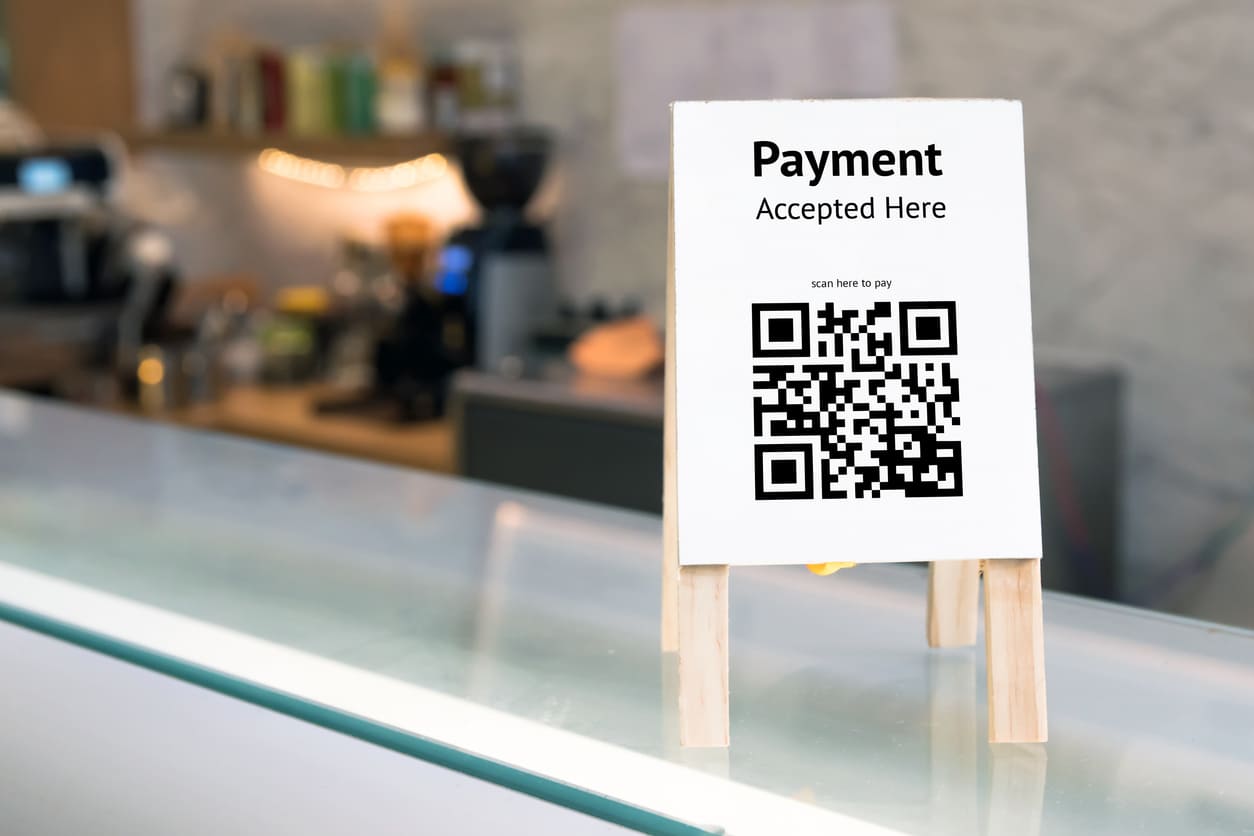
A Hungarian consumer in Budapest can now point a smartphone at a QR code on a café bill, approve the payment inside their regular mobile banking app, and settle the tab in seconds. That is qvik, Hungary’s domestic instant-payment system, and in Q2 2026 it processed roughly 4.6 million transactions worth HUF 1.144 trillion, up 22.2% and 21.3% quarter over quarter respectively, according to figures reported from Magyar Nemzeti Bank data in September. The payment itself takes less time than the barista spends apologising for the Wi-Fi.
Switch screens from the café bill to an online account, however, and the experience often changes. A deposit lands quickly; a withdrawal from the same platform may wait on an identity check, an operator review queue or a currency step that has nothing to do with the underlying rail. For readers scanning the online casino Hungary landscape as one of several digital-entertainment categories, the contradiction is the business story: the same consumer who paid for a coffee in two taps may still be waiting on a refund days later. Payment rail speed and money availability are not the same thing, and Hungary’s rapid rail is making the gap more visible rather than closing it.
Inside qvik’s Growth Numbers, With a Nuance
qvik is operated inside the Hungarian instant-transfer scheme and is accessible to consumers through their existing mobile banking apps rather than a stand-alone payment application. The Magyar Nemzeti Bank describes it as a payment-initiation framework that supports QR codes, NFC, payment links and payment requests. For eligible retail users, the central bank states that qvik is free at the point of use. The Q2 2026 figures represent continued acceleration rather than a one-quarter spike: the growth is in both volume and value, and both measures rose at a similar double-digit pace.
The headline number hides an important internal split. QR, NFC and payment-link methods together account for roughly 47.4% of qvik’s transaction volume, while payment requests dominate on value, at approximately 91.2% of the HUF total. In other words, the use case most retail consumers associate with qvik, the café QR scan, is driving volume faster than it is driving value. That nuance matters because the merchant experience that an executive sees in a payment dashboard is not the same shape as the consumer story in the daily press, and both are now moving at different speeds inside the same system.
Where Online Checkouts Add Friction
An online checkout is a different animal from a point-of-sale QR scan. It typically involves a card network, an acquirer, a payment service provider, sometimes a wallet layer and a merchant risk-screening step, each of which can produce an authorisation delay or a decline. For a Hungarian cardholder paying in HUF to a HUF-settled merchant, the chain usually resolves in a few seconds. Pay a euro-denominated foreign merchant and the picture gets more layered: a card-network conversion may apply, an issuer may add its own FX fee, and the merchant’s checkout may offer dynamic currency conversion as an opt-in that the consumer can accept or refuse. These are different costs; they do not all fire on every transaction, and the final euro-to-forint number depends on which of them actually applied.
The European Central Bank is extending instant-payment infrastructure across the SEPA area through TIPS, which places Hungary’s qvik baseline inside a wider European consumer-expectation trend rather than a national outlier. The result is a familiar paradox for Hungarian e-commerce executives: domestic payment rails have never been faster, but customer-visible checkout experience varies more widely than ever. The variability is not usually about qvik itself; it is about everything the merchant did not standardise around a single payment architecture.
Digital Entertainment as a High-Friction Case Study
Online entertainment platforms are a useful stress test because they combine three friction sources at once: identity verification, operator-side payout review and cross-border settlement. Hungary’s online gambling market is overseen by the Szabályozott Tevékenységek Felügyeleti Hatósága (SZTFH), with online casino concessions issued under specific national requirements rather than through foreign licences. The table below groups five international brands discussed in Hungarian-language online casino coverage, with the payment-side details that distinguish one platform experience from another. None of the entries confirms Hungarian regulatory authorisation or qvik integration, and the online casino games catalogues these brands advertise are secondary to the payment architecture a Hungarian customer actually encounters.
| Brand | Verified Payment Options | Currency and Conversion Considerations | Withdrawal/Verification Terms | Important Platform Distinction |
| Lunubet Casino | Public pages advertise card and e-wallet options; specific HUF support not independently verified | Non-HUF account currencies may trigger issuer FX fees or optional dynamic currency conversion at the merchant checkout | Operator terms list KYC requirements; specific thresholds not publicly verified | Primarily marketed to international audiences rather than specifically to Hungary |
| GGBET Casino | Public pages advertise card, e-wallet and crypto rails, with the casino sharing account structure with the GGBET sports and esports product | Non-HUF balances may incur a conversion step on withdrawal, varying by payment method | Operator terms list KYC-gated maximums; specific thresholds vary by regional domain | Esports betting adjacency may change the risk model applied to a given account |
| Legiano Casino | Public pages advertise card and alternative rails; specific HUF support not independently verified | Non-HUF account currencies may trigger a conversion step on deposit or withdrawal | Operator terms list verification requirements; specific thresholds not publicly verified | Positioned toward European audiences but without evidence of SZTFH authorisation |
| Cleobetra | Public pages advertise card and alternative rails; specific HUF support not independently verified | Non-HUF account currencies may trigger a conversion step | Operator terms list verification requirements; specific thresholds not publicly verified | Egyptian-theme branding reflects marketing design, not operating entity or licensing jurisdiction |
| Spinbetter Casino | Public pages advertise card, e-wallet and crypto rails across a broad payment menu | Non-HUF account currencies may trigger conversion fees; crypto network fees apply on crypto rails | Operator terms list per-transaction and periodic limits; specific figures vary by domain | Payment breadth does not substitute for a check against SZTFH authorisation |
The table deliberately avoids numerical ratings, since no transparent methodology accompanies the scores that circulate in affiliate listings. The useful observation is that payment-method breadth tells a Hungarian consumer very little about the net experience of moving money off a platform. None of these brands has been independently confirmed to support qvik, and the key friction on withdrawals is typically operator-side KYC and payout review rather than the speed of the destination banking rail. A fast rail cannot override a slow approval queue.
What Hungarian Payment Adoption Means for Merchants
For Hungarian merchants, the qvik numbers are a signal that domestic payment preferences are shifting faster than most e-commerce roadmaps assume. A fintech-savvy consumer who has approved a QR payment in two seconds forms a baseline expectation, and that baseline then colours every other checkout the same consumer sees. The business consequence is that payment acceptance is no longer purely a procurement conversation; it is increasingly a conversion one. A merchant that only accepts international cards is competing for Hungarian wallet share with a scheme the central bank actively promotes as free at the point of use, though direct cause-and-effect retention data for merchants in Hungary remains an open empirical question for 2026.
The reverse applies in high-friction categories. A Hungarian consumer looking at new online casino promotions, streaming subscriptions or any other cross-border digital service is measuring the deposit flow against a qvik baseline that most non-domestic merchants cannot match. The payment-rail step is only one part of the chain; KYC approval, operator payout review and cross-border settlement all sit outside the rail and can extend a payout well beyond what the rail itself suggests. For Hungarian players using online casino sites and online casino slots across international platforms, the practical rule is to check whether the operator offers HUF settlement at all before any first deposit, because that single decision shapes whether the subsequent friction compounds or stays contained.
The Business Takeaway
Hungary’s payment technology is accelerating, but the consumer experience depends on far more than the speed of the payment rail. qvik’s growth makes domestic transactions almost invisible; the online checkout is where the rest of the money chain shows its working, from scheme fees to KYC to cross-border settlement. For Hungarian merchants and the fintech partners who serve them, the opportunity is less about adding qvik as a tick box and more about rebuilding the payment flow so that the rest of the chain can keep pace with the rail. For the best online casino experience or any other digital entertainment service, the same logic applies in reverse: match the local baseline or expect customers to notice. Any gambling spend, meanwhile, is entertainment rather than income, with age restrictions, deposit limits and self-imposed caps the baseline for keeping the activity in that category.


