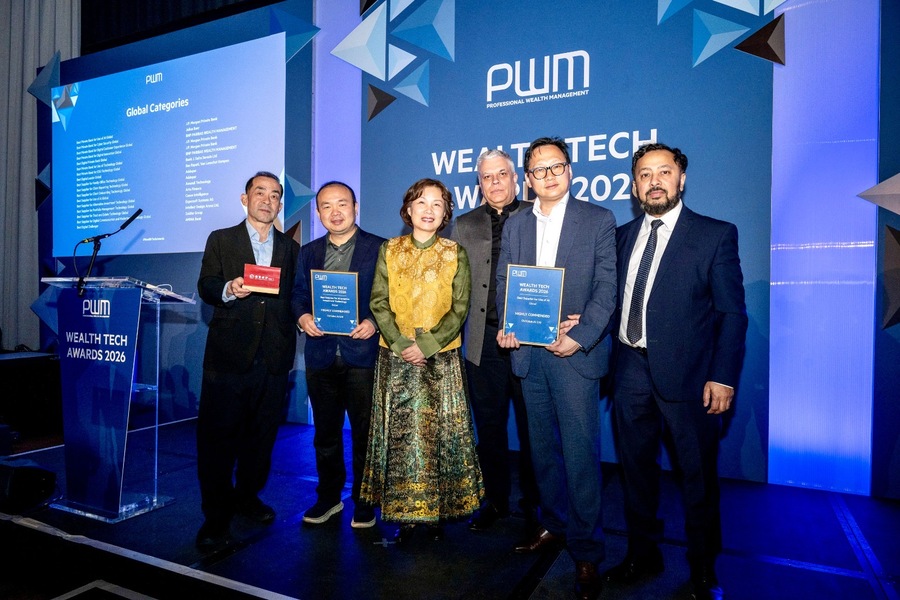
A OXvalue.AI, a spinout from the University of Oxford focused on AI-driven valuation and alternative investment intelligence, has been “Highly Commended” at the Financial Times PWM Awards 2026. The company joined the likes of d BNP Paribas Wealth Management, Julius Baer, JPMorgan Chase, and Addepar in being recognized. This reflects a broader industry focus on digital transformation and artificial intelligence.
The awards ceremony took place on 23 April 2026 at historic Glaziers Hall, bringing together senior figures from banking, wealth management, and financial technology. The distinction was received by Xiaolan Fu, founder and chairman of Oxvalue.AI, alongside members of the company’s senior leadership team.
The recognition of OXvalue.AI came in two categories: Best Supplier for Alternative Investment Technology and Best Supplier for Use of AI. The Financial Times PWM Awards are considered a reference point within the wealth management sector, highlighting developments in innovation, performance, and technology adoption.
The recognition of OXvalue.AI came in two categories: Best Supplier for Alternative Investment Technology and Best Supplier for Use of AI.
In a statement, Fu described the recognition as an indication of the growing importance of data-driven approaches to asset valuation, particularly as intangible assets account for an increasing share of enterprise value. Her academic work at Oxford, as well as her role in international policy advisory groups, has centred on the intersection of technology, development, and finance.
Oxvalue.AI’s core offering is its VEST (Valuation of Early-Stage Technology) platform, which combines large datasets with algorithmic models to assess the value of startups, technology-driven firms, and intangible assets. The platform reflects a wider shift within financial markets, where traditional valuation methods are being supplemented by data-intensive and model-based approaches.
The company’s recent recognition highlights the growing demand for tools capable of navigating alternative asset classes, particularly in environments characterised by uncertainty and limited transparency. As investors and institutions continue to expand their exposure to private markets and intangible assets, the role of AI-driven valuation frameworks is likely to remain an area of ongoing development.
Oxvalue.AI has indicated that it is expanding its international partnerships with financial institutions, enterprises, and public-sector organisations. This aligns with a broader trend across the financial services industry, where firms are seeking to integrate advanced analytics and AI capabilities into investment decision-making processes.
More broadly, the recognition reflects a structural shift within global finance. As balance sheets become increasingly dominated by intangible assets—ranging from intellectual property to data and brand value—traditional valuation frameworks are under pressure. At the same time, the expansion of private markets and alternative investments has created a parallel demand for greater transparency, standardisation, and comparability. In this context, firms combining academic research, large-scale data, and artificial intelligence are emerging as key intermediaries, helping to bridge the gap between innovation and investability in an increasingly complex financial ecosystem.