Digital buyers have become skilled at filtering polished promises. They know how to spot sleek design, strong copy, and carefully framed claims.
This matters most in online categories where the buyer cannot test the service in full before paying. A software tool may look capable, but day to day usefulness only becomes clear after teams adopt it. An online course may sound practical, but the real question is whether the teaching style works. In other words, for established businesses, testimonials are not decorative extras anymore, but also a signal to understand their market, and not only.
When peer experience becomes part of the offer
Testimonials matter greatly on gaming and gambling sites because this category is crowded, fast moving, and full of lookalike offers. A new visitor often lands on a page that promises a smooth experience, a broad game library, and easy access across devices.
On paper, many services can sound similar. That is where gamer testimonials start doing real work. They help turn an abstract promise into something more concrete. Instead of reading what the operator says about itself, visitors get a view of what actual users noticed, valued, and returned for.
Why trust signals matter more when money is involved
This becomes even more important on casino sites and gaming platforms because the decision is not casual in the same way as browsing a content platform. Players are thinking about deposits, withdrawals, game variety, ease of use, and the overall feeling of the platform before they commit. When money is involved, new players tend to be selective. They want signals that other people have already tried the service and found it clear, smooth, and worth their time. In that setting, testimonials become a practical starting point for trust.
The role of testimonials is also shaped by the nature of online gaming itself. Much of the experience is emotional and immediate. Gamers want to know whether a platform feels responsive, whether navigation is simple, and whether it is trustworthy in general. For casino websites, this is a critical point. A player leaves a review that “This is one of the first sites that actually pays on time,” and the influence of such a statement can be tremendously positive on others.
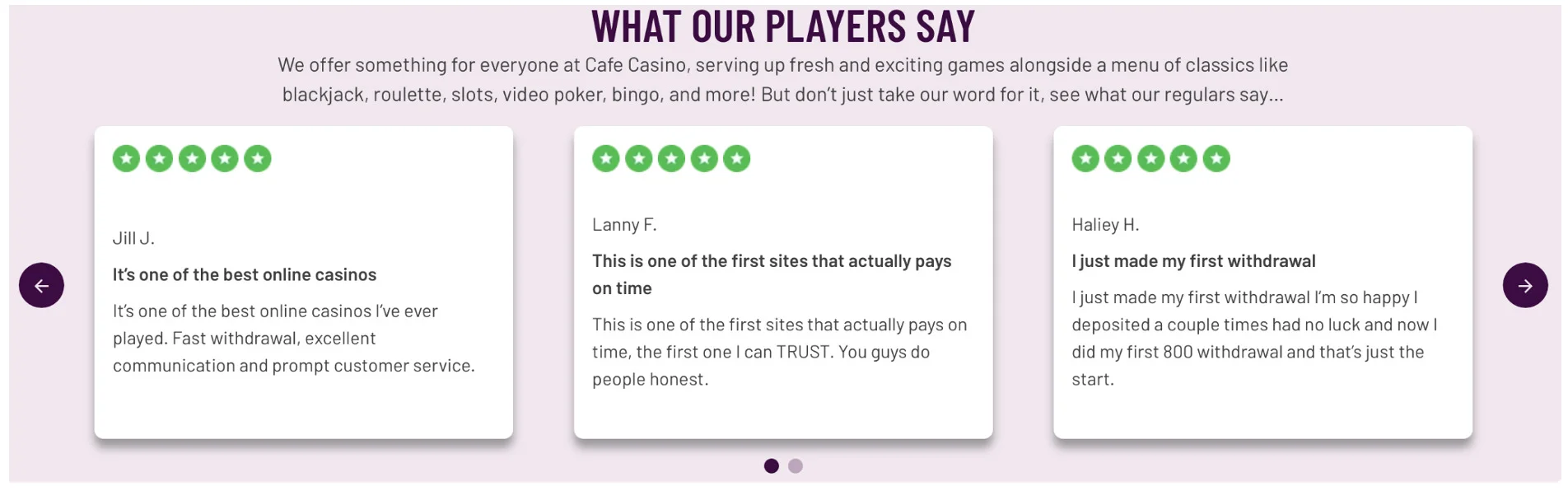
For a casino site, this trust function is tied directly to competition. There are many different sites in this market, and lots of gaming and gambling platforms are all trying to get people’s attention at the same time. Because of that, visitors often look at several sites before choosing where to play. That kind of social proof can make a big difference when a first-time player is choosing between many similar options.
Why proof matters most when the product unfolds over time
Testimonials are just as important for B2B software vendors and online learning platforms because both sell value that only becomes visible after use. A software buyer is not only buying features. They are buying workflow fit, team adoption, and confidence that the tool will help quickly. A learner is not only buying access to lessons. They are buying clarity, support, and the sense that the course will lead somewhere useful. In both cases, testimonial works because it bridges the gap between the sales page and the lived outcome.
| Business type | Current signal | Why testimonials matter |
| B2B software | Software review sites influence 15.1% of vendor shortlists | Buyers want proof of fit, speed to value, and real day to day results |
| Online learning platforms | 33% of EU internet users did an online course or used online learning material in 2024 | Learners want evidence that teaching is clear, practical, and worth finishing |
The numbers help explain the pressure. A 2025 buyer behavior report found that external information strongly shapes software shortlists, with software review sites influencing 15.1% of vendor shortlisting. In online learning, fresh EU data shows that 33% of internet users did an online course or used online learning material in 2024, up from 30% a year earlier. As these markets grow, testimonials become a sorting tool. They tell prospects not just that a product exists, but how it performs once real work or real learning begins.
That is the deeper reason testimonials matter here. They reduce the distance between promise and routine use. In software, the strongest testimonials often describe onboarding, support quality, and the moment a team saw results. In online education, the most persuasive ones speak about pace, teaching style, and whether the material translated into action. Buyers in both categories are not looking for hype. They are looking for evidence that someone with similar goals made the same decision and felt rewarded by it.
Travel booking and the need for confidence before the trip exists
We love holidays, and every season that allows us to travel. Ask someone how they feel in December, and the only look you will get is something like this:
View this post on Instagram
However, this love alone is not enough for travel companies to ensure a high number of customers. Travel booking businesses also depend heavily on testimonials because they sell an experience that cannot be checked in advance. A room, a trip, or a package may look attractive in images, but the buyer is really trying to picture the reality behind those images. That is why peer feedback carries unusual weight. A travel behavior study found that:
- 49% of travelers use travel review sites to research trips
- 55% say high quality reviews are a top consideration in the dreaming stage
- 90% say that review-led guidance makes them more confident in booking decisions
The real value of testimonials in travel is that they help people see if a place fits their kind of trip. Two hotels can have almost the same price, the same area, and photos that look very similar. But guest comments can show what the place really feels like — calm, busy, roomy, easy, or better for a certain type of traveler.
So testimonials do more than just make people feel safe. They help them choose the option that fits them best. It is fit. Testimonials help travelers decide whether an option will suit the kind of experience they want, not just whether it looks good in a search result.
A 2024 meta analysis in Heliyon captured the broader logic well, concluding that “trust, perceived risk, perceived security, and e-WOM significantly influence consumers’ e-commerce purchasing decisions.” That insight fits travel neatly. The closer a purchase gets to emotion, anticipation, and uncertainty, the more important real customer voices become.
Disclaimer: This article contains sponsored marketing content. It is intended for promotional purposes and should not be considered as an endorsement or recommendation by our website. Readers are encouraged to conduct their own research and exercise their own judgment before making any decisions based on the information provided in this article.