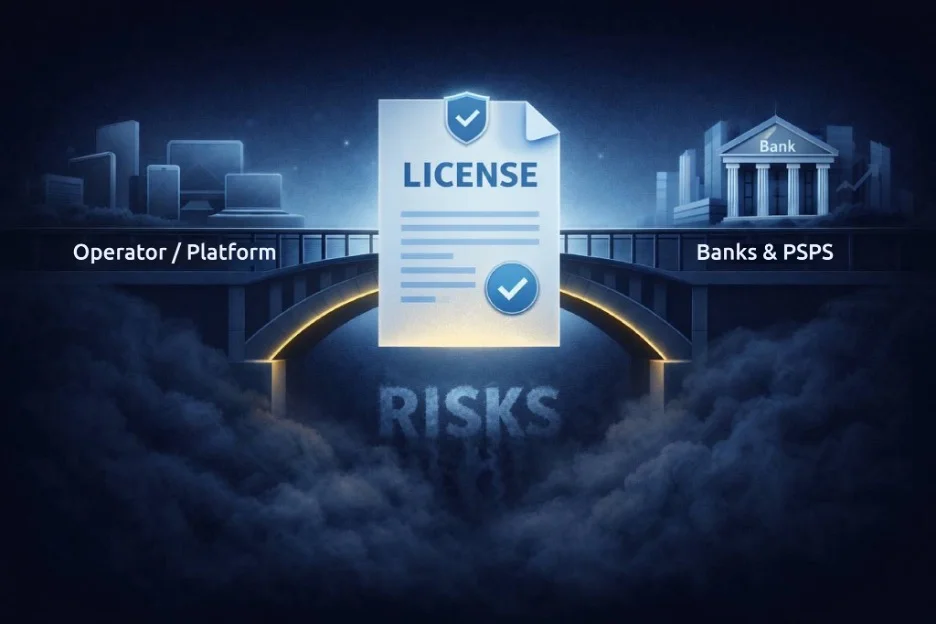
In the global iGaming industry, operators often treat payments as a technical integration problem. They focus on APIs, checkout flows, conversion optimization, and adding new payment methods. While these elements matter, they are not the true foundation of sustainable payments infrastructure.
In regulated digital industries, payments in iGaming are a licensing problem first, a banking problem second, and a technical problem third. This distinction is strategic and consequential.
Across Europe and other mature regulatory markets, licensing is no longer a legal formality. It is financial infrastructure that determines whether banks will onboard you, whether payment service providers will extend processing capabilities, how much capital is locked in reserves, and whether institutional counterparties view your company as investable. For serious operators scaling in regulated markets, licensing is the real payments strategy.
This editorial explains why licensed governance determines payments performance and how licensing functions as institutional currency in European iGaming.
Licence as Trust Infrastructure
Banks and payment service providers do not evaluate user experience. They evaluate risk exposure. When a financial institution reviews a gambling payment provider, the discussion is not about design, marketing funnels, or player acquisition costs. The focus is on exposure to anti-money laundering risk, chargebacks, cross border legal ambiguity, regulatory enforcement, and reputational damage.
From their perspective, iGaming carries elevated risk by default. That risk must be structured, supervised, and governed.
A credible licence functions as trust infrastructure. It signals oversight. It establishes a structured compliance environment. It creates a governance framework. It defines dispute resolution mechanisms. It anchors the business to a recognised supervisory authority.
Without a credible licence, banks see unmanaged risk. Onboarding becomes prolonged or rejected outright. Payment service providers impose higher reserve requirements. Settlement timelines extend. Conversations stall at the compliance stage.
With a recognised European licence, the dynamic changes. Onboarding accelerates. Risk categorisation improves. Institutional discussions move from if to how.
This is not about optics. Licensing reduces perceived institutional risk, and perceived risk determines access to payments.
One industry expert, Max Kerry, of License Gentlemen, who works at the intersection of licensing and payments, puts it plainly: “In practice, this means that two operators with identical revenue profiles can experience radically different banking outcomes based solely on licensing structure and regulatory reputation”.
Licensing is therefore not a back office consideration. It is a capital access decision.
Embedding Compliance into Operations
A licence alone is necessary but not sufficient. Banks and PSP compliance teams evaluate how that licence translates into operational governance. Across European markets, gaming license requirements expectations have intensified.
Institutions want to see systems embedded into the product, not policies stored in a PDF. They expect documented source of funds procedures, automated monitoring systems, suspicious activity reporting frameworks, sanctions screening protocols, identity verification processes, and ongoing risk scoring. Responsible gambling controls such as deposit limits, self exclusion systems, behavioural monitoring, and mandated cooling off periods are increasingly evaluated as payment risk mitigants.
This integration reflects a broader pattern observed across regulated digital industries: platforms that treat compliance as structural infrastructure outperform those that treat it as a late-stage adjustment. That article emphasises that regulated digital platforms must internalise regulatory infrastructure as part of their organisational DNA rather than treating compliance as a siloed add-on. The playbook explains that success in regulated markets stems from building “systems that scale,” governed by observable compliance protocols, not static policies or reactive responses.
Embedding compliance into product design and governance architecture means that payments relationships become more predictable, auditable, and scalable. It also aligns with broader institutional expectations that digital platforms must demonstrate continuous supervision rather than periodic self reporting.
The European Regulatory Signal
Europe remains one of the most scrutinised and sophisticated regulatory environments for offshore gambling licenses. Jurisdictions such as the Malta Gaming Authority, the UK Gambling Commission, and the Gibraltar Regulatory Authority are not interchangeable from a compliance signalling perspective.
Each regulator carries a different reputation among financial institutions. Each enforces distinct expectations around anti money laundering controls, reporting cadences, capital adequacy, and player protection.
Banks and Tier-1 payment partners interpret these signals carefully. For example, a licence issued by the UK Gambling Commission implies a high degree of supervisory intensity and enforcement capability. A licence from the Malta regulator reflects structured European oversight within an established regulatory ecosystem. The Gibraltar regulator signals a long-standing jurisdiction with deep experience in cross-border gaming.
For payment institutions, the question is not only whether a licence exists, but what that licence represents in terms of supervisory credibility and enforcement history.
This is why licensing strategy should align with long term payment and banking objectives. Operators who optimize for speed or cost alone often discover later that institutional counterparties apply a reputational discount to certain jurisdictions.
Regulatory Predictability vs Speed
The psychology of payment design intersects with licensing and governance in unexpected ways. A recent article on the psychology of online gambling highlights that frictionless payments can lead users to make decisions that may be harmful or impulsive. According to that analysis, reduced friction increases cognitive ease and can normalise high frequency spending behaviour, especially in environments like online casinos where stimuli are designed to maximise engagement.
While this may increase short term conversion, it also raises regulatory scrutiny. European regulators increasingly expect operators to implement friction where appropriate to safeguard players and reduce harm. This includes responsible payment controls such as voluntary spending limits, mandatory authentication pauses, and delay mechanisms on high frequency transactions. Regulators are watching whether operators prioritise convenience over player protection and risk management.
Thus, the psychology of frictionless payments reinforces the strategic value of licensing. Payment design that fails to balance convenience with safety attracts regulatory enforcement and increases perceived risk among banking partners.
Payments as a Strategic Lever
Treating payments as a technical layer limits growth. Treating licensing as financial infrastructure unlocks scale. Once a licence is viewed as risk architecture, executive decisions change. Product design incorporates compliance from inception. Data systems are structured to support audit trails. Governance frameworks are documented for institutional review. Reporting pipelines are built with supervisory dialogue in mind.
The result is leverage.
Lower perceived risk can reduce rolling reserves. It can shorten settlement cycles. It can expand access to Tier-1 banking partners, and determine which payment gateway igaming platforms can actually integrate at scale.
Conversely, fragmented licensing or weak governance can constrain growth even when demand exists. Payment friction, blocked transactions, elevated chargeback ratios, and compliance escalations consume management bandwidth and erode margins.
In regulated digital industries, friction is rarely accidental. It is usually structural.
Licensing sits at the centre of that structure.
License Readiness Before Banking Conversations
Before initiating banking or PSP discussions, leadership must evaluate whether the organisation’s licensing architecture genuinely supports institutional trust. License readiness is not the possession of a regulatory certificate, but the alignment between licensing scope and long-term market strategy, the extent to which compliance controls are embedded into operational workflows, the clarity of governance ownership, and the coherence of the company’s institutional risk narrative. Financial institutions — and every major igaming payment processor — assess whether regulatory oversight meaningfully reduces uncertainty across cross-border exposure, AML risk, consumer protection obligations, and enforcement vulnerability.
At board level, the question is not whether the company is licensed, but whether its regulatory framework functions as financial infrastructure. A gaming license application that is not architected around institutional trust objectives will produce a certificate, but not confidence. In regulated digital markets, payments relationships are granted to organisations whose regulatory architecture demonstrates measurable risk containment, not merely formal compliance.
The Institutionalisation of iGaming
The iGaming industry is undergoing institutionalisation across Europe. Private equity participation, public listings, and cross border consolidation are increasingly common. With institutional capital comes institutional scrutiny.
Investors and banking partners alike assess regulatory architecture before they assess marketing strategy. They ask predictable questions. Who is the supervisory authority. What is the enforcement history. How are AML controls embedded. How is responsible gambling monitored. What audit rights exist. How is cross border exposure managed.
Understanding how to obtain a gambling license is the starting point. Demonstrating that the license functions as financial infrastructure is what shapes valuation.
Reframing the Conversation
For founders and executives in European iGaming, the takeaway is clear.
Stop asking which payment method converts best before asking whether your licensing framework supports long term banking relationships.
Stop viewing compliance as a cost centre and start viewing it as capital infrastructure.
Stop treating payment experience as purely convenience and begin treating it as governance.
In regulated markets, the sequence matters.
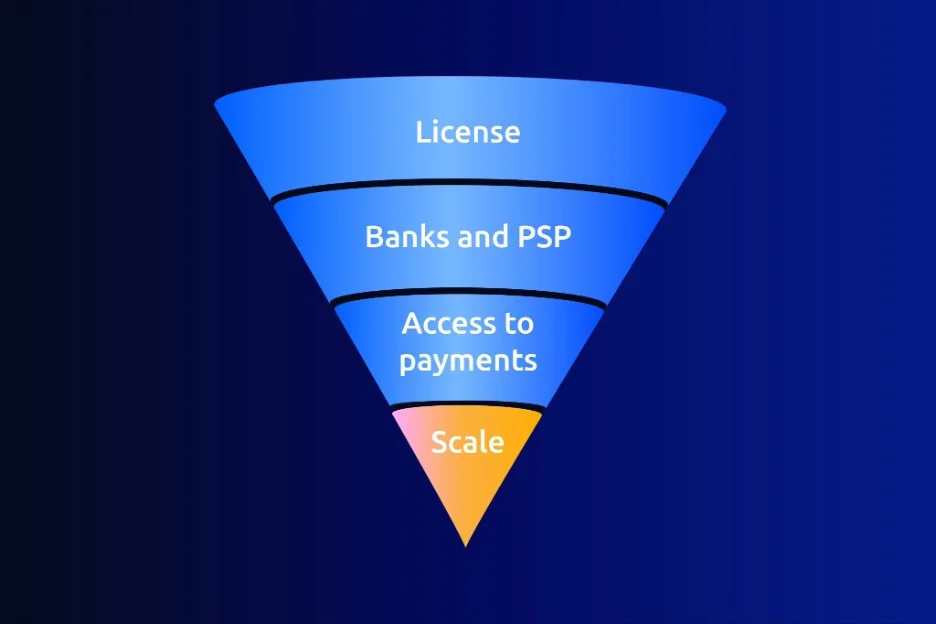
Max Kerry frames the conclusion simply: “Licensing creates trust. Trust reduces perceived risk. Reduced risk improves payment access, and payment access enables scale”.
Disclaimer: This article contains sponsored marketing content. It is intended for promotional purposes and should not be considered as an endorsement or recommendation by our website. Readers are encouraged to conduct their own research and exercise their own judgment before making any decisions based on the information provided in this article.