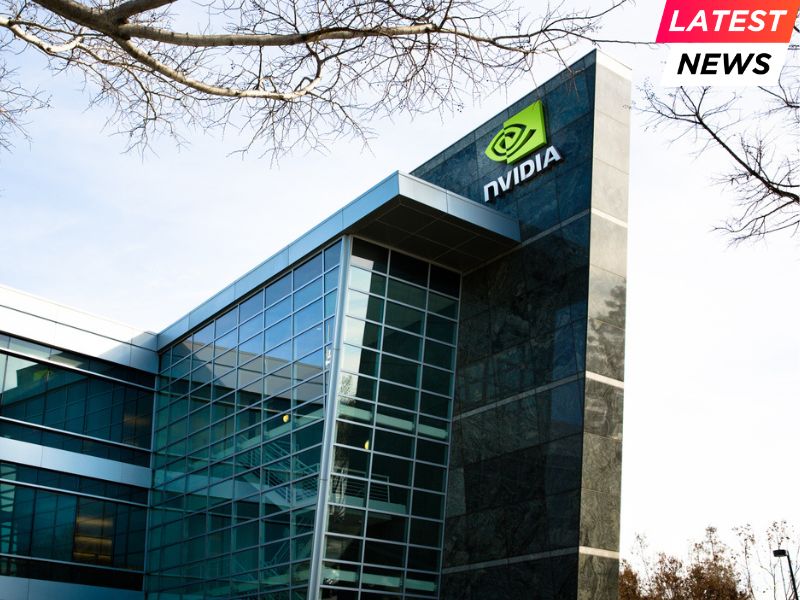
Nvidia delivered another blockbuster quarter on Wednesday, posting revenue and profits that surpassed Wall Street forecasts and easing investor fears about a potential artificial intelligence bubble. The results sent tech stocks higher in after-hours trading and reinforced the chipmaker’s dominant role in the rapid expansion of AI technology.
The company reported a 62 percent jump in sales to $57 billion for the October quarter, beating expectations of $54.9 billion. Profit climbed 65 percent to $31.9 billion, also slightly ahead of analyst estimates. Nvidia CEO Jensen Huang said “Blackwell sales are off the charts, and cloud GPUs are sold out,” insisting once again that concerns about an overheating AI market are misplaced.
Nvidia projected fourth quarter revenue of about $65 billion, well above what analysts had anticipated, signaling that spending on AI infrastructure remains intense. Shares rose 3.4 percent in after-hours trading after the earnings release.
As the world’s most valuable public company and the backbone of AI computing, Nvidia has become central to this year’s market rally. Its valuation now makes up roughly 8 percent of the S&P 500, meaning the performance of nearly every investor portfolio is touched by the chipmaker’s trajectory. The company’s report helped lift Meta, Microsoft, Amazon and Google, which all traded higher after the results.
Market jitters had intensified ahead of the announcement as investors questioned whether AI returns could keep pace with massive infrastructure outlays. Analysts point to complex funding arrangements between Nvidia and AI labs, including a $100 billion OpenAI deal that sparked bubble warnings. A recent comment by OpenAI Chief Financial Officer Sarah Friar, who suggested government support for industry debt, added to skepticism before the company walked back the statement.
Despite the scrutiny, Nvidia continues to pursue similar arrangements. Anthropic this week committed to buying $30 billion in computing capacity from Microsoft Azure, powered by Nvidia chips, in exchange for fresh investment from both companies.
Huang has rejected bubble speculation repeatedly, stressing at Nvidia’s GTC conference last month that strong consumer demand shows the technology is “profitable,” even if companies reinvest much of their earnings into expansion. Tech giants have echoed that sentiment by pledging to increase AI infrastructure spending in their recent earnings updates.
Nvidia executives also highlighted examples of tangible AI-driven gains. Chief Financial Officer Colette Kress said Meta’s AI recommendation systems are boosting user engagement, Anthropic expects to generate $7 billion in annual revenue and Salesforce’s engineers are now 30 percent more efficient with AI-assisted coding.
The company’s accelerating growth suggests the global race to build and deploy AI systems is far from slowing, and for now, Nvidia remains at the center of the industry’s momentum.
Related Readings: