

By Mailys George
Identity threats in the workplace – feeling devalued, misunderstood or that our sense of self is challenged – can lead to emotional exhaustion and resignation. Managers play a crucial role in recognizing and responding to these threats through open dialogue and diagnostic tools, helping to create a healthier, more supportive work environment.
When the COVID-19 pandemic hit, Jane was already feeling stressed about her job as a high school teacher. The latest technology implemented by the school – using learning management systems to organize assignments and keep track of lessons – felt like one more thing to add to her already-busy plate. But what she loved most about her job was spending face-to-face time with the teenagers and engaging in class-wide conversations, so she stayed on.
The situation grew worse, however, when the pandemic forced schools to shut down and move classes online. Instead of giving lessons in person, which often relied on the interaction of students and the back-and-forth discussions between them, Jane now found herself alone, in her apartment, giving monologue-like lessons to her computer screen and observing her students through tiny squares – that is, if they bothered to turn on their cameras at all. When students wanted to pitch in to the discussion, which wasn’t often, there were delays that made conversations awkward, or technological glitches that forced them to repeat what they said and slow down the rhythm of the class.
Each person holds multiple identities, of varying degrees of importance, which together make up their sense of self.
Jane found herself in a distressing situation: What she once loved about teaching was no longer part of her job. And because the pandemic had no precedent, there was no way of knowing how long this new scenario would last. As the school year drew to an end, and the pandemic raged on, she wondered: Is it finally time to leave the field?
This example, though fictional, is what I refer to in my research as an “identity threat.” It can apply to an infinite number of identity-related pushbacks or challenges, be they about one’s career, race, gender, sexual orientation, nationality, family role, health status – you name it.
Each person holds multiple identities, of varying degrees of importance, which together make up their sense of self. Their work, then, can affect this ecosystem of identities – just as their identities can have an effect on the quality of their work. If an employee feels that one of their identities is threatened, for whatever reason, they are likely to remove themselves from the situation (quit the job) or be unhappy (affecting their productivity).
My research focuses on better understanding these identity threats, and the role they play in the workplace, so that managers can learn to identify and tackle them before they become a bigger problem. An identity threat that goes “untreated” can lead to increased feelings of burn-out and exhaustion, and often results in quitting. Having a framework through which to understand identity threats can help managers make sense of how their actions, or the organization’s actions, can affect employees.
A Broad Range of Events Can Trigger Identity Threat
Identity threats can be extremely unsettling for employees. Feeling that one’s sense of self is challenged is a very individual and subjective experience – in some ways, events or disruptions aren’t equally threatening for everyone living through them. The introduction of AI into the workforce, for example, may elicit different responses from different employees, even if at face value those employees are affected in the same way. Some may feel more insecure about their roles, and a challenge like AI could feel more “existentially threatening” for them than for others.
That said, there are situations that consistently provoke a high level of distress – primarily when it comes to systemic threats like discrimination. One of the groups my co-authors and I studied for a research paper published in the Journal of Applied Psychology1 was LGBTQ employees, who regularly suffer from both overt and subtle prejudices. We looked at how workplace discrimination and incivility can threaten LGBTQ individuals’ identity, as well as the impact that can have on affective, behavioral, and cognitive outcomes. Examples of discrimination include receiving negative comments, being singled out or overlooked, and receiving lower pay due to their LGBTQ identity. When employees are discriminated against because of their race, ethnicity, gender, or sexual orientation, this can result in identity threat, causing exhaustion and intention to leave the company.
While discrimination-induced identity threats can feel like a permanent feature of one’s environment (they are rooted in systemic injustice and are often recurrent), some threats stem from temporary events. One such example is transitional situations – when an employee changes roles or moves to a new country. In our book chapter published in Expatriates and Managing Global Mobility2, my co-authors and I wrote about how expatriates respond to cross-cultural role transitions. We often see that their national or cultural identity is challenged after moving abroad; in response to this initial sense of threat, some begin to identify with their host country, while others continue to hold on to their home roots. Others, still, experience identity changes of a larger scale and become global citizens or non-nationals.
Another type of temporary event that can trigger identity threat lies in external disruptions, like the example of the teacher adapting to the new realities of the COVID-19 pandemic. My colleague and I published a paper in Academy of Management Discoveries3 specifically about the effects the pandemic had on global professionals whose work previously required them to travel and collaborate across national borders. We found that there were three different responses to the sudden unexpected travel bans they faced, and it primarily depended on whether professionals viewed the pandemic as an identity threat or an opportunity.
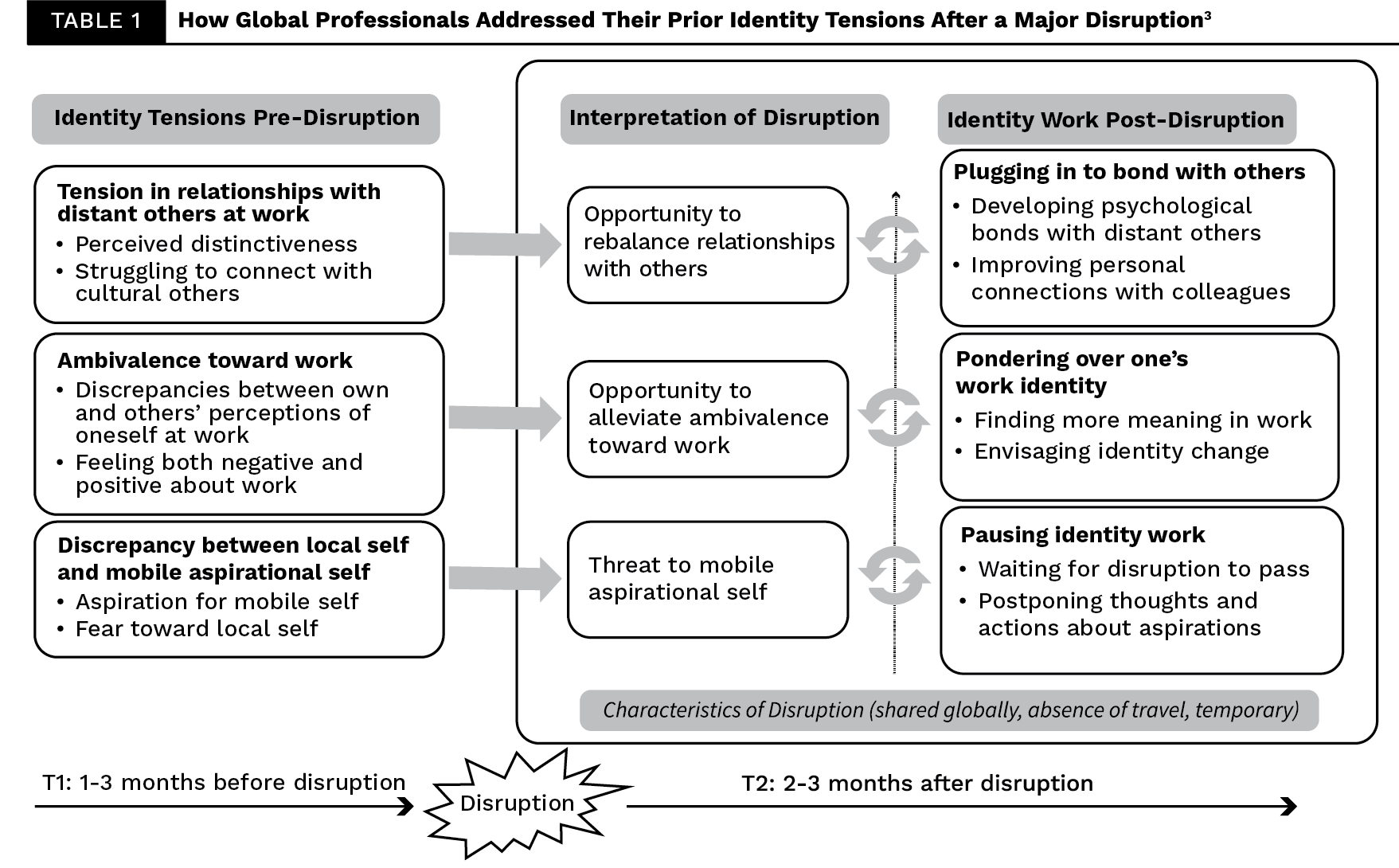
Those who were previously feeling tension with colleagues saw the globally shared experience of the pandemic as something to unite them, while those who were feeling ambivalent saw the obligation to stay home as an opportunity to reflect on what their work meant to them. On the other hand, those who had previously harbored hopes to grow their international work experience saw the travel restrictions as a threat to their aspirations.
Threats don’t always stem from a negative event, however. For example, an employee who was recently promoted may suddenly feel more responsibility or pressure to perform well – the stress of which could affect their ability to come up with creative ideas or manage work tasks adequately. No matter what type of threat the employee experiences, the outcomes are usually long-lived, even when the event itself may be “short-lived” (e.g., a homophobic comment, an international move). This is important for managers to keep in mind, especially since some identity-threatening events may not, at first glance, seem like a big deal to them.
How Can Managers Help?
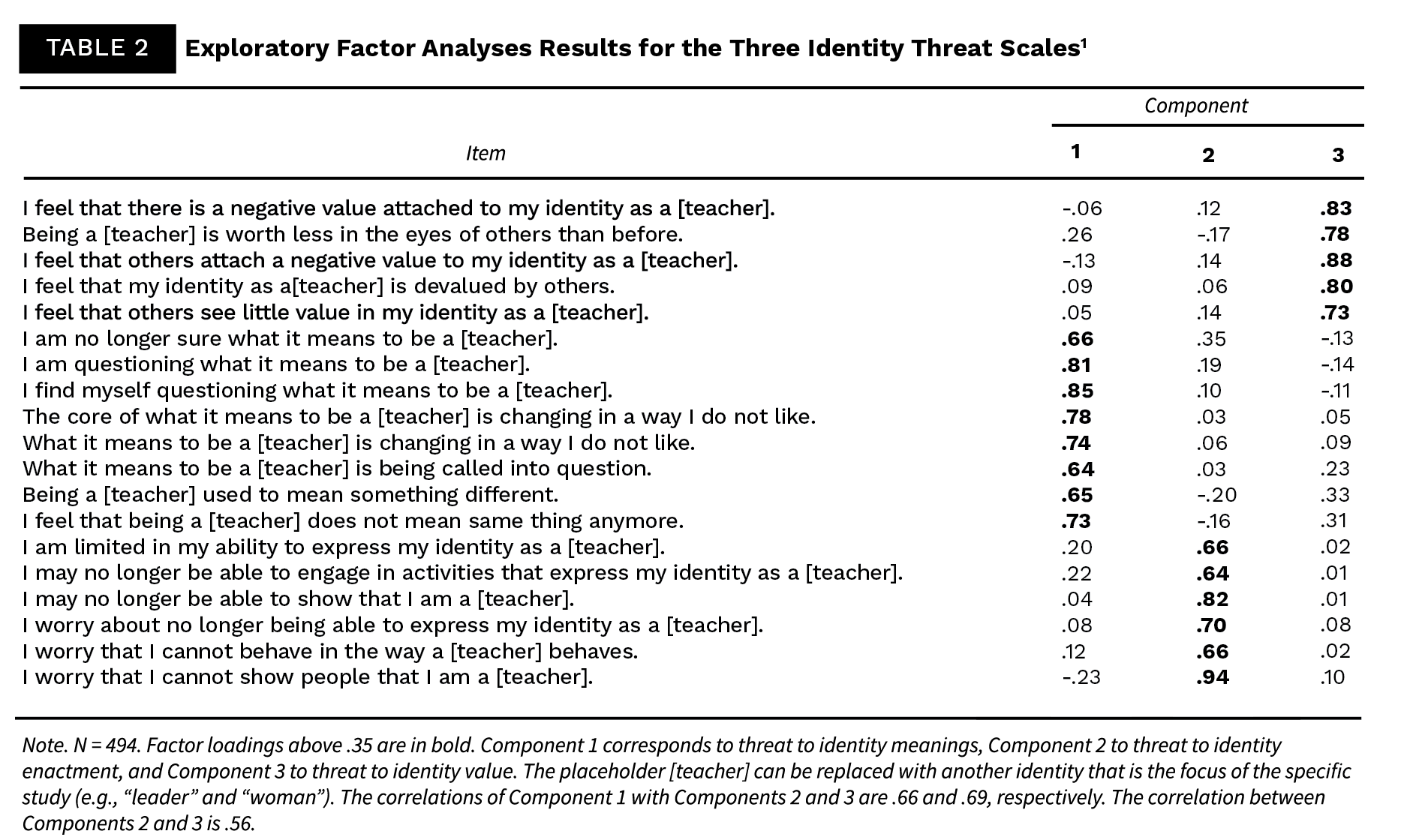
There are two crucial steps managers can take to gauge possible identity threats and keep them from escalating. The first is a survey – which my colleagues and I developed for the paper published in the Journal of Applied Psychology1 – to be administered before a big organizational shift or disruption. This can help shed light on how employees are feeling before the change is implemented.
The second, and perhaps most important, action is creating a safe space for employees to raise their issues. When managers deal with employees who are angry about a situation, their objective should be to unearth the emotion behind that anger: Is it an identity threat or is it something else? Being aware of the existence of those threats gives managers a framework to understand what’s happening beneath the surface. It also helps managers give employees the tools and words necessary to understand identity threats themselves – and be able to name them.
It’s not always about fixing the problem, either, but rather listening to and acknowledging the problem. For example, an employee may go to their boss to complain about the lack of a promotion, even though the manager has no say over institutional decisions such as role changes. Perhaps the employee feels they worked harder than ever with the expectation of elevating in rank, and they wonder if the job is worth poring over if they’ll continue in the same position. Not being promoted can be identity-threatening when it clashes with a person’s career aspirations. The manager’s response is crucial here; they may keep the employee from quitting if they listen to their grievances, offer support, and propose some kind of solution (for example, to do a rotation abroad). The problem at hand (lack of promotion) wasn’t solved, but the key thing is that the employee was heard and validated – and given options. This likely helped assuage the employee’s identity threat (not feeling adequately valued in their role).
Healthy Workplace, Happy(Er) Worker
At the end of the day, understanding identity threats is a huge part of managers’ work. It’s not necessary to preemptively anticipate a threat (it’s impossible to be attuned to every single thing going on in the workplace), but there is power in simply listening. In the previous example about promotions, the situation could have escalated if the manager got implicated in the employee’s frustration – be it by downplaying the threat (“You should be happy with what you have”) or getting caught up in it (“This company is doing everything wrong”).
Similarly, providing room for an employee to come to terms with their emotions is crucial – in other words, giving space and time to grieve. It may not be a death they’re dealing with, but it could still be a loss. Their role may have been altered by outside disruptions (a teacher shifting from in-person to online teaching during the COVID-19 pandemic), or the way they view themselves could have been challenged by an organizational change (a copywriter editing AI-written text instead of actually writing). Sometimes, it’s enough to simply give employees time to process a change or event – instead of expecting them to accept it and move on – and let them express their emotions. Other times, it’s helpful to invest in more costly services such as coaching, which provides employees with a platform and professional guidance to cope with their feelings and learn to detect the primary emotion taking place underneath their initial response of frustration or anger.
In a way, it’s not unlike a therapist’s role. Managers may benefit from listening and becoming a sounding board for their employees while, at the same time, not imposing their own emotions on them. It’s a challenging task, but one that could make all the difference when trying to foster a healthy workplace.
 Mailys George