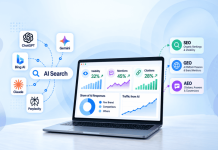
For years, businesses have relied on search engine optimisation to help them appear more prominently when potential customers search online. But the way people find information is changing. Alongside traditional search engines such as Google, more people are now using AI-powered tools and AI-generated search results to discover brands, compare services and answer questions.
That shift has led to the rise of AI SEO. While it shares plenty of similarities with traditional SEO, there are some important differences business owners should understand.
What Is Traditional SEO?
Traditional SEO focuses on improving a website’s visibility in search engine results pages. The aim is to help your pages rank as highly as possible for relevant searches, increasing the chances that users will click through to your website.
This typically involves keyword research, technical optimisation, link building, creating useful content and improving the overall user experience of a site. Search engines look at a wide range of signals when deciding which pages deserve to rank, including relevance, authority, website performance and content quality.
These fundamentals are still incredibly important. AI SEO does not replace traditional SEO. Instead, it adds another layer to your search strategy.
So, What Is AI SEO?
AI SEO is focused on improving how visible, understandable and trustworthy your brand is within AI-powered search experiences.
Rather than simply trying to earn a high-ranking blue link, businesses also need to consider whether AI systems can clearly understand what they do, where they operate, why they are credible and how their products or services relate to a user’s question.
This means your wider digital footprint matters. AI systems may draw information from your website, third-party mentions, trusted publications, reviews and other online sources when generating responses.
Businesses that want specialist support with this newer side of search can click here to learn more from an AI SEO agency in St Albans about improving visibility across AI-driven search environments.
The Biggest Difference Is How People Get Answers
Traditional search usually gives users a list of results to explore themselves. AI search can instead provide a direct answer, summary or recommendation.
That changes the challenge for businesses. Being on page one may no longer be enough if an AI-generated response answers the user’s question before they ever scroll through the standard search results.
Your brand therefore needs to be positioned as a reliable source that AI systems can confidently understand and reference.
AI SEO Places Greater Emphasis On Brand Signals
Strong brands have always benefited SEO, but brand authority is becoming even more important as AI search develops.
Consistent information across the web, expert content, credible mentions and clear evidence of experience can all help strengthen the signals surrounding your business. It is no longer just about optimising individual pages. Your overall online reputation matters too.
Do Businesses Need Both?
In most cases, yes. Traditional SEO remains essential for attracting organic traffic, while AI SEO helps prepare your business for the growing number of searches taking place through AI-powered experiences.
The strongest approach is to treat them as connected rather than separate. Build a technically strong website, create genuinely useful content, strengthen your reputation and make it easy for both search engines and AI systems to understand what your business offers.
Search may be changing quickly, but the underlying goal remains the same: making sure the right people can find and trust your business when they need it.