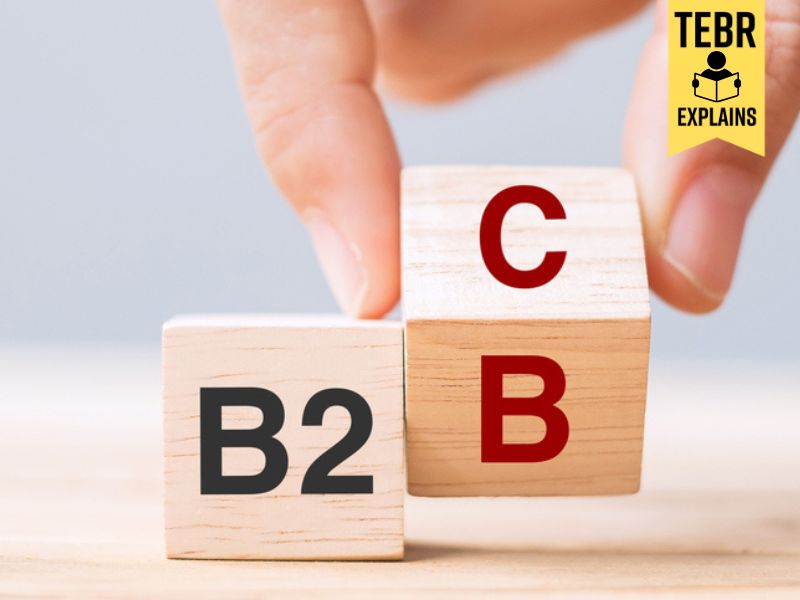
When you hear the terms B2B and B2C, it can be confusing at first. But understanding the difference is key to making smarter business decisions. Whether you’re launching a product or planning a marketing campaign, knowing who you’re selling to helps you craft the right message and strategy every time.
In the world of business and marketing, two common terms often come up: B2B and B2C. These abbreviations stand for Business-to-Business (B2B) and Business-to-Consumer (B2C), respectively. Understanding the difference between these two models is essential for anyone looking to enter a market, sell a product, or build a marketing strategy. Whether you are a startup founder, an aspiring marketer, or simply curious about how businesses operate, this explainer will help you grasp the fundamental distinctions between B2B and B2C.
Definition of B2B and B2C
At the most basic level, the difference between B2B and B2C lies in who the customer is.
B2B refers to businesses that sell products or services to other businesses. This could include a company that manufactures industrial equipment, a software company providing tools to other organizations, or a wholesaler selling bulk products to retailers. In B2B, the end user is not an individual consumer, but another business entity.
On the other hand, B2C refers to businesses that sell directly to individual consumers. This includes online retail stores, restaurants, clothing brands, and streaming services. The customer in B2C is the everyday person making a purchase for personal use.
Key Differences in Audience
Because B2B and B2C serve different types of customers, their marketing approaches, sales cycles, and product features vary significantly.
In B2B, the audience tends to be professionals, managers, or executives within a company. Their purchasing decisions are often based on logic, efficiency, and return on investment. B2B buyers typically go through a longer decision-making process that includes research, consultations, and multiple rounds of approval.
In contrast, B2C targets individual consumers who often make quicker decisions based on emotion, convenience, or brand appeal. B2C marketing is usually more straightforward and geared toward immediate conversion, such as making a purchase on a website or signing up for a subscription.
Differences in Marketing and Sales Approach
B2B marketing often focuses on relationship building, in-depth information, and long-term value. Because the sales process involves more stakeholders and a longer timeline, content in B2B is usually educational and data-driven. Think of white papers, webinars, case studies, and industry reports. Sales in B2B may involve a sales team, formal proposals, and contract negotiations.
B2C marketing, on the other hand, tends to be more visual, emotional, and product-focused. It often involves social media campaigns, influencer partnerships, video ads, and promotions. The goal is to grab attention quickly and encourage immediate action. Sales are typically more transactional and require fewer steps. Consumers can often complete a purchase in just a few clicks.
Pricing and Purchase Volume
B2B transactions typically involve larger purchases and higher price tags. This is because businesses may be buying in bulk or investing in high-value services. Pricing in B2B is also more complex and may depend on negotiations, long-term contracts, or customized packages.
In B2C, prices are generally fixed and lower per transaction. A consumer might buy one pair of shoes, a monthly subscription, or a single meal. While total volume may still be significant, individual purchases tend to be smaller and more frequent.
Customer Relationships and Retention
B2B businesses rely heavily on long-term relationships. Since B2B customers often represent substantial revenue, maintaining trust and reliability is critical. B2B companies invest in account managers, customer service teams, and onboarding programs to retain clients over time.
B2C companies also care about customer loyalty, but the relationship is typically more transactional. Loyalty programs, personalized recommendations, and excellent user experience help keep customers coming back, but the dynamic is less formal and more flexible than in B2B.
Examples of B2B and B2C
To make things clearer, here are some examples of each model.
Examples of B2B:
- A cloud storage company selling enterprise software to corporations
- A logistics firm managing shipping for e-commerce brands
- A supplier providing raw materials to a furniture manufacturer
Examples of B2C:
- An online retailer selling clothes to individual shoppers
- A mobile app offering fitness coaching to users
- A coffee shop serving walk-in customers
Some businesses operate in both spheres, which is known as a hybrid model. For example, a company might sell software to large enterprises (B2B) and also offer a version for individual users (B2C).
Digital Differences in B2B and B2C
The digital strategies for B2B and B2C also diverge. B2B websites are often structured around services, industry solutions, and lead generation. They include features like contact forms, demo requests, and downloadable resources. B2C websites prioritize user experience, simple navigation, and fast checkout. Their design encourages browsing and impulse purchases.
Similarly, digital advertising differs. B2B brands tend to use LinkedIn or industry-specific platforms to reach decision-makers, while B2C brands often rely on Instagram, TikTok, or Facebook to reach wider audiences.
Path to Success and Navigating Challenges
Both B2B and B2C businesses can be highly successful, but the strategies to get there differ.
For B2B businesses, success often depends on building credibility, offering excellent support, and proving measurable value. Trust is a critical asset. To grow, B2B companies must demonstrate that they understand the pain points of their industry and offer tailored solutions. Challenges in B2B can include long sales cycles, limited customer pools, and complex decision chains. Navigating these challenges requires strong sales teams, thought leadership content, and a robust pipeline management strategy.
B2C success relies on visibility, brand identity, and customer experience. Because B2C markets are often more crowded, standing out requires creativity and deep understanding of consumer behavior. Personalization, speed, and consistent value are key to keeping customers engaged. However, B2C businesses face challenges like high competition, shifting trends, and brand loyalty issues. These can be tackled by investing in analytics, agile marketing strategies, and superior user experience design.
In both models, understanding the customer journey and adapting to feedback can drive long-term growth. Technology, from customer relationship management tools to data analytics, plays a vital role in helping both B2B and B2C companies navigate uncertainty and scale effectively.
Conclusion
B2B and B2C are two sides of the commercial world. While they both involve selling something of value, they do so in very different ways. B2B focuses on business needs, relationships, and rational decision-making. B2C centers on personal preferences, emotion, and fast-moving transactions.
Each model has its unique challenges and advantages. By understanding who your customer is and how they make decisions, you can better position your brand for success. Whether you are serving businesses or consumers, the key is always to know your audience and deliver value in a way that resonates with them.