The circular economy offers a transformative model for sustainability by redefining how resources are used. Instead of following the traditional take-make-dispose path, it promotes reuse, recycling, and regeneration. This approach allows businesses to reduce waste, preserve value, and build resilient systems that benefit both the environment and the economy.
Today’s economy is largely based on a take-make-dispose pattern. Businesses extract raw materials, use them to manufacture products, and sell those products to consumers who eventually throw them away. This system has powered industrial growth for centuries, but it comes at a cost. It depletes natural resources, generates enormous waste, and contributes heavily to environmental degradation. As the world faces increasing pressure to address climate change, pollution, and resource scarcity, a new economic model is gaining traction. Known as the circular economy, it challenges traditional thinking by offering a smarter, more sustainable way to produce and consume. It is not only an environmental strategy but also a business opportunity that encourages innovation, efficiency, and long-term resilience.
Defining the Circular Economy
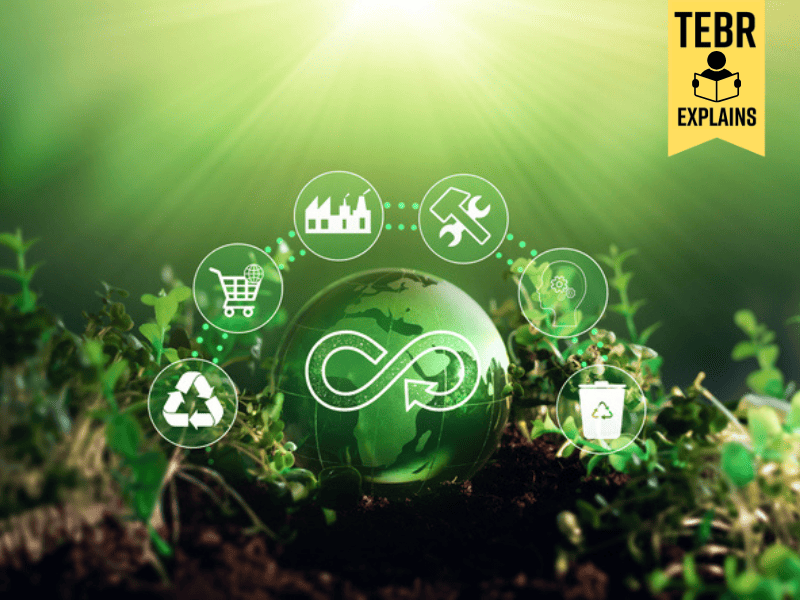
The circular economy is an economic system designed to eliminate waste and keep materials in use for as long as possible. Instead of relying on a linear flow of resources from production to disposal, the circular economy focuses on designing out waste, regenerating natural systems, and keeping products and materials in continuous circulation.
This approach involves rethinking how goods are made, used, and disposed of. Products are designed for durability, repairability, and recyclability. Materials are recovered and reused in new forms. Waste is seen not as an endpoint but as a beginning of a new cycle. The ultimate goal is to create a closed-loop system where the value of resources is preserved and regenerated rather than destroyed.
For example, when a product reaches the end of its life, it can be broken down into parts that are reused to make new products. Organic waste can be composted to enrich soil and grow more food. The circular economy is rooted in the idea that everything has value and nothing should be wasted.
Key Principles of the Circular Economy
There are three main principles that define the circular economy. These principles work together to create a sustainable and regenerative business model.
The first principle is to design out waste and pollution. This means that waste is not treated as an unavoidable consequence but as something that can be eliminated at the design stage. By choosing better materials, using fewer resources, and planning for reuse from the beginning, businesses can create products that are both functional and environmentally responsible.
The second principle is to keep products and materials in use. This involves strategies such as recycling, repairing, refurbishing, and remanufacturing. Products are no longer viewed as disposable. Instead, they are treated as valuable assets that can be maintained and reused. Businesses might offer services that allow customers to return used items in exchange for credit or discounts, which encourages participation in the circular process.
The third principle is to regenerate natural systems. The circular economy is not just about reducing harm. It is also about restoring the environment. By using renewable energy, practicing regenerative agriculture, and returning nutrients to the soil, businesses can contribute to the health of natural ecosystems. This principle helps close the gap between economy and ecology by making the business a force for environmental healing.
Business Opportunities and Benefits
Adopting a circular economy model offers many benefits for businesses. It can reduce costs, open new revenue streams, improve brand reputation, and increase resilience in the face of global supply chain disruptions.
Businesses that recover materials and reuse them reduce their dependency on virgin resources. This can result in major cost savings, especially when raw materials are scarce or expensive. By creating products that last longer and can be repaired, companies can also build stronger relationships with customers who value durability and responsibility.
There are also opportunities for innovation. Companies can explore new services such as product-as-a-service models, where customers pay to use a product rather than owning it. In such models, businesses retain ownership of the product and are responsible for maintaining and recycling it. This encourages better design and long-term value creation.
Moreover, consumers are increasingly choosing brands that align with their values. A circular approach can enhance a company’s image, attract environmentally conscious customers, and build trust with investors. In a time when sustainability is not just a trend but a requirement, circular strategies provide a competitive edge.
Real-World Applications of the Circular Economy
The principles of the circular economy are being applied in various industries around the world. In the fashion industry, some brands are designing clothes made from recycled textiles and offering take-back programs where customers can return used garments. These clothes are then sorted, repaired, and resold or transformed into new fabrics.
In the electronics sector, companies are developing smartphones and laptops that are easier to repair and upgrade. Instead of replacing entire devices, customers can replace individual parts, such as batteries or screens, extending the life of the product and reducing electronic waste.
In agriculture, circular practices involve turning food waste into compost, using it to enrich the soil and grow more crops. This approach not only reduces landfill waste but also supports soil health and biodiversity. These examples show how businesses across different sectors can shift their operations in line with circular thinking and create a more sustainable economy.
Challenges to Implementation
Despite its benefits, the circular economy also faces several challenges. One of the biggest obstacles is the current infrastructure, which is built around a linear system. Recycling facilities, product designs, and consumer behaviors are often not aligned with circular goals.
Another challenge is the need for collaboration across industries and sectors. A single business cannot create a circular system alone. It requires cooperation from suppliers, consumers, governments, and other stakeholders. Policies and regulations also play a crucial role in supporting the transition by creating incentives for circular practices and removing barriers.
Moreover, shifting to a circular model demands investment in innovation, education, and new technologies. Not all companies have the resources or knowledge to make these changes quickly. However, as awareness grows and more success stories emerge, the path to a circular economy becomes clearer and more achievable.
Conclusion
The circular economy represents a powerful shift in how we think about business, resources, and sustainability. It moves beyond the outdated take-make-dispose model and embraces a future where materials are continuously reused, natural systems are restored, and value is created without waste. Businesses that adopt circular principles can reduce costs, unlock innovation, and build stronger relationships with customers and the planet. While challenges remain, the potential rewards are too great to ignore. The circular economy is not just a trend. It is a necessary evolution. It invites businesses and individuals alike to participate in building a future that is both economically vibrant and environmentally sound.