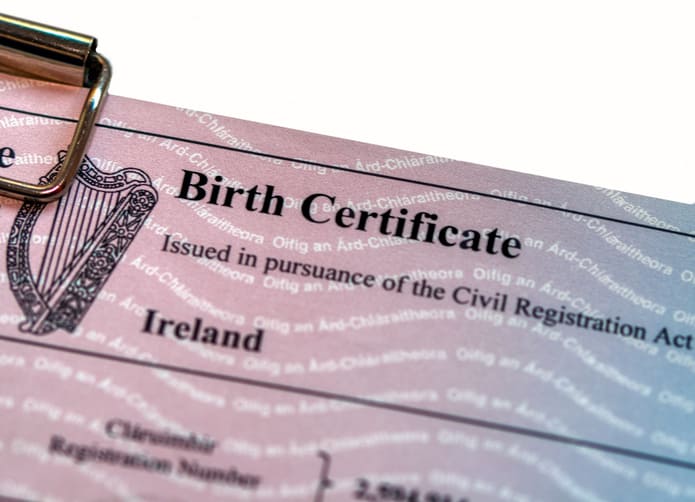
Ask a manager about the biggest risks in an international assignment and you’ll hear about visas, tax, and housing. Rarely does anyone mention a birth certificate, until a transfer stalls because the document is in a drawer three time zones away, or can’t be found at all. The same thing happens in ordinary hiring, when a new employee has to prove identity and work eligibility, and in family relocations, when a passport or school enrolment depends on proof of birth.
A certified birth certificate is a small piece of paper with an outsized role in many official processes. This guide explains how to obtain one, what slows people down, and what employers and HR teams can do to avoid avoidable delays.
Why Organisations Keep Running Into This
Birth certificates come up more often in professional life than most people expect. A certified copy is commonly needed for:
- Passport applications. First-time U.S. passport applicants must show certified proof of citizenship, and a birth certificate is the usual document.
- Employment eligibility. On the U.S. Form I-9, a certified birth certificate issued by a state, county, or municipal authority is one of the accepted identity-and-eligibility documents when presented alongside a photo ID. Employees choose which acceptable documents to show, and employers shouldn’t dictate the choice.
- REAL ID and other identity upgrades. Many state licensing offices ask for a certified birth certificate as proof of identity.
- Visa and immigration filings. Applications for relatives, spouses, and dependents often require certified records, sometimes with an apostille for use abroad.
- Benefits and insurance. Adding dependents, claiming benefits, or settling certain legal matters can all require proof of birth.
In each case the same problem appears. The document is needed on a deadline, but obtaining it takes weeks.
Start With the Right Office
There is no single national registry. In the United States, birth records are issued by the vital records office of the state or territory where the person was born, and in some places also by the county or city. USA.gov advises people born in the U.S. to contact their birth state or territory’s vital records office to learn how to order online, by mail, or in person, how to get a copy quickly, and what each copy costs. You’ll need to know the city and county of birth.
Citizens born abroad to U.S. parents usually have a Consular Report of Birth Abroad, which serves the same purpose as a birth certificate and is obtained through the State Department, not a state office.
Routing matters. Some cities, such as New York City, run their own vital records systems separate from the state. Writing to the wrong office is one of the most common and most costly mistakes, because the request is simply returned and the clock starts over. For a step-by-step walkthrough of how to get birth certificate copies, including the identification you’ll need and what to expect, EaseGov publishes a guide, and its role is explained further below.
Know Which Kind of Copy You Need
Not every copy is accepted everywhere. Several types exist:
- Certified copy. This carries an official seal or stamp from the issuing office and is the version most agencies require. When a form asks for a “birth certificate,” this is what it means.
- Informational copy. Some states issue copies marked as not valid for establishing identity. California, for example, limits who can receive an authorized copy and stamps other versions as informational.
- Short-form versus long-form. A short-form record shows basic details. A long-form record includes additional information, such as parents’ details and place of birth, and is often required for dual citizenship, certain visa filings, and some international uses.
- Apostilled copy. For use in many foreign countries, a certified copy needs an additional certification from the state, which is a separate step and sometimes a separate order.
Ordering the wrong type is the second most common reason a request fails. When in doubt, ask the agency or authority requesting the document exactly which version it accepts.
Who Can Request One
Because a birth certificate is an identity document, access is restricted. Generally the person named on the certificate, a parent listed on it, or a legal guardian can request a certified copy. Some states also allow a spouse, adult child, or legal representative with proof of relationship. Expect to present a valid photo ID.
People who’ve lost all their identification aren’t automatically stuck. Many states accept alternatives such as a sworn statement of identity or a notarized letter from a parent, and the State Department’s guidance suggests replacing a driver’s licence first where possible. Check your birth state’s requirements before sending anything.
The Realistic Timeline
Processing times vary widely. Some offices turn around requests in days, and others take several weeks, with long-form or specially authenticated copies taking longer. Mail adds time in both directions. Expedited options and in-person pickup can shorten the wait but usually cost more or aren’t offered everywhere.
Fees for a certified copy are typically modest, often in the range of $15 to $30 per copy, though they differ by state and county. Ordering a spare copy at the same time is usually cheaper than requesting one later.
The practical lesson is to treat a birth certificate request like any other lead-time item. If a passport appointment, relocation date, or start date depends on it, build in several weeks of slack.
Ordering Online and Getting Help With the Paperwork
Many states now accept online orders, and some route them through an authorised vendor. Online ordering removes the postal delay but not the verification steps, so you’ll still need to prove your identity.
If you’d rather not work out which office to use or how to complete its form, some independent services prepare the request for you. EaseGov, mentioned earlier, is one example, and it offers to help prepare the application. It’s worth understanding exactly what that means. EaseGov describes itself as an independent third-party service, not a government agency, and says it provides preparation and support only. The certificate itself is still issued by the state’s vital records office, and a service like this adds its own fee on top of the government’s charge. Whether that’s worth paying depends on how much you value the time saved and the reassurance of a second check.
What Employers and HR Teams Can Do
For organisations, a few simple practices prevent most of the delays.
Give clear, early guidance. Tell new hires and relocating employees which documents they may need and how long they can take to obtain, well before the start date or move.
Don’t specify documents for I-9 purposes. Provide the full list of acceptable documents and let the employee choose.
Build document lead times into mobility plans. Passports, certified records, apostilles, and translations often take longer than the visa itself.
Offer practical support. Some employers reimburse the fee for obtaining vital records as part of a relocation package. Others simply provide a checklist and a point of contact.
Handle originals carefully. Don’t hold onto certified documents longer than needed, and give clear instructions on how copies will be stored and protected, since birth certificates are sensitive identity records.
A Short Checklist
Before placing any order, confirm the following:
- Which agency actually holds the record, state, county, or city
- Which type of copy the requesting party will accept
- Who is eligible to order it, and what identification is required
- Current fees, processing times, and any expedited options
- Whether an apostille or translation will be needed
- How many copies you’ll need, now and later
The Bottom Line
A birth certificate is one of those documents that’s invisible until it becomes urgent. The people and organisations that avoid the scramble are the ones who treat it as a lead-time item: they identify the right office, order the right type of copy, allow for realistic processing times, and keep spare certified copies in a safe place. Do that, and a document that causes so many last-minute headaches becomes a routine checkbox instead.