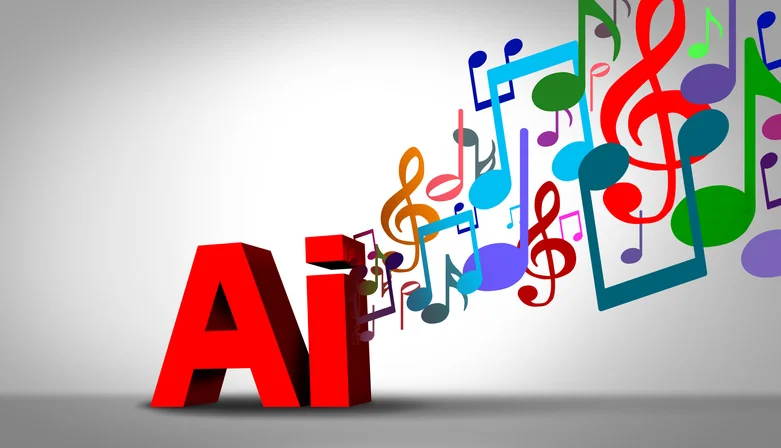
Where does visual art end, and where does music begin? For centuries, artists sought to connect these two realms, exploring how colors, shapes, and patterns could evoke melodies and rhythms. Now, artificial intelligence (AI) is making this artistic fusion possible, creating unprecedented opportunities for experimentation. From abstract paintings inspiring symphonies to photographs generating meditative soundscapes, AI is paving the way for a new form of royalty free music expression.
How AI Bridges Visual Art and Music
Artificial intelligence excels at finding patterns in data—and in the case of image-to-music technology, it draws connections between the visual and auditory realms. Each component of an image, like its color, texture, shape, and brightness, can be mapped to corresponding musical elements such as pitch, tempo, harmony, or rhythm. Think of it as translating visual “language” into auditory “language.”
For example:
- colors can represent tonal ranges, with warmer hues like red or yellow translating into higher pitches and cooler tones such as blue or green becoming deeper sounds.
- textures in an image, such as a smooth gradient or rough lines, may inform the rhythm or tempo of a piece.
- shapes can inspire musical dynamics—sharp edges might translate to staccato notes, while soft, round curves could evoke flowing, legato melodies.
AI models trained on robust datasets learn these correspondences, enabling them to compose music “inspired” by any visual input. The result? A unique, often surprising piece of music that captures the essence of the visual work.
Artists and Projects at the Forefront of AI Image-to-Music Creation
Several trailblazing artists and collaborations showcase how AI is merging art and sound in innovative ways. Here are some standout examples.
Refik Anadol’s Immersive Installations
Refik Anadol, a renowned media artist, blends AI and machine learning to create immersive experiences. Known for turning data into art, Anadol uses image-to-music algorithms to build multi-sensory installations. One exhibit, for instance, transformed satellite imagery of landscapes into ethereal soundscapes. Visitors could not only see sweeping vistas but “hear” the emotional resonance of these environments, brought to life through AI-driven music.
The Neural Synesthesia Project
This ongoing artistic experiment invites participants to submit images that AI then transforms into musical compositions. By integrating visual and auditory interpretations, the project explores how people experience art on a deeper emotional level. The initiative has produced compositions inspired by everything from cityscapes to abstract drawings, often highlighting how individual perception of art changes with added dimensions like sound.
AI-Generated Album “Sonographs”
Some musicians have begun collaborating with AI to produce full albums driven by image inputs. The album “Sonographs,” for instance, was inspired entirely by digital artwork submitted by fans. Each track corresponded to a specific piece of visual art, making the album a rare combination of collaborative effort and computational creativity. Fans could hear the spirit of their images brought to life as symphonies, creating deeply personal connections between visual and sonic art.
Primary School Workshops
Beyond professional art circles, educators are leveraging image-to-music AI tools in schools to teach creative thinking. Children can draw a picture and instantly hear a song based on their artwork. These workshops not only foster creativity but also introduce younger generations to the possibilities of AI in art.
The Creative Process Behind Image-to-Music AI
One of the most exciting aspects of image-to-music AI is the unique collaborative process it fosters between human creativity and machine interpretation. While the artist provides the initial visual stimulus, AI plays the role of co-creator by “interpreting” this input through patterns it has learned.
The process typically involves the following steps:
- Image selection. The artist uploads an image into an AI-powered program. This could range from simple sketches to intricate photographs or abstract digital art.
- Pattern analysis. The AI analyzes the visual elements of the image, identifying factors like color palettes, shapes, and patterns.
- Sound mapping. Using its training dataset, the AI maps these visual features to musical dimensions, creating the framework for a composition.
- Human refinement. Artists often tweak the AI-generated composition, adding their personal touch to create a more cohesive and emotionally resonant piece.
By acting as a bridge rather than a replacement, AI plays an essential role in expanding artistic possibilities, enabling creators to explore new ways of expression.
Challenges and Opportunities in Image-to-Music Art
Every groundbreaking technology introduces challenges alongside opportunities. For image-to-music AI, these are worth considering as the medium grows in practice and popularity.
Challenges:
- While AI captures patterns and translates them into music, it does not inherently understand emotion. Some critics argue that the resulting compositions may feel mechanical or lack the human touch that makes art so powerful.
- The computational power and cost required to experiment with AI tools can limit access for independent artists or smaller institutions.
- Transforming an existing piece of art into music raises questions about copyright and artistic ownership, particularly when the AI model uses preexisting datasets.
- AI systems reflect the biases present in their training data, which could limit creativity or produce results that unintentionally reflect cultural stereotypes.
Opportunities:
- Museums, galleries, and performance spaces can leverage this technology to offer audiences completely immersive artistic experiences, increasing engagement and emotional impact.
- Users can now access tools to create deeply personal pieces of art, turning their favorite images or memories into musical keepsakes.
- Schools and universities can use this approach to teach interdisciplinary studies, helping students understand the connections between art, technology, and music.
- By combining visual art and audio, artists worldwide can explore common themes or create collaborative projects that transcend language barriers.
The lines between visual art, music, and technology are blurring in ways never before imagined. For artists and audiences alike, the fusion of pixels and soundwaves offers endless possibilities to reimagine creativity. The question is no longer whether the arts can merge, but how far this union can take us.