

By Dr. George Sammour
This article explores how business schools can transform education by embedding sustainability and innovation across curricula, research, teaching, and operations. Drawing on global frameworks like the UN SDGs, it outlines actionable strategies to develop responsible leaders equipped to address pressing global challenges, foster social impact, and drive systemic change.
In today’s rapidly changing world, challenges like climate change, social inequality, and economic uncertainty call for thoughtful and comprehensive approaches to leadership and decision-making. Business schools possess a unique opportunity and responsibility to be part of the solution to these challenges. They must go beyond traditional instruction of management skills, and how to run businesses or develop profit-making strategies. Business education needs to foster leaders who can think critically about the broader values of business decisions.
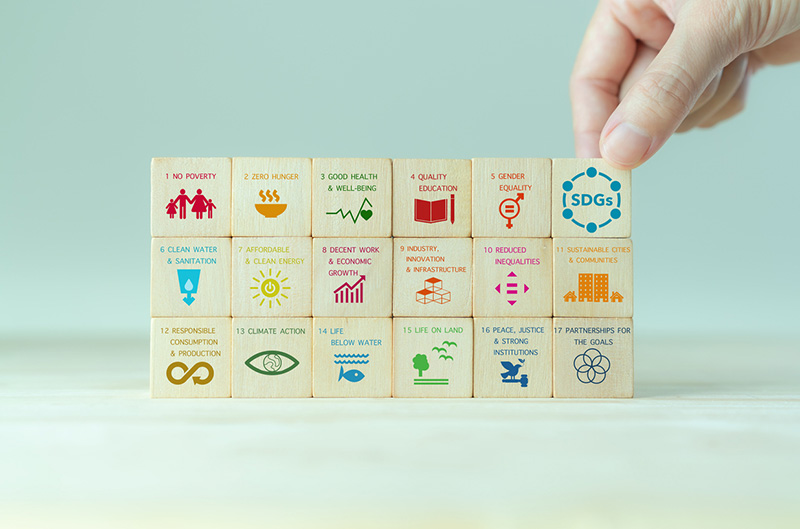
This transformation can be achieved by embracing sustainability concepts and rethinking business education in terms of the curriculum, teaching, research, and service. In this context, the 17 United Nations Sustainable Development Goals (UN SDGs) offer an opportunity for business schools to work together with their stakeholders to shape a sustainable future. By integrating principles such as climate action, gender equality, and quality education into the curriculum, research, lifelong learning, and partnerships, business schools can empower students to address such challenges. When sustainability becomes part of daily campus life, not just a topic in the classroom, it inspires students to think critically, act with purpose, and design solutions that create value for both business and society. This transforms business schools from places of learning into contributors to positive social change. The following insights, from key sources, presents how integrating sustainability into business education is already making a difference.
When sustainability becomes part of daily campus life, not just a topic in the classroom, it inspires students to think critically, act with purpose, and design solutions that create value for both business and society.
According to the United Nations Sustainable Development Goals framework1, when business schools align their curriculum with the SDGs, they create an institutional framework that supports global sustainability efforts. This adoption helps them meet broader social responsibility expectations while improving internal policies and practices. As a result, courses are redesigned to reflect actual global challenges, faculty gain new purpose in teaching impact-driven skills, and students conceive their future as change makers, while the Association to Advance Collegiate Schools of Business (AACSB) emphasizes that business schools are in a unique position2 to adapt the UN SDG framework to their specific regional or institutional context. This adoption allows business schools to focus on SDGs that resonate most with their mission and stakeholders. Business schools can create customized courses, research initiatives, and partnerships, which supports the relevance of sustainability efforts within local economic, cultural, and environmental settings. Furthermore, initiatives like the Business School Impact System (BSIS)3 of the European Foundation for Management Development (EFMD), which requires business schools to integrate SDGs into business education, transform business education in three ways. First, it enhances curriculum relevance by connecting classroom learning to pressing global challenges; second, it strengthens stakeholder engagement through partnerships with local communities, governments, and industries; and third, schools gain competitive advantage by measuring and showcasing concrete SDG impacts, such as reduced carbon footprints or improved gender balance in leadership programs.
As described in the Sustainable Development Goals and Institutions of Higher Education (2022)4 report, integrating sustainability principles into business education prepares graduates to become responsible leaders and promotes business schools’ societal impact. Aligning SDGs with curricula by connecting classroom learning to real-world case studies enhances relevance, with 85 percent of recruiters prioritizing graduates’ sustainability literacy. Furthermore, the report revealed that schools embedding SDGs in their business curricula, positioning themselves as hubs for innovation and policy influence, witnessed a 30 percent increase in applications and 50 percent more industry partnerships.
Therefore, integrating sustainability concepts into business schools’ curricula, research, students’ activities, and services presents an opportunity to prepare future leaders equipped with business acumen committed to contributing to sustainable development. Thus, business schools must develop a clear action plan to embrace sustainability and innovation as core objectives of their operations. This requires taking a comprehensive approach that focuses on making real and measurable changes to how business education is shaped. The following actions comprise the main drivers of business education transformation towards sustainable development.
Curriculum Transformation
Sustainability and innovation must be embedded across all business disciplines, not limited to electives. The Environmental, Social, and Governance (ESG) and the UN SDG principles should be integrated into all key business areas, including finance, accounting, marketing, operations, technology, and strategic planning. Specialized tracks in areas such as sustainable finance and social entrepreneurship should complement this integration. Relevant case studies, industry reports, and interdisciplinary research must supplement traditional teaching material. Additionally, academic programs must include systems thinking to help students understand the interconnection of business, society, and the environment.
Innovative Teaching
Business schools need to shift from traditional lectures to active, experiential learning. Imagine campuses not just as places of study, but as real-world learning hubs where students work on sustainability solutions, whether by consulting with real businesses and NGOs, solving real-world problems, or participating in simulations that test their responses to complex ESG risks. Students’ participation in case competitions helps them develop critical decision-making skills in dynamic, realistic environments. Furthermore, business schools can empower sustainability clubs led by students to support them to lead, launch impactful initiatives, and inspire their peers through campaigns and peer learning.
Research and Thought Leadership
To transform business education, business schools must become centers of impactful research. This can be achieved through establishing dedicated sustainability research clusters, funding faculty and student research, and supporting interdisciplinary collaborations, which will accelerate knowledge creation. Industry partnerships are equally important. By co-authoring case studies with companies, researchers ensure that their work addresses real-world challenges while giving students exposure to current business needs. Furthermore, business schools can amplify impact by offering executive courses that translate research into practical tools for business leaders
Strategic Partnerships and Networking
Collaborations with leading sustainable corporations, NGOs, and social enterprises offer students and faculty valuable insights and real-world exposure. Engaging alumni in working in sustainability and participating in global initiatives like PRME or GBSN can amplify the school s influence and access to best practices. Business schools can significantly enhance their sustainability efforts by forming strategic partnerships and alliances with neighboring or regional academic institutions. These cross-campus alliances enable schools to combine resources, expertise, and influence to drive meaningful change.
Institutional Commitment
By systematically aligning their operations, governance, and reporting with sustainability values, business schools reduce their environmental impact and serve as living case studies for responsible institutional management. This begins with achieving operational sustainability through pursuing certifications for campus buildings (e.g., LEED)5, implementing comprehensive waste reduction programs, and transitioning to renewable energy sources. To demonstrate accountability, schools should publish detailed annual sustainability reports that transparently track progress across key areas: curriculum integration of sustainability concepts, research output on ESG topics, carbon footprint reduction, and community engagement initiatives.
Business Education for a Thriving Future
Modern business education has become about shaping leaders who can balance economic success with the health of our planet and the well-being of society. By embedding sustainability into every aspect of their programs, curriculum, research, partnerships, and operations, business schools can shift from passive observers to architects of systemic change. Graduates armed with this mindset will redefine success, turning resilience into competitive advantage and purpose into measurable impact. Slow, small steps are no longer enough; the future will be led by institutions ready to take actions to make sustainability a core part of leadership, not just an optional add-on.