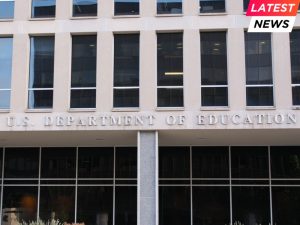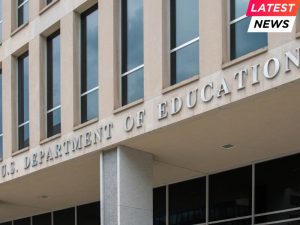
A sweeping legal effort by leading education scholars and research associations is challenging the Trump administration’s abrupt dismantling of key research programs at the U.S. Department of Education. In three separate lawsuits filed in federal courts throughout April, professional organizations representing thousands of researchers are demanding the restoration of terminated projects and the reversal of mass staff dismissals at the Institute of Education Sciences (IES).
The suits argue that the department, led by Secretary Linda McMahon, overstepped its authority by cutting programs required by federal law, including Regional Education Laboratories and vital data collections. Nearly 90 percent of IES staff were placed on administrative leave in March, with more than 1,300 employees set to be formally terminated by June 10. Advocates warn this could leave the federal education research infrastructure crippled, threatening decades of work.
Unlikely allies have joined forces in opposition. Among those submitting court declarations are Grover J. “Russ” Whitehurst, a former IES director known for his support of private school vouchers, and Sean Reardon, a sociologist from Stanford focused on inequality in education. Despite differing ideological backgrounds, both emphasize the damage the cuts have caused to their work and the broader research community.
“We were reminded that this is an existential threat,” said Elizabeth Tipton, president of the Society for Research on Educational Effectiveness and a statistician at Northwestern. “This kind of research won’t exist if this continues.”
The three lawsuits were filed by six major associations: the Association for Education Finance and Policy (AEFP), Institute for Higher Education Policy (IHEP), American Educational Research Association (AERA), Society for Research on Educational Effectiveness (SREE), National Academy of Education (NAEd), and the National Council on Measurement in Education (NCME). Their members rely on federal data and grant support to conduct studies and guide policy decisions.
Each case seeks a preliminary injunction to immediately halt the Education Department’s cuts. Plaintiffs are represented by prominent progressive legal organizations: Public Citizen, Democracy Forward, and the Legal Defense Fund, which originated from the NAACP but now operates independently. The first hearing on the matter is scheduled for May 9 in Washington.
Attorneys argue the administration violated the Administrative Procedure Act by acting arbitrarily and ignoring congressional mandates. The Education Sciences Reform Act of 2002 obligates the department to conduct specific types of research and data collection. Those programs were abruptly scrapped in February, leaving gaps in information used to inform education policy nationwide.
Of particular urgency are two June deadlines. Starting June 1, researchers are set to lose remote access to sensitive datasets needed for ongoing projects. And by June 10, thousands of research staffers placed on leave will be officially dismissed, potentially permanently severing institutional knowledge and expertise.
Felice Levine, executive director of AERA, highlighted the broader impact: “Practitioners and policymakers are left to make decisions without evidence. Graduate students can’t move forward. This threatens the entire research pipeline.”
Contract cancellations have further disrupted the landscape. Without internal data storage, the Education Department has relied on external contractors to maintain historical datasets. Those agreements are now defunct, raising fears about long-term data preservation and access.
Andrew Ho, Harvard professor and past NCME president, emphasized the stakes: “For 88 years, our organization has defended standards for valid measurement and the research built on it. This is about data quality and the integrity of our entire field.”
The lawsuits reflect a long-building frustration. When the first signs of cuts appeared earlier this year, many in the academic community were hesitant to speak out. Now, with their work in jeopardy and key infrastructure dismantled, education researchers are pushing back — not only to protect their own studies but to defend the future of evidence-based education policy.
“The damage is already happening,” said Dan McGrath, an attorney for Democracy Forward. “At some point, it won’t be possible to put Humpty Dumpty back together again.”