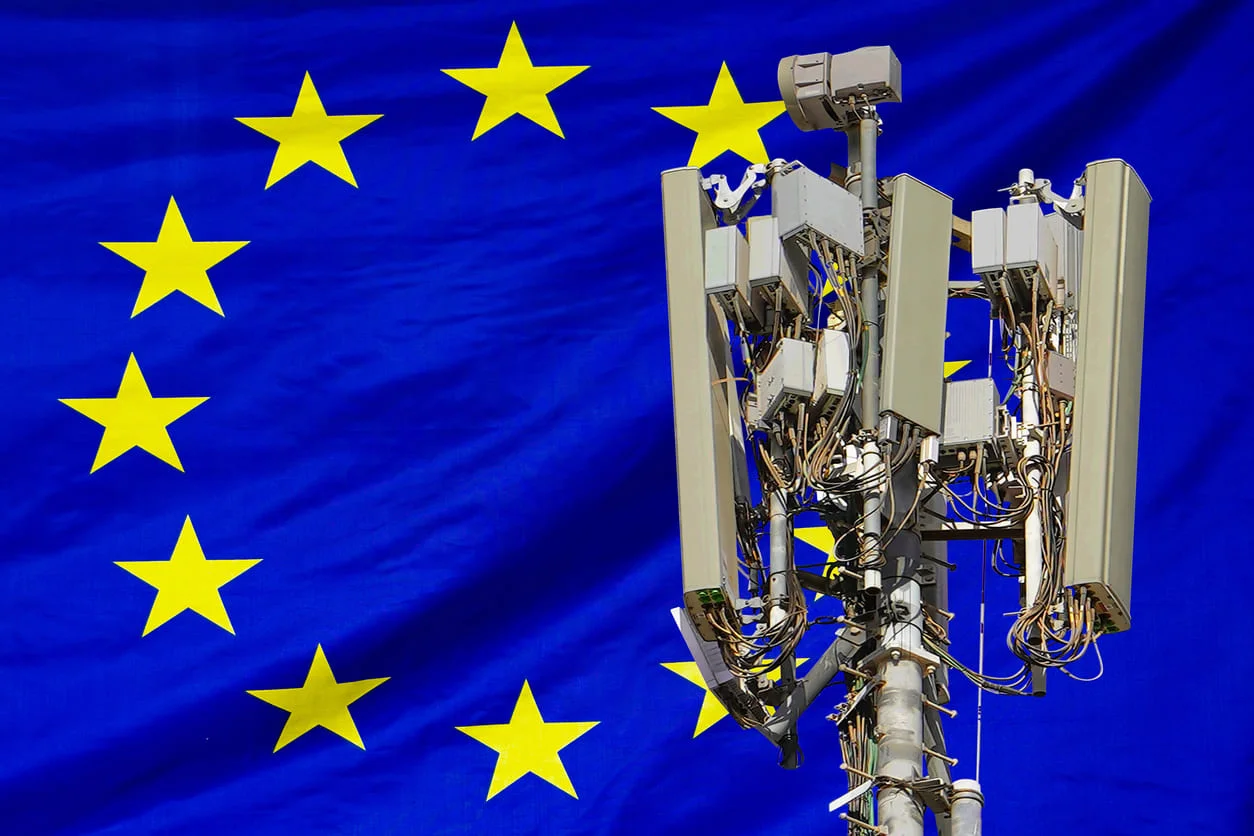
The European telco market is diverse by its very design, as the regulatory bodies of the European Union have a practice of proactively preventing various mergers in an effort to avoid monopolies and ensure competitiveness. However, some industry professionals argue that such laws have the opposite effect, stifling the growth of the European telco market. Some telecoms groups, such as Spanish giant Telefonica, are even actively calling for a market with fewer, yet larger players.
The numbers reflect the fact that the European telecoms market is highly fragmented. According to the latest State of Digital Communications study, conducted by Connect Europe, there are currently 41 companies on the continent with at least 500,000 customers, compared with 5 in the USA, and 4 in both China and Japan.
This issue was brought to the spotlight in September when the CEO of Spanish telecoms group Telefónica announced the company’s intention to eventually sell its Latin American assets to raise funds for future acquisitions in Europe. While the pushback from the EU is likely due to regulatory constraints, if it were to happen, the European telecommunications landscape would undergo significant changes.
Vincentas Grinius, co-founder of IPXO, an IP address management platform, seconds that the EU market is undeniably fragmented, and for years, it has been highly unlikely to address the issue due to red tape. However, considering the recent geopolitical shifts and Europe’s ongoing pursuit of digital sovereignty, this paradigm shift may serve as the catalyst for necessary changes.
“In the current European market, dozens of mid-sized telco players compete fiercely, which keeps prices low for the customers but also weakens the ability for the companies to invest in next-generation networks, such as 5G, 6G, and fiber, creating structural inefficiencies,” says Grinius. “The European regulators must now choose their priorities. If they value strategic investments and improvement in the quality of the networks, consolidation should follow quickly,” he says.
Consolidation – key to Europe’s strategic autonomy
A central argument for more M&As is that investments in critical operations, such as cybersecurity, infrastructure, and data centers, require funds that European telco companies currently do not have. This does not necessarily mean a titanic shift in how the EU approaches its anti-monopoly rules. Still, it does mean that large telecom companies can operate and consolidate without regulatory interference.
“If regulators would soften their stance, consolidation would follow quickly. In the short term, consumers might face higher prices, but in the long run, fewer stronger players could deliver better coverage, faster networks, and more stability for businesses. Larger operators would mean more investment power and competitiveness, but the risk is that fewer players could limit choice and drive up costs,” says Mr Grinius.
He emphasizes that currently, the EU is heavily reliant on tech giants such as AWS and Microsoft. And while the AWS European Sovereign Cloud (ESC) and similar projects that will undoubtedly follow in the future aim to solve this issue, current dependency limits the continent’s strategic autonomy. Consolidation of major European telecoms, in tandem with a pan-European technical strategy, might give them a chance to finally challenge the US companies.
“By scaling up, the European telco companies could strengthen the continent’s digital sovereignty and reduce the technological dependence on US and Asian giants. But true sovereignty will depend not just on the size of these companies, but on whether they can build independent, sustainable pan-European digital ecosystems,” says Mr Grinius.